

No products in the cart.
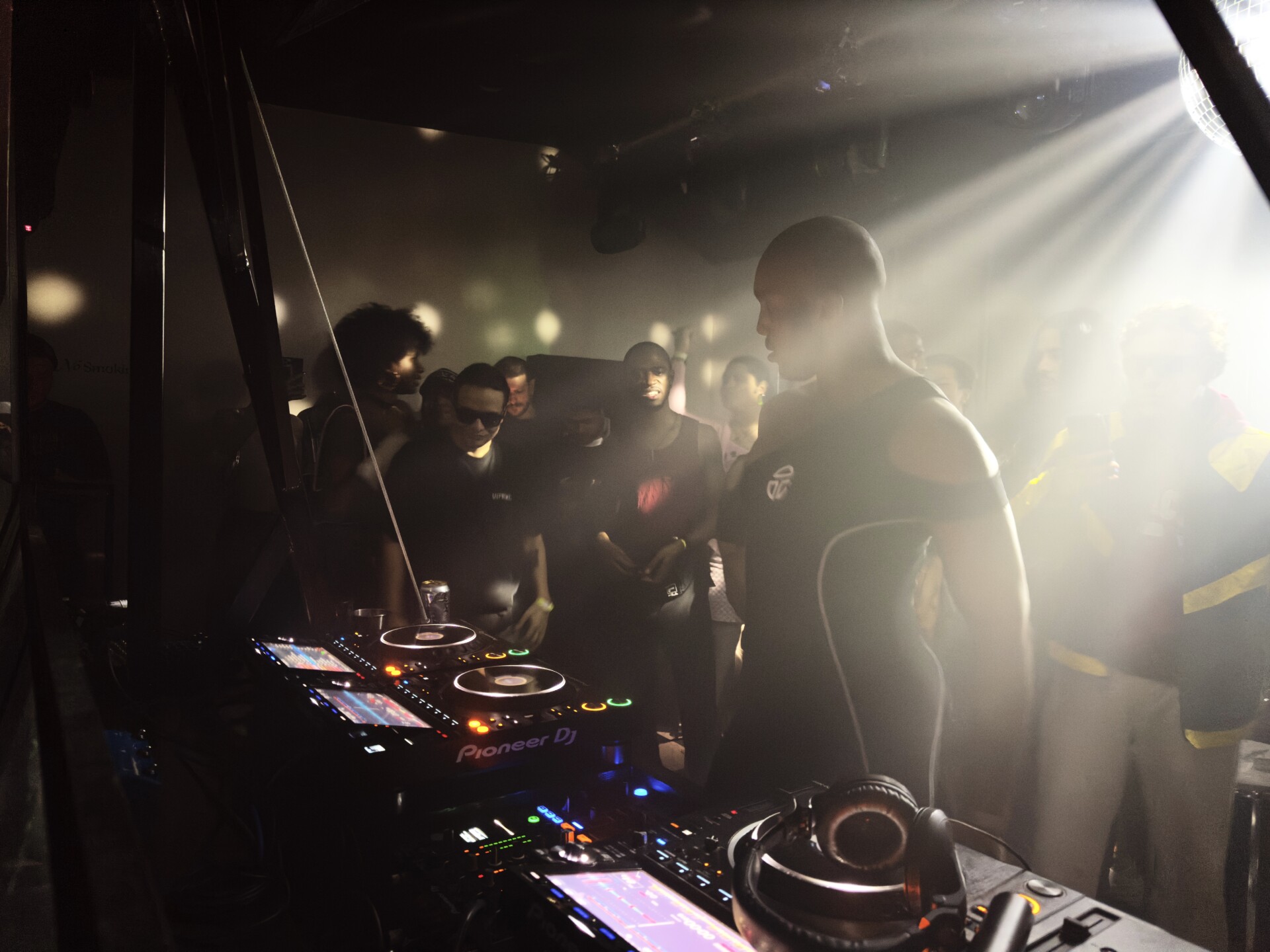
When Frankie Decaiza Hutchinson speaks of Dweller, she never describes it as “just a festival.” She speaks of rebuilding a world. Of reclaiming a stolen space. Of restoring a memory that was systematically erased from the global narrative of electronic music. Of recentring Black communities, not as an act of diversity, but as an act of truth. Dweller exists not to diversify the industry, but to remind it of its foundations.
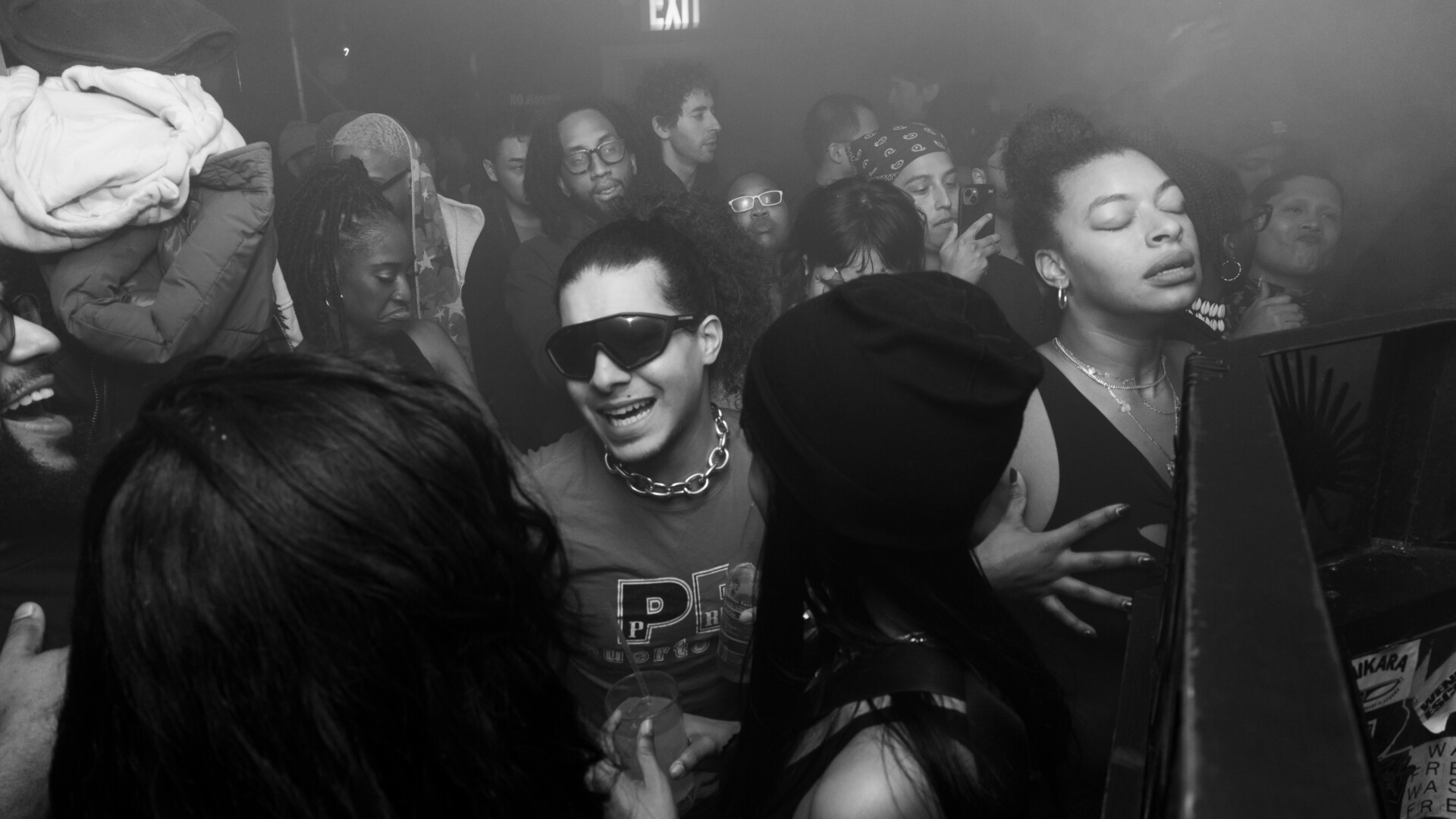
The reaction to the festival’s comeback announcement confirmed its urgency. “It’s all been wonderful, we cannot complain,” Frankie says. “Such a warm welcome.” The relief surrounding its return highlights a reality the industry often avoids naming: Black ravers and Black artists still struggle to find spaces where they are not merely permitted, but placed at the centre of the narrative.
The sabbatical taken in 2025 is often framed from the outside as a moment of strategic recalibration, but Frankie refuses to romanticise it.
“I don’t know if that’s really possible,” she says when asked whether a festival model can exist without burning out its creators. “We took a year out to recalibrate, seek funding ideas… we certainly recalibrated, but funding remains tricky and I think it may always be that way if you don’t want to compromise the integrity of what you’re building.”
She is equally frank about the future: “Another sabbatical is never not on the table.”
This level of honesty contrasts sharply with many festivals, particularly in Europe, where institutional support and brand partnerships often mask structural inequalities and widespread burnout. Dweller, by contrast, insists on transparency, acknowledging fragility not as weakness but as resistance.
One of the most striking aspects of Dweller’s philosophy is its temporal refusal. “We move pretty slowly,” Frankie admits. “We don’t rush in terms of programming or articles we publish. Everything takes a lot of time.”
She believes this pace is not only intentional but political: “Accepting that this process is slow is part of the subversiveness of what we’re doing. There is such a sense of rush and competition in this industry, which we don’t want to participate in or be governed by.”
In a global scene obsessed with hype cycles, immediacy, and content production, Dweller’s unhurried development becomes an implicit critique of the market logic that governs electronic music.
Centring Black communities reshapes the entire ecosystem
Dweller is one of the rare spaces where Black people, artists, dancers, staff, thinkers, are the gravitational centre. This shapes everything, from the line-up to the public ethos.
“It can be effortless and also extremely difficult,” Frankie explains. “You feel a duty to cover all genres, while simultaneously having access to an abundance of local underground talent.”
Programming is not just a logistical puzzle; it is an ethical responsibility. “Programming is so hard and in all honesty it keeps me up at night. Some ideas literally come in dreams. We can only hope the intentional programming offers an intentional space for Black folks to feel a sense of ownership over what’s happening.”
That sense of ownership is particularly striking when contrasted with the whiteness of contemporary club culture. “It’s honestly kind of insane how white club environments are,” she says. “I was struck by this viral video of this person asking partygoers how many Black DJs they know — the fact that’s a question feels demeaning enough. Like our existence within electronic music has become viral fodder, rather than something real.”
They are rebalancing the field, not excluding anyone
A recurring accusation leveled at Black-centred initiatives in Europe is that they create exclusion. Frankie dismisses this assumption completely.
“We’ve literally never had that criticism,” she says. “I think it’s telling because everybody knows that Black artists and partygoers have such little space within electronic music. So it can’t in good faith be viewed as exclusionary practice to have a Black festival.”
Her answer reveals a truth the industry often obscures: reclaiming space is not exclusion; it is repair. Not sure that it will have the same welcome in France, where non-mixed events are highly criticized.
The safe space as infrastructure, not branding
Frankie is cautious about the idealised notion of “safe spaces.”
“To be honest I struggle with the term, and I don’t think one can ever have full control over a space as the nature of what’s happening is precarious,” she explains.
Yet she emphasises what can be done:
“There are parameters that can be put in place to help keep people safer, whether it be better informed security, safety monitors, drug test strips, Narcan access, training, etc.”
Here again, Dweller distinguishes itself from parts of the global scene, especially in France, where the rhetoric of safety is often adopted without the corresponding infrastructure.
The industry amnesia and the limits of 2020’s awakening
Frankie speaks candidly about the recurring narrative that surfaces whenever a line-up includes several Black artists or a Black-majority crowd: people call it “inclusive,” as if Blackness were an exception.
“It’s very jarring,” she says. “If I think about it too much I get stuck with resentment.”
She has little faith in the industry’s ability to evolve:
“I’m extremely cynical about how much the industry can change to better reflect the Black origins of the music. We saw some parts of the industry attempt to care in 2020, but that collapsed. I don’t believe it can be salvaged — so just create what you wanna be part of.”
Drexciya as mythic architecture and intellectual inheritance
The festival’s name, drawn from Journey of the Deep Sea Dweller, situates Dweller within the speculative universe of Drexciya, a mythology imagining the descendants of enslaved Africans forming an underwater civilisation.
“We see ourselves as an extension of the world they created for us,” Frankie says. “A world where we can build what we want. We thank Drexciya for their imagination and how that’s inspired us to create this space.”
Even as she insists she is “not particularly spiritual,” she acknowledges the almost mystical charge that emerges during the festival.
Black intellectual tradition as the festival’s backbone
Asked how Black intellectual tradition shapes the festival’s artistic decisions, Frankie offers a modest response:
“I think if you read our blog, it’s easy to make the connections between the intellectual and the festival. It’s hard to explain — they just organically interact.”
Indeed, the Dweller Forever blog filled with essays on white ethnocentrism, diasporic aesthetics, the politics of nightlife, and conversations with thinkers like Katherine McKittrick functions as the festival’s theoretical infrastructure. The dance floor becomes an archive; the rave becomes a political text; the community becomes a repository of memory and futurity.
And to to the French scene
Seen from France, Dweller exposes what remains unspoken. In Paris and beyond, racial profiling at club doors persists, yet almost no major media outlets address it, for fear of losing funding or contradicting the idyllic self-representation of the French electronic scene. Line-ups remain overwhelmingly white, and the presence of a single Black artist is often presented as progress.
Meanwhile, collectives, Black, Asian or queer diasporic crews continue the work of cultural repair, yet they are rarely centred, rarely funded, and rarely historicised.
Dweller shows what happens when Black communities are not an afterthought but the starting point.
It is not a model to copy mechanically.
It is a reminder, perhaps even a warning, that techno cannot survive on amnesia. Dweller is a reclamation, a futurity, and above all, a home.