
No products in the cart.
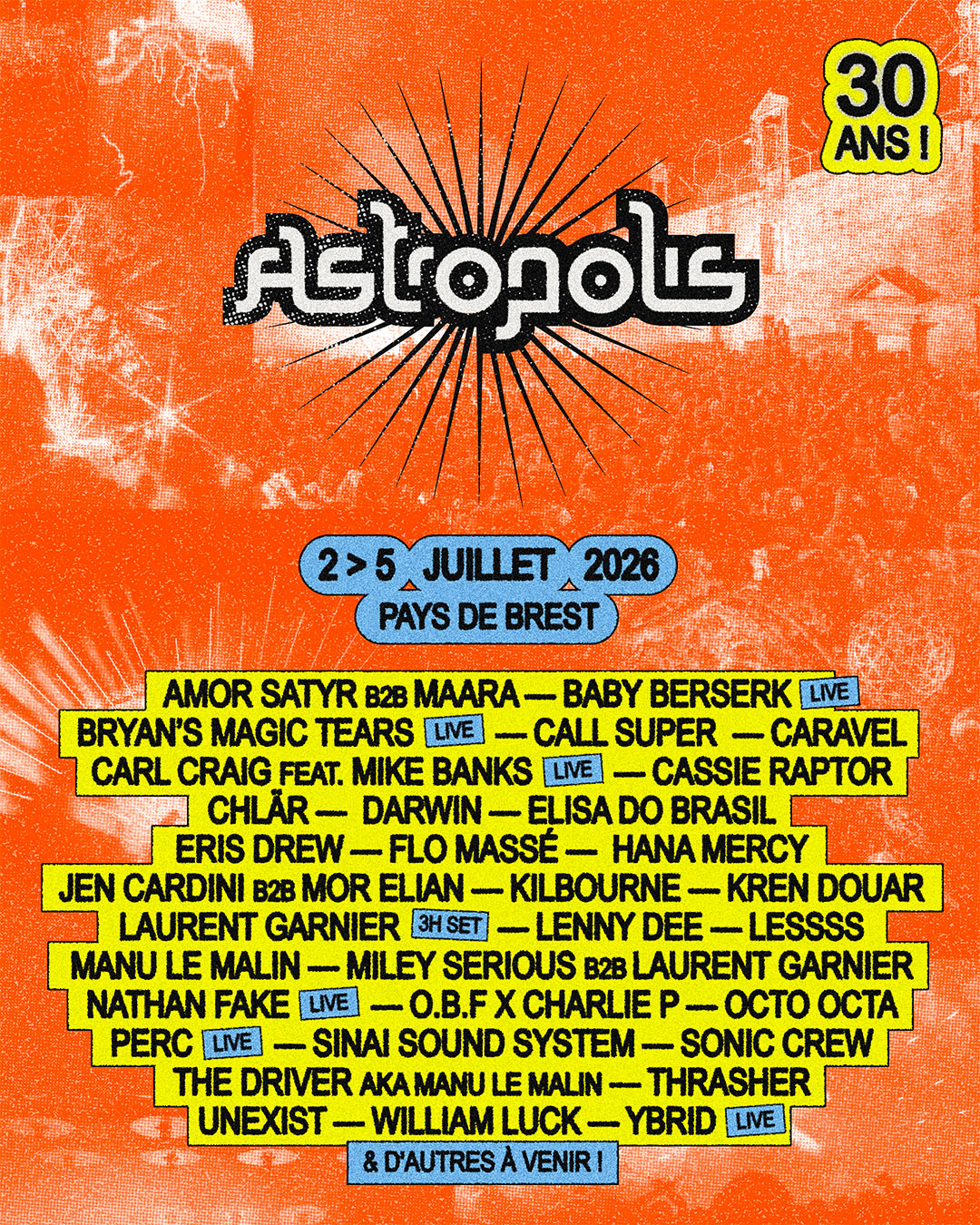
Born in 1995 in Brittany, Astropolis is celebrating its 30th anniversary this year. Very few French electronic festivals can say the same, and even fewer while still claiming such continuity in political spirit, aesthetics, and collective identity. From July 2 to 5, 2026, Brest and the Manoir de Keroual will host an anniversary edition that looks both to Detroit and to today’s club scenes, with Carl Craig, Mad Mike Banks, Laurent Garnier, Jen Cardini, Eris Drew, Octo Octa, O.B.F, and Manu Le Malin among the names on the bill. But beyond the line-up, the real story is larger: what rave once stood for, and what it might still defend today.
Some anniversaries are little more than brand celebrations. Others force you to look back at the road travelled with a kind of disbelief. Astropolis, which turns 30 this year, clearly belongs in the second category. When the festival was born in the summer of 1995 in the north of Finistère, rave culture in France was nothing like the heritage object or tourism asset it can sometimes resemble today. It still felt like a rupture. People came to it in search of freedom, of margins, of a different way of being together, at a time when electronic music inspired both fascination and deep suspicion.
Thirty years later, Astropolis is still here. That fact alone already says a great deal. In a festival landscape that has become crowded, professionalised, and often smoothed into recognisable formulas, there is something significant about an event born out of DIY energy still insisting on independence, collective spirit, and the idea of electronic culture as a space of resistance. What is at stake in the 2026 edition is not simply a nostalgic celebration. It is also a reminder: rave did not just produce sounds or trends. It produced communities, ways of doing things, and a very concrete idea of freedom.
That may be why this 30th edition feels built as a dialogue between foundations and the present. Astropolis is not simply calling in historical figures to flatter its own mythology. It is trying to make several timelines of electronic culture coexist. On one side are the pioneers, the architects, the artists who helped shape an entire imagination. Carl Craig and “Mad” Mike Banks, coming from Detroit, embody that living memory almost by definition. Laurent Garnier remains one of the clearest faces of Astropolis’ long-standing history, while Jen Cardini, deeply tied to the festival’s DNA, belongs to that same lineage of artists who represent a freer, riskier, more adventurous idea of French club culture.
But the more interesting part is the way that memory is made to speak to the present. The 2026 programme does not feel like a museum. It leaves room for more current tensions and currents, whether through the generous, political house of Eris Drew and Octo Octa, the forward-thinking techno of Mor Elian, the hybrid club mutations of Amor Satyr and Maara, or the harder edge carried by LESSSS, Caravel, and William Luck. What comes through is a fairly clear intention: to show that the spirit of Astropolis is not tied to one fixed sound from the 1990s or 2000s, but to a way of creating pathways between scenes, generations, and intensities.
That logic appears especially clearly in the announced back-to-backs. Jen Cardini b2b Mor Elian, Miley Serious b2b Laurent Garnier, Amor Satyr b2b Maara — these are not just attractive pairings on a poster. They suggest circulation. A form of transmission that is not paternalistic, but based on the simple idea that scenes stay alive because they rub against each other, shift, and answer back. For a festival marking thirty years, that is a more intelligent gesture than just stacking legendary names on top of one another.
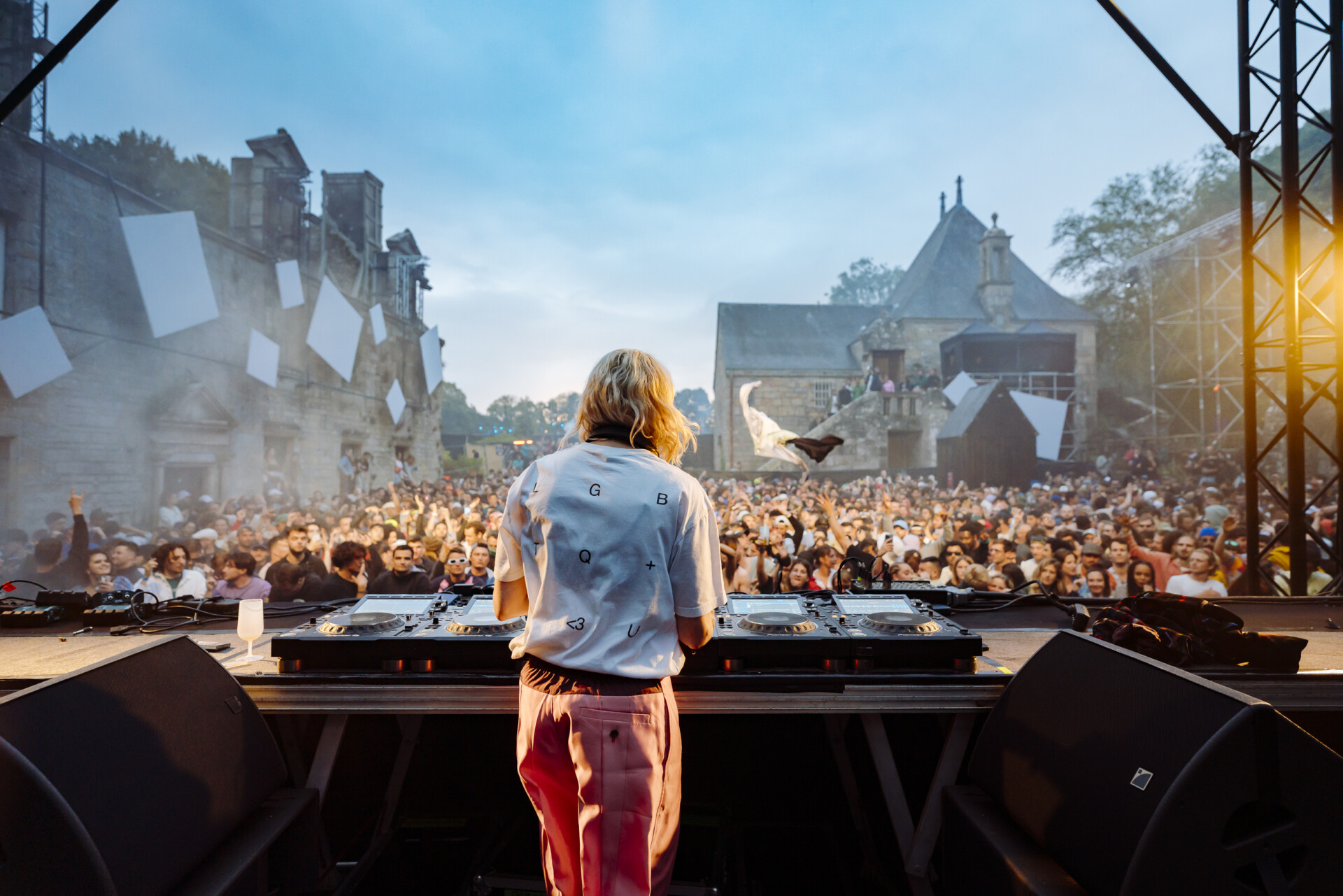
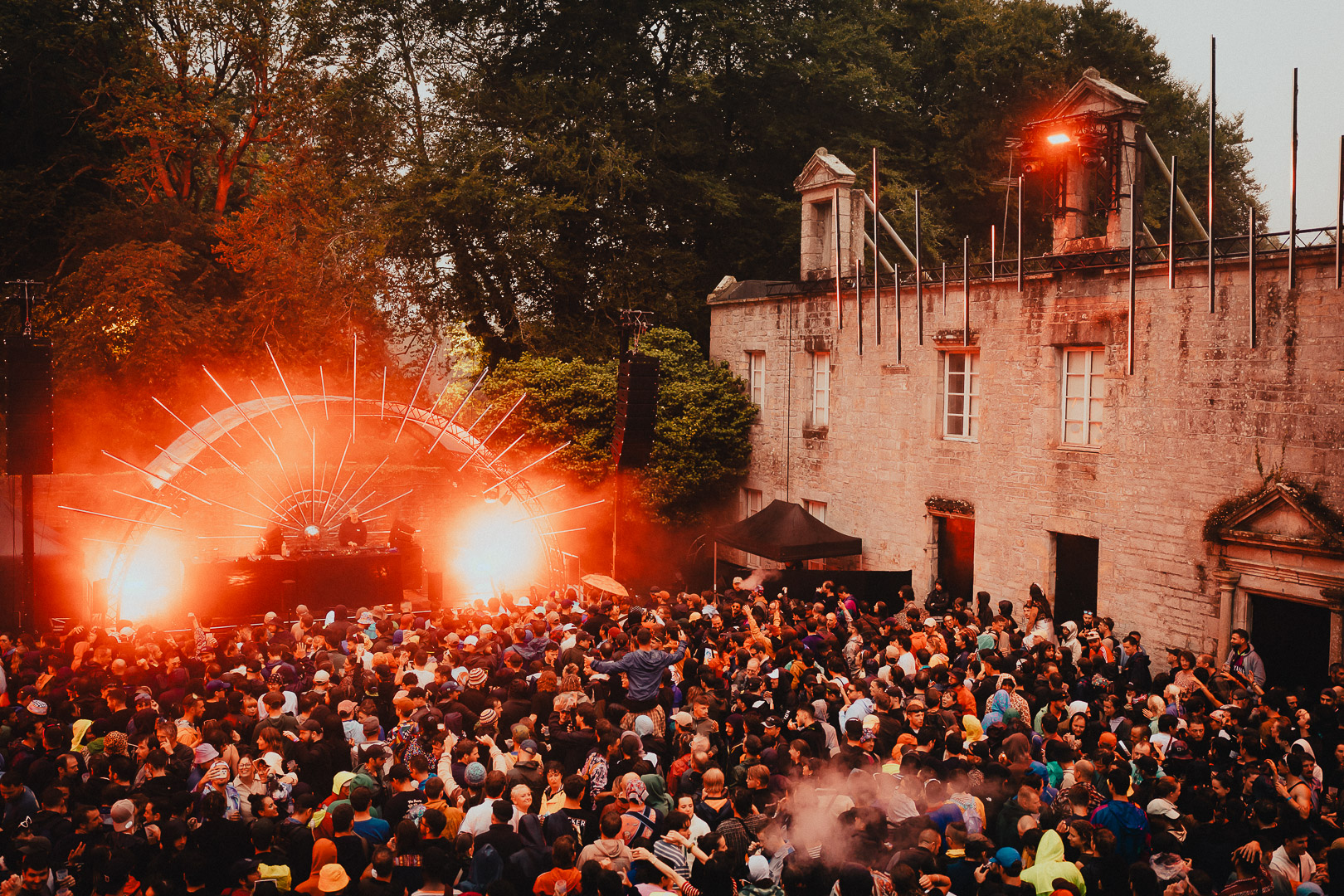
Another strong signal comes from the transformation of the Keroual site itself. The manor remains, of course, the symbolic heart of the festival, its most memory-loaded setting, almost its mental landscape. But Astropolis is also using this anniversary to subtly alter the grammar of the place. First by opening the main Saturday night from 6pm, stretching the celebration across 13 hours. Then by adding a new stage, the Dub Corner, dedicated to dub and bass music and powered by the highly respected Sinai Sound System. Again, this is more than a programming detail. It says something meaningful about how Astropolis sees itself: not as a techno sanctuary closed in on itself, but as a space able to reactivate different branches of sound system culture, the rave continuum, and bass-driven music.
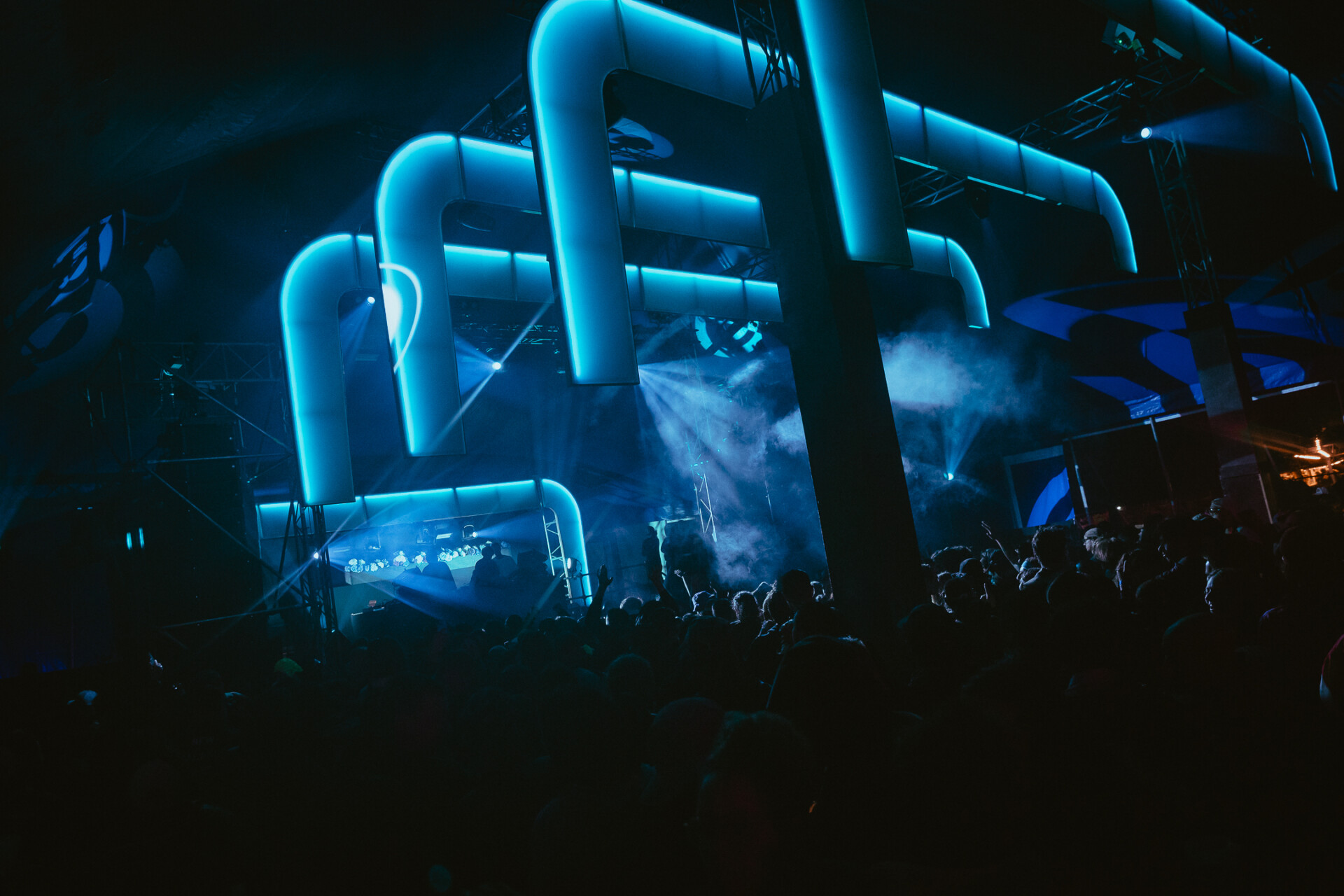
The return of a dub stage also feels coherent within the festival’s longer history. It is a reminder that Astropolis has never simply been a techno event in the narrow sense. For a long time, the festival has existed in the porous space between genres, practices, and tribes. Bringing in O.B.F, Charlie P, Darwin, Elisa Do Brasil, Kren Douar, and the Sinai crew for this new chapter restores a central place to a very physical, collective, and deeply political way of understanding sound: the sound system not only as immersion, but as another way of inhabiting the dancefloor.
It is also impossible to ignore Manu Le Malin, whose name remains inseparable from another side of Astropolis’ story: its harder, more radical face, loyal to the cathartic violence of certain nights. His Mekanik stage continues to bridge pioneers and newer generations, with Lenny Dee, Unexist, Ybrid, but also Cassie Raptor and Kilbourne. Again, this is not simply about honouring the past. It is about showing how an aesthetic long considered marginal remains alive precisely because it keeps mutating.
The 2026 edition quietly tells another story too: the place of Brest itself. Astropolis is not just a festival dropped onto a site. It is also a long-term relationship with a city, its venues, its habits, its loyal communities. For four days, Brest becomes less a backdrop than a territory crossed by different ways of living electronic music: from the Warm Up! at the Ateliers des Capucins, with Carl Craig and Mad Mike Banks, to the Cabaret Sonique entrusted to Octo Octa, and on to the harder nights of the Astroclub. On the scale of an anniversary, that dispersal matters. It stops the event from being reduced to one central spectacle and reminds us that a culture is also built through a plurality of formats, capacities, and audiences.
Then there is what the festival says openly, and which deserves to be taken seriously. In its own language, Astropolis insists on the dancefloor as a shared space of freedom, on the need to defend places where other ways of being together can still be imagined in a society that feels increasingly fragmented and brittle. It would be easy to dismiss that as routine festival rhetoric. That would be a mistake. After thirty years, continuing to frame things that way is not automatic. Many events now prefer to speak the language of lifestyle, image, or “experience.” Astropolis still speaks about collectivity, resistance, and freedom. That does not solve everything, of course. But in the current landscape, that vocabulary still carries weight.
In the end, what this 30th edition celebrates is not only the longevity of a festival. It is the survival of a certain rave imagination. Not as a relic. Not as folklore. But as an active force, still capable of reshaping itself without abandoning what made it possible in the first place. In 2026, Astropolis is not only telling the story of where it came from. It is also asking a very simple, very contemporary question: what do we still want to defend together on a dancefloor?
From July 2 to 5, in Brest and at the Manoir de Keroual, the answer will probably be sought where it has always been sought: in the sound, in the night, and in that very particular way some parties have of creating, however briefly, a shared idea of the common.