
No products in the cart.
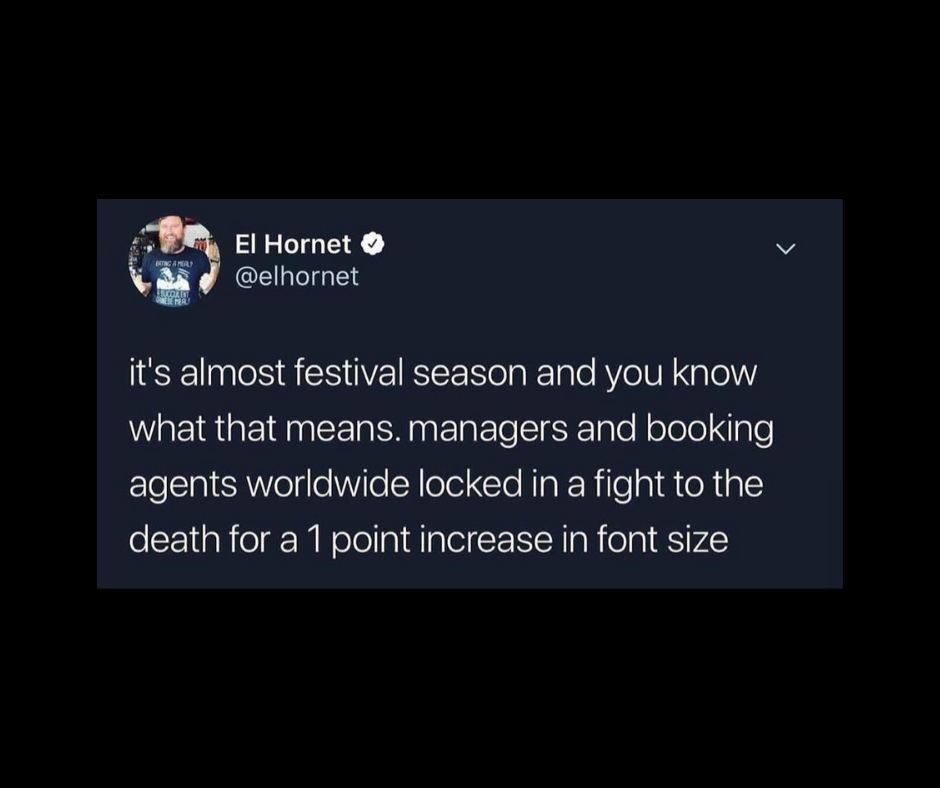
So what exactly is billing? Billing refers to the way artists are presented on a poster or an official lineup announcement. Order of names, font size, placement on the visual, reading direction from left to right or top to bottom. Behind this seemingly technical term lies a central tool for structuring artistic value.
Billing is not neutral because it organizes the audience’s gaze before the music even starts. It suggests who matters, who attracts, who deserves to be seen first. It is a silent staging, but a highly effective one, and one that comes with its own reasons (more or less justified…)
The historical and economic logic
Originally, billing responded to a simple necessity. In a music economy based on attendance, certain names provide reassurance, trigger ticket purchases and give an event a readable framework. Highlighting headliners helps secure an audience and position a festival or club within a specific landscape. It’s name-dropping, plain and simple.
Over time, billing has become a marker of prestige. Being placed at the top of a poster or benefiting from more visible typography is perceived as a career indicator. For artists, it represents symbolic recognition. For promoters, a way to showcase their ability to attract identifiable profiles. For bookers and managers, a negotiation lever on par with fees or time slots.
What billing actually produces (we asked promoters)
From a marketing perspective, billing makes a lineup easier to read. It creates reference points for an audience constantly solicited from all sides. It also allows established artists to consolidate their image and events to build credibility through association.
In our scene, where not everything is measured purely in numbers (yes, really…), billing acts as a symbolic currency. A better position can compensate for a lower fee, prepare a step up in status or serve as a reference for future bookings. This is not just about ego, but about a tool embedded in artists’ professional trajectories.
Tensions around billing
Billing is also one of the most sensitive negotiation spaces in the music industry. These discussions usually remain backstage, but they are constant. Name size, order of appearance, position on the poster… Every detail can become the subject of intense debates between promoters, bookers and managers.
When headliners appear at the top and local artists are pushed to the bottom in alphabetical order, it is almost never accidental. These choices reflect power dynamics, concessions and economic trade-offs.
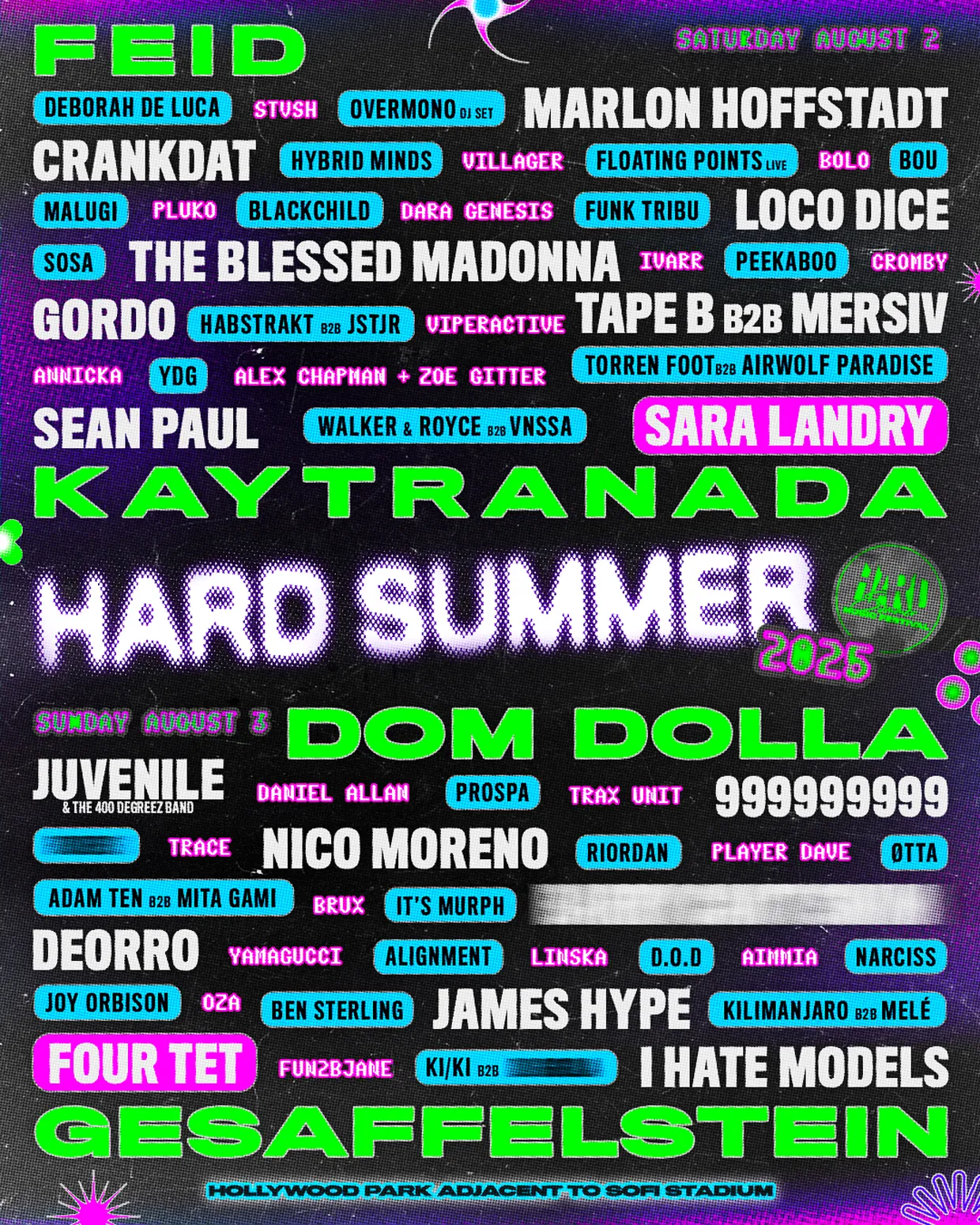
The episode involving Deborah De Luca, who withdrew from the Hard Summer festival due to the placement of her name on the poster, made visible practices that are otherwise widespread.
“I’m very sorry, guys! But they put my name smaller than others, it was not dignified for my career. I asked to change it and they told me no. It was not my choice. I’m very sad, but I’m sure it will be a crazy festival and you will have a lot of fun.”
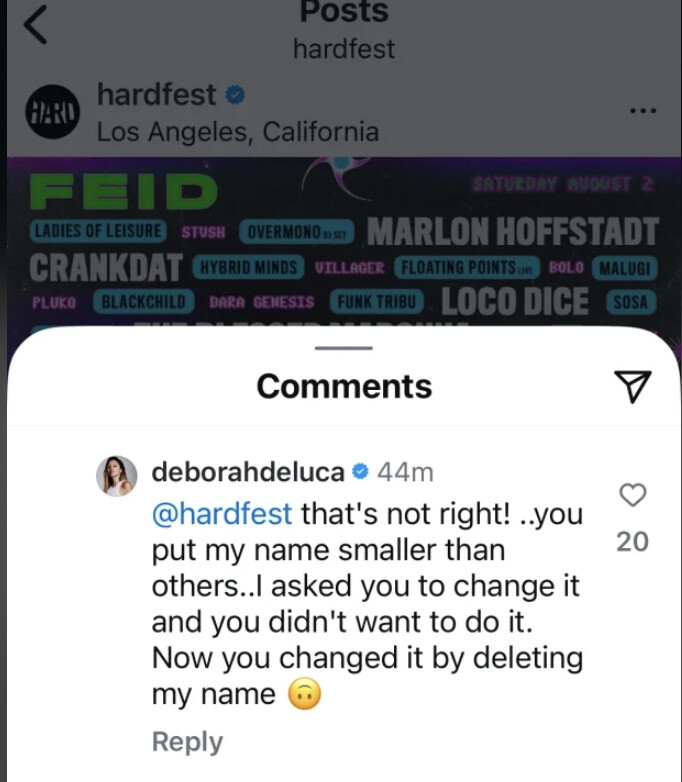
The reactions that followed revealed a persistent double standard. Similar demands made behind the scenes by male artists are often perceived as professional (trust us, we have witnessed epic email battles), while public statements by women are more easily dismissed. This alone shows the impact billing can have on a (commercial) career.
Here is the original disputed poster:
Billing as a tool for manufacturing value
Beyond recognizing existing notoriety, billing is also used to create it. Some promoters deliberately place artists they book or manage at a level of visibility equivalent to established headliners. This choice is not always (almost never) based on scene dynamics or a desire to highlight local talent.
This can be a valuation strategy. By creating the appearance of symbolic equality on a poster, billing installs a perception of status. In the eyes of audiences, programmers and media alike, this visual hierarchy becomes an implicit signal of artistic value.
Once this image is established, the artist can be presented elsewhere under this new positioning. Billing then becomes a silent argument to justify more prestigious time slots or higher fees. This mechanism blurs the reading of posters and turns a communication tool into a financial lever.
Billing directly influences how music is consumed. It encourages a name-driven approach rather than engagement with a global artistic proposition. It reduces space for curiosity and reinforces the idea that some artists are inherently secondary.
This hierarchy tends to reproduce itself. The more visible an artist is, the more they are booked, the more their position is consolidated. Conversely, emerging or local artists often remain confined to marginal placements, even when they actively contribute to a scene’s identity.
Under economic pressure, promoters are encouraged to secure their lineups with already established figures. The result is often an homogenization of lineups and an increasing difficulty in renewing artistic propositions.
Billing is not going away. It is deeply embedded in the economic and symbolic models of the music industry. But it can be questioned. Some events experiment with non-hierarchical posters (A-to-Z for example), late announcements, or lineups built around concepts rather than names.
These alternatives do not claim to erase existing inequalities, but they shift the perspective. They remind us that billing is not a natural law. It is a construction that can and should be observed, discussed and, why not, re-invented.