

No products in the cart.
DJs: Credit Isn’t Optional
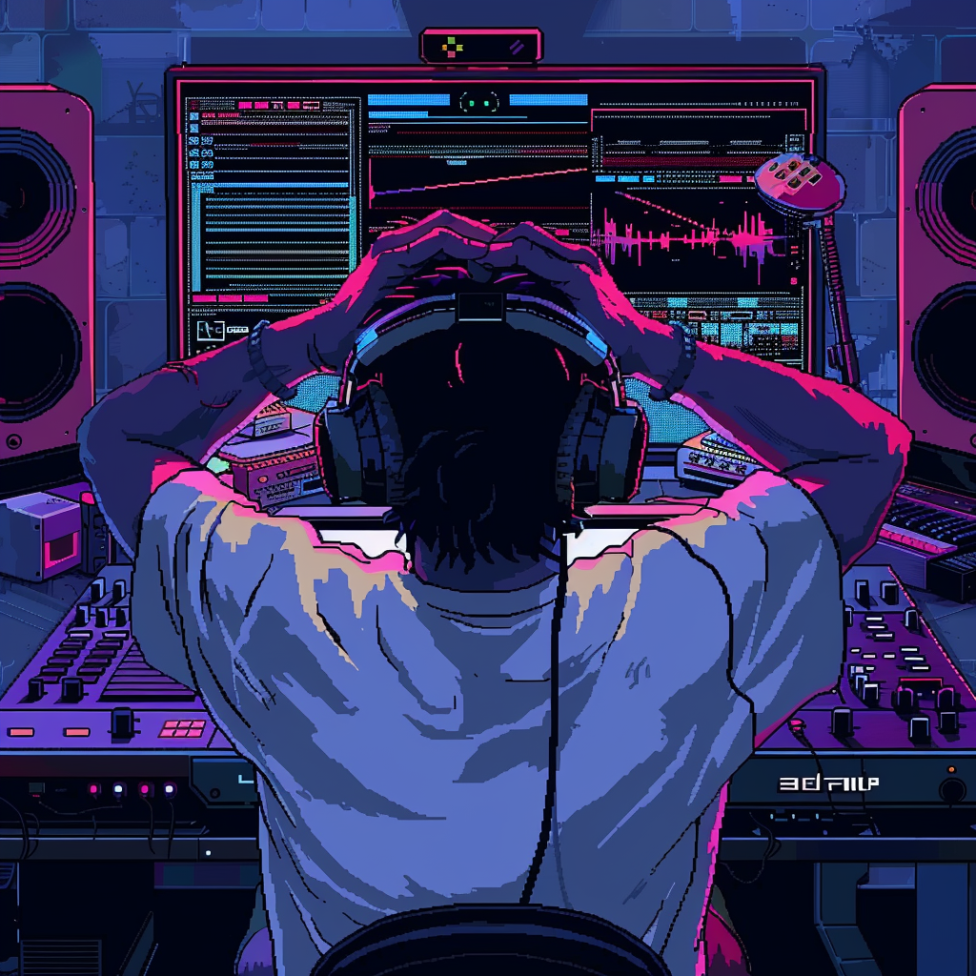
An hour of digging will never outweigh the hundreds of hours spent in the studio by those who actually make the music.
“Track ID?” has almost become a refrain under DJ videos: a kind of ritual where the audience demands, in the name of curiosity and memory, what should already be given, the name of the track, the identity of the producer. Yet it often feels like an obstacle course.
One might think this is a peripheral issue. But in reality, it cuts to the heart of power dynamics, artistic recognition, and the economy of the scene. When a DJ plays a track without citing its author, they literally erase part of the creative work, making invisible the person who shaped the sound. It is, whether intentional or not, an act of appropriation.
Ada Kaleh’s words and the techno system
The essay “Ghost Sounds: how techno DJs feed on other people’s music” by Ada Kaleh describes with clarity what happens behind the scenes: a predator-prey dynamic in which star DJs hoard unreleased tracks, never crediting them, because rarity — exclusivity — is their capital. Producers send their demos, hoping for support, but too often remain invisible, while their music becomes the product of a promoted DJ. The cycle is simple and brutal: the producer creates, the DJ consumes, the agency books, the producer disappears.
This phenomenon is reinforced by agencies, who feed the same careers on the same platforms, recycling festival lineups over and over. By repeating the same names, by imposing a centralized aesthetic, they lock musical diversity into a safe, pre-formatted version, while the creators at the base are reduced to an underground role — sometimes invisible, but always crucial.
DJs heavily booked in the techno/pop-TikTok ecosystem are often praised for their “curation” when they play tracks from emerging producers — without ever citing the “source.” Meanwhile, less visible artists accumulate streams, spend countless hours in the studio, but gain little recognition. We also know the practices of ghost production, exposed by producers working behind the scenes for big electronic names: tracks paid for “turnkey” but denied in the official credits. UKF
Finally, there’s a more structural case: some labels or agencies sign producers with promises, but release the music under the name of a star artist, using the word “collaboration” to mask the operation. Credit is reformatted, reassigned, under the lure of signatures, fame, or gigs.
Three scenarios to distinguish
To avoid falling into black-and-white accusations, we need to nuance:
Forgetting or negligence: a DJ who fails to credit out of distraction, laziness (yes, you know who you are!), or fear of having their tracks “stolen.” The harm exists, of course, but it isn’t always intentional.
Career strategy: some DJs build their image on mystery — “this is unreleased, no one else has it” — while playing other people’s tracks without credit, and reaping the benefits.
Institutional manipulation: “official” ghost production, opaque contracts, fake collaborations. Here, the problem goes beyond individual ethics — it’s the system itself that exploits.
What can we do?
If we want to rebalance this broken ecosystem, here are some levers. Because yes, we complain, but we’re also trying to propose solutions:
Join rights organizations (SACEM, BMI, PRS…): this is the minimum for ensuring legal protection of the work.
Systematic transparency: media, clubs, and festivals should require DJs to provide tracklists. With our residents, we’ve done it from the start: it feeds our playlists, values producers, and changes habits.
Educate the audience: encourage listeners to ask “who’s behind this sound?” rather than “what’s that obscure hit?” Curiosity gives credit.
Call out abuses: publicly name agencies, labels, and DJs who reappropriate without credit. It’s fragile, but necessary.
Reject ego: keep the digger spirit. Even if you don’t want to give all titles, at least mention the artist or label.
Credit is not a favor, it’s a foundation. If a music scene claims to be inclusive and forward-thinking, it cannot run on theft or appropriation, but on mutual visibility. DJs are not above studio work, they are its messengers. When you erase the one who makes the sound, you create a void between the jungle of playlists and the heart of creation.
Without credit, without recognition, the scene dies. And the person we applaud on Saturday night, if they are only a relay of work that isn’t theirs, loses all legitimacy. Time to remember: DJs, credit isn’t optional.
Tagged with :
Ada Kaleh AFEM agences aslice crédit musique DJ DJ ethics Electronic music exploitation musicale Festivals ghost producer ghost production House labels music credit musique électronique producer rights producteurs SACEM scène underground techno techno scene Track ID tracklist transparency underground culture