

No products in the cart.
French Electronic Music Added to France’s Intangible Cultural Heritage List, First Step Toward UNESCO Recognition
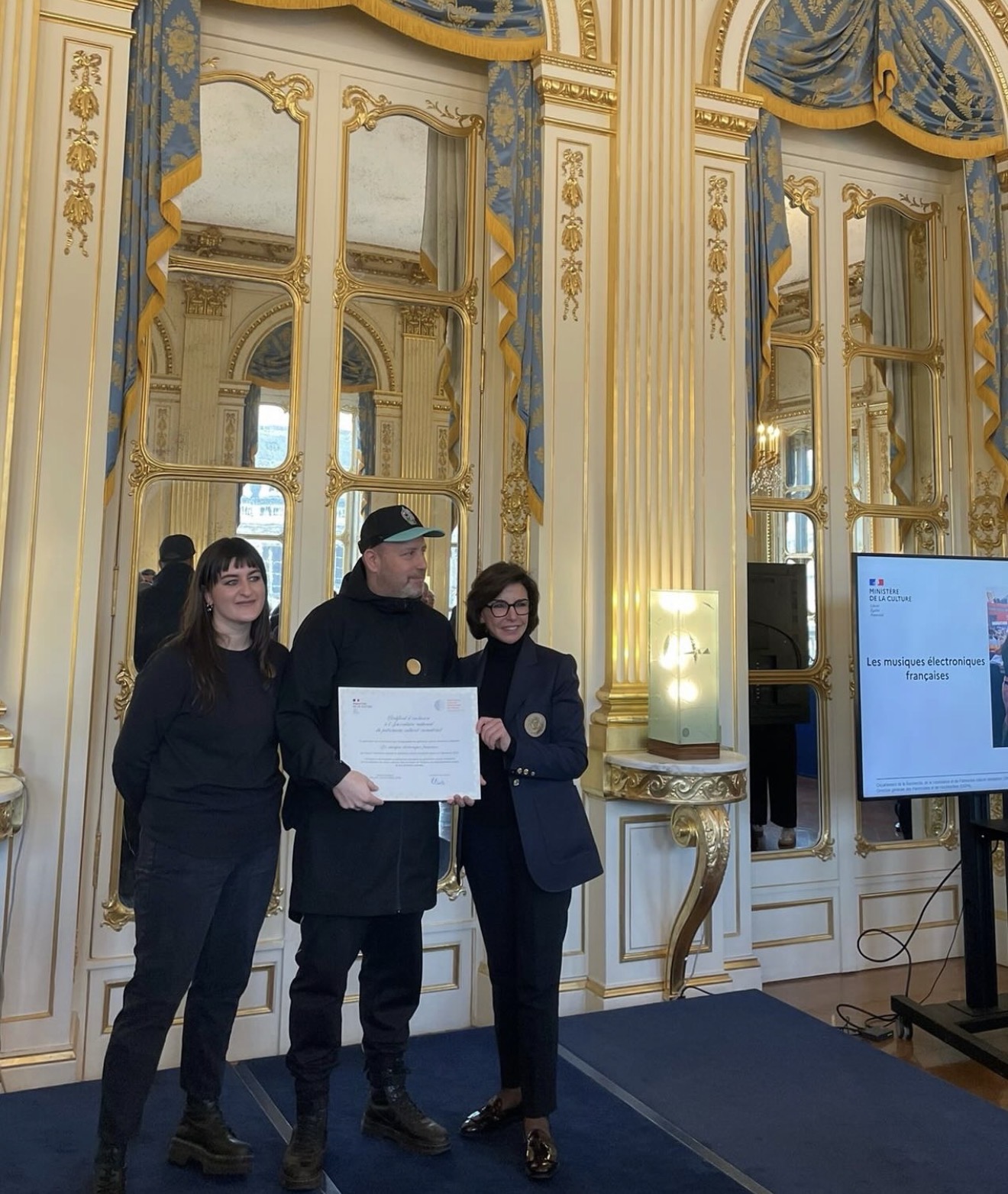
The news is spreading like a small collective comeback: French electronic music is finally making its way into the “intangible cultural heritage”, the first step toward UNESCO recognition. After decades of being treated like a suspicious subculture, hearing the word “heritage” associated with our dancefloors is honestly pretty exhilarating.
And then there’s the political sequence that poured fuel on the fire. On June 21, 2025, Emmanuel Macron said he supported a French Touch bid for UNESCO intangible cultural heritage, in an interview with Radio FG—complete with the usual competitive punchline (“inventors of electro”, “French touch”, etc.). In the wake of that, Technopol and Radio FG announced they were working on getting “French electronic music” added to the national inventory, an unavoidable step before any international application.
On paper, it all looks like a victory. On the ground, it’s more… ambivalent.
Because the real question isn’t “is it cool?” (yes), but “what does it actually change?”. And that’s where reality often feels like a SYNC button that doesn’t work: you can celebrate a scene, photograph it, put it on display—while letting it die from things other than a lack of prestige.
The most brutal example is almost funny in how symptomatic it is: Techno Parade 2025 was cancelled for lack of funding. We’re talking about one of the biggest public markers of electronic music in France—a massive showcase that, over the years, has claimed wild numbers (kilometers covered, floats, DJs, millions of attendees). And yet: not enough money to keep it standing. “Heritage” starts to sound like a premium sticker slapped onto a club door that’s closing.
That’s why the concept of intangible cultural heritage (ICH) deserves to be recalled for what it is—and what it isn’t.
ICH isn’t a medal or a hall of fame. In the UNESCO framework, it’s about identifying, documenting, protecting, and passing on living practices. In France, the National Committee for Intangible Cultural Heritage validates requests for inclusion in the national inventory and also gives an opinion on applications to the UNESCO lists. And above all, a UNESCO application is conditional on prior inclusion in the national inventory. In other words: if you want to play the “UNESCO” game, you first have to exist administratively as a practice worth safeguarding.
In theory, that kind of recognition can open doors. Berlin has shown it: when techno is recognized at a heritage level, you can hope for stronger protections (especially against urban development pressures) and a better ability to defend venues. It shifts from “simple nightlife entertainment” to something we’re supposed to preserve—like a cultural ecosystem.
But that’s exactly where the discomfort begins, because in France, partying lives in a permanent political schizophrenia.
On one side, we patrimonialize. We stage big ceremonies, exhibitions, official playlists, photos of DJs who “embody modernity”. Electronic music becomes a convenient emblem: it’s young, exportable, it screams “France shining”, and it sells perfectly in a press release.
On the other side, part of the scene remains criminalized, monitored, repressed—sometimes violently—especially as soon as it steps outside “clean” institutional frameworks. There’s a continuum of repression targeting raves and free parties, with recurring references to crackdowns on unauthorized gatherings and legislative tools that, for decades, have framed and punished these practices. The “IN” party is applauded when it serves attractiveness and postcard culture. The “OFF” party is still, far too often, treated as a public order problem (hi Bruno).
And in the middle, there’s the economic reality of venues.
Even when we’re talking about “recognized” clubs, the core issue isn’t symbolism—it’s material survival. Rents go up, land pressure pushes fragile venues out, costs explode, and prices follow. The result is a slow gentrification of nightlife, with a cruel paradox. A culture born on the margins (queer, racialized, precarious, alternative) becomes a premium urban product—very, very white—filtered by price, codes, door policies, and communication. And the same people who rave about nightlife “heritage” sometimes, without even realizing it, contribute to its social sanitization.
That’s also why this whole “heritage” sequence should be met with tenderness, yes—but also with suspicion.
Because we know the movie: French Touch gets waved as a national flag whenever it’s useful to look modern, while in the real life of clubs, labels, collectives, “very little actually moves”. This contradiction has been spelled out very clearly already by La Pépinière (soon Volte Face) and Paradis Fiscal. It’s an image frenzy, a surface-level recognition—and behind it, structures fighting for very basic things (paying teams, keeping a lease, soundproofing, securing, welcoming people properly, surviving).
Even when the state creates recognition schemes (like the “Club Culture” label), the question stays the same: does it translate into rights, protections, resources—or does it remain a nice formula? The Observatoire des politiques culturelles article puts it quite well: patrimonialization can turn into museumification, and recognition can coexist with the very concrete weakening of structures.
And then there’s another discomfort—more internal, more “scene”—the one we talk about less because it bruises the ego: what do we, ourselves, do with this recognition?
That’s maybe where it gets genuinely ironic. Because you can already see people celebrating, sharing, cheering, self-congratulating—while letting slip, day to day, issues that are far more urgent and far dirtier to deal with: everyday and structural racism, LGBTQIA+ phobias, sexual and gender-based violence, toxic power dynamics, impunity, organized silences. All of that still eats away at scenes, crews, afters, backstage spaces. And you can’t claim “heritage” on one side while staying cowardly about ethics on the other—especially when you never see those people on the real ground of activism (and surprise: it’s not on Instagram).
The truth is, celebrating on Instagram costs nothing. Building safer spaces costs time, money, conflict, self-questioning, sometimes exclusions, procedures, training, care, consistency. In short: politics in the noble sense—the kind that happens without cameras.
So yes: it’s good news. Truly. A scene that was demonized finally being treated as a cultural practice in its own right matters. And we have every right to savor the symbol—especially when we remember where it comes from.
But if that’s all it is—if it stops at a “heritage” stamp and a couple of triumphant sentences—then it will be nothing but smoke and mirrors. We’ll have won a word, and lost the real.
If we want this recognition to mean something, it has to translate into very concrete things: protecting venues against real estate pressure, a long-term funding vision, a less paranoid and more proportionate relationship between authorities and events, support for local scenes and not just national showcases, spaces for free parties, and a minimum coherence between what we celebrate and what we repress. On the “ecosystem” side, we also need to stop confusing heritage with a postcard, please: living heritage is protected by letting people live it—not by turning it into a press kit.
Intangible heritage, in the end, isn’t “French Touch in a museum”. It’s the right to keep making party culture—here, now—in venues that hold, with teams that don’t burn out, in spaces that protect their publics, and in a culture that doesn’t sacrifice its values for the first ministerial selfie. Whether that’s with Dati or Lang, for that matter.
In short… nightlife deserves better than honor without resources. And so do we.