

No products in the cart.
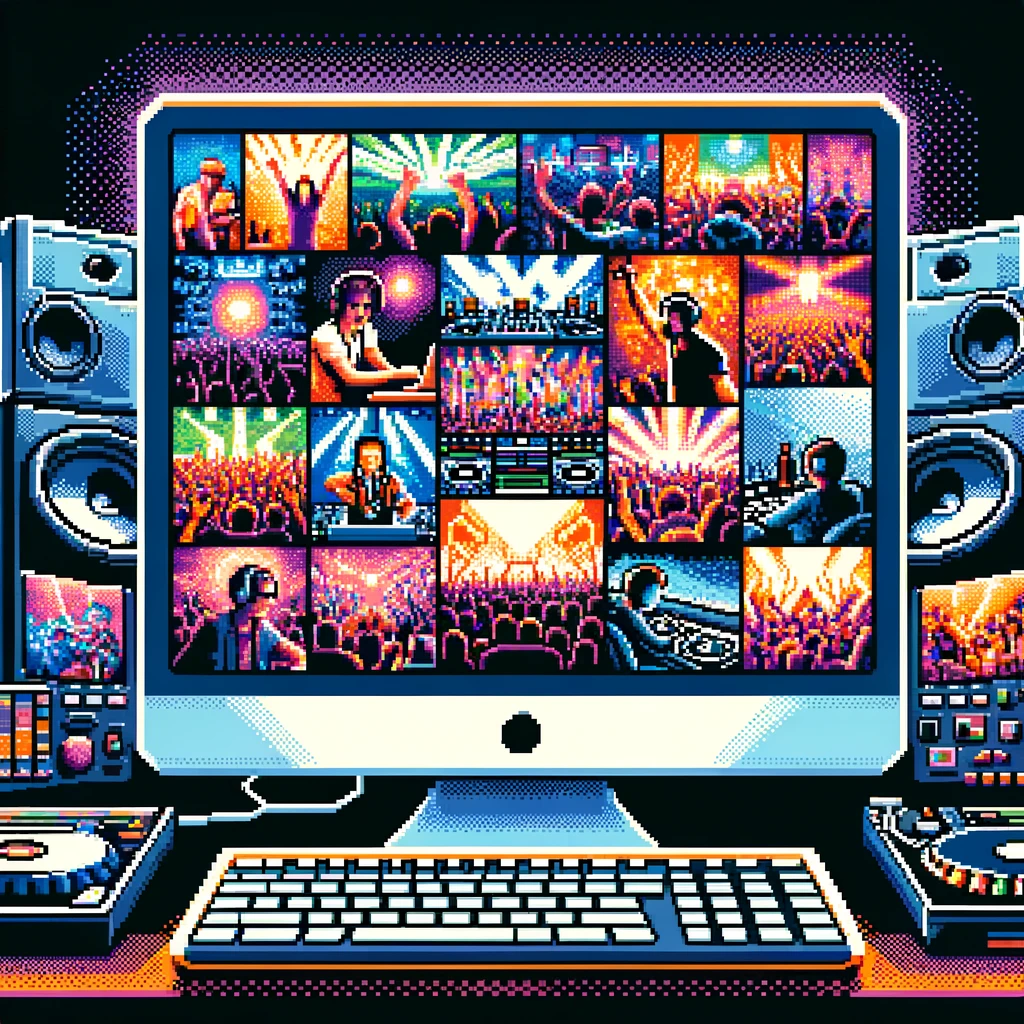
Social media has profoundly transformed the way we relate to music, information, and culture as a whole. It has accelerated rhythms, shortened formats, and simplified content. Everything is expected to be fast, accessible, and immediately understandable.
This shift has consequences. As we consume shorter, fragmented content designed to capture attention within seconds, our expectations have evolved — or more precisely, they have gradually decreased.
In music journalism, for instance, space for in-depth analysis has noticeably shrunk. Long-form articles still exist, but they circulate less. They require time, focus, and effort. In contrast, short formats — reels, clips, headlines — are consumed in seconds. They inform quickly, but leave little room for nuance or deeper understanding. Music becomes a flow rather than something to explore.
The same logic applies to how we listen.
Platforms and social media increasingly shape discovery. We gravitate toward familiar tracks, the ones we have already heard, the ones that perform well. In this context, surprise becomes rarer. When a DJ moves away from expectations or takes risks, the response can be more restrained. Audiences are less willing to be challenged, less inclined to follow a musical narrative that takes time to unfold.
Listening becomes a matter of recognition rather than discovery.
At the same time, the way careers are built has changed. Image now plays a central role. Visibility — measured in followers, views, and engagement — has become a key factor. In some cases, it even precedes the artistic work itself. Some artists build an audience before developing a strong musical identity.
This shift affects the entire scene.
DJing is no exception. Technique, selection, and timing remain essential, but they are less visible than online presence. A large following can now open doors, regardless of actual performance level. The focus shifts from the performance itself to how it is represented.
Meanwhile, the way we experience nightlife is also evolving.
Smartphones, once discreet, are now omnipresent. People no longer document moments just to remember them, but to produce content. Each night becomes something to capture, edit, and share. The experience is sometimes shaped by how it will appear online.
In this environment, the line between experiencing and performing becomes increasingly blurred.
Finally, the role of criticism has also shifted. Discussions around music often take the form of immediate, polarized reactions, driven by highly engaged communities. Nuanced, constructive critique has less space to exist. It requires time, while platforms reward speed.
Social media has not eliminated standards. It has reshaped them — fragmented them, and in some cases, diluted them.
The question is not whether social media is good or bad. It is what it does to the way we listen, observe, and judge.
And perhaps, what we are still willing to expect.