

No products in the cart.
Hot Take : Reclaiming the scene from those who only come to admire themselves
As the electronic music scene became institutionalized, professionalized, and globalized, another dynamic settled in: that of the ego. An omnipresent, multifaceted ego, rarely questioned and sometimes worshipped, which today shapes power relations, the night-time economy, and even the way partying itself is experienced.
This issue does not concern DJs alone, even if they are its most visible figures. Ego runs through the entire chain: artists, promoters, agencies, media, and audiences. As long as it is only challenged at the margins, nothing really changes. As long as it is not structurally questioned, the scene continues to lose what once made it strong in the first place: the collective.
And that is the goal of this article: to oppose ego to community, because only the community will save our scene.
Originally, the DJ was not an icon. He or she was a club employee, serving a venue and its audience. Their role was not to be watched, but to make people dance. Music mattered more than the person, the experience more than the individual. This relationship gradually reversed when the DJ became a market value, an identifiable product, monetizable and exportable.
From the moment an artist becomes bankable, the rules change. Music must meet market expectations, image becomes a strategic tool (we invite you to reread our Hot Take on the quest for perfect control on social media), and values—when they exist—become negotiable or interchangeable depending on who you are talking to. Artistic risk turns into an economic threat. This shift profoundly alters the relationship between the dancefloor and the booth, and between the collective body and the individual put forward.
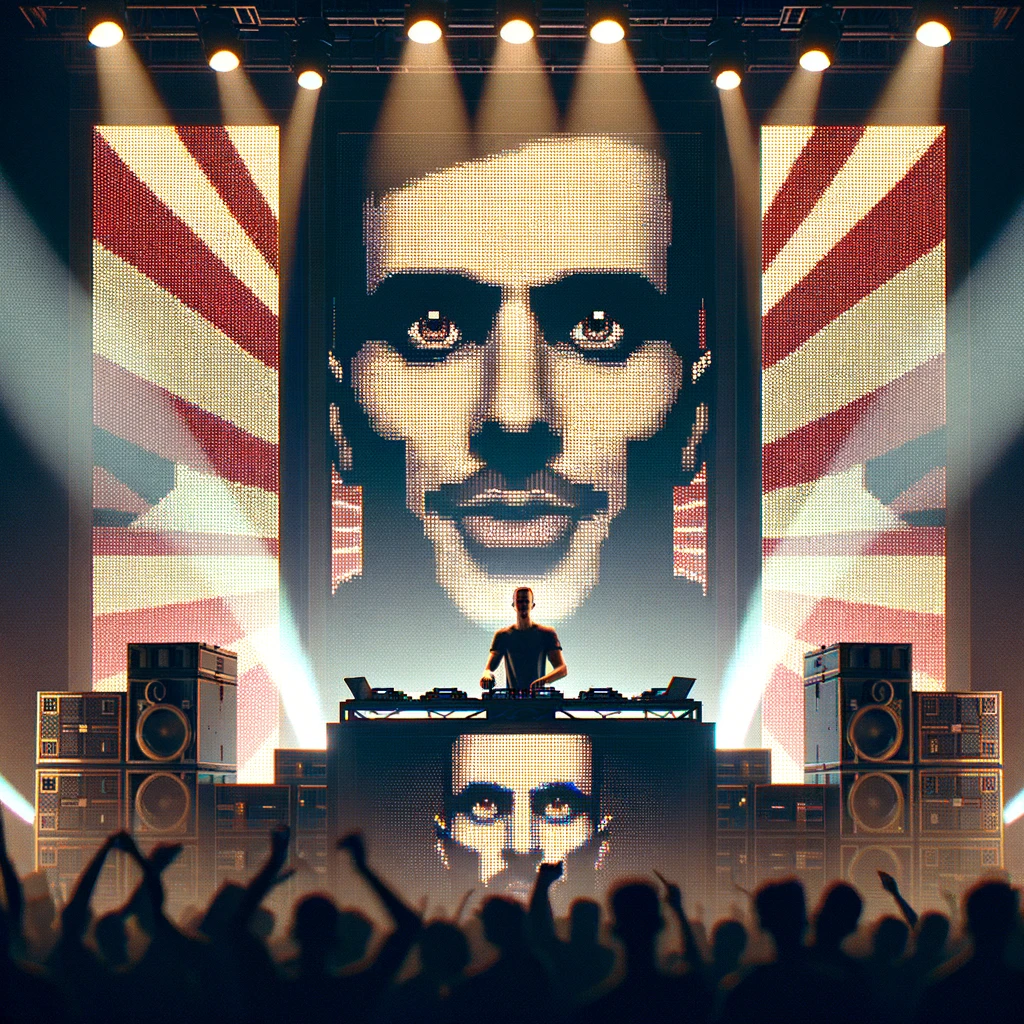
This transformation is also visible in the physical space of clubs and festivals. Elevated stages, barriers, and the systematic distancing of the DJ contribute to a form of sacralization that is far from neutral. The message is clear: dancing is no longer central, but the person who makes it happen is. While some setups are justified by safety concerns, particularly at festivals, their generalization in clubs is more symbolic than necessary.
Putting the DJ lower again—both literally and theoretically—is not an attack on artists. It is an attempt at rebalancing. Refocusing the party on the dancefloor, on movement, on connection. And, mechanically, pushing aside those who are only there to be seen.
If you have ever been to Fabrik in London, you know the DJ is almost hidden behind the decks, which are raised. The no photo, no video policy was already in place long before it became a marketing tool or a necessity.
The question of money is inseparable from this reflection. The explosion of fees has deeply altered the ecosystem. When certain clubs or festivals decide to cap fees, as was recently the case at Trésor West, they are not making a neutral economic choice. They are setting a political framework. Limiting fees means slowing speculation, breaking the bidding war between venues, and forcing programming to be rethought beyond notoriety.
Voir cette publication sur Instagram
This type of decision has a direct consequence: it forces a selection. Artists who are present only for visibility or prestige gradually disappear from lineups. What remains are those for whom music, context, and meaning still matter.
But ego does not stop with artists. It is also at work among certain promoters. Those who place themselves in peak time, those who underpay DJs, technical crews, and staff while maximizing their margins, those who rely long-term on unpaid labor without ever questioning it. The promoter’s ego appears when an individual confuses producing a party with being its center.
Agencies also play a key role in this mechanism. Certain practices are now well known. Forcing the booking of multiple artists to access a headliner, driving prices up by organizing artificial competition, applying higher fees to new venues or collectives, establishing unbalanced—sometimes contemptuous—relationships. Behind these strategies lies a vision of the scene as a market to be controlled rather than an ecosystem to be nurtured. We won’t hide it: there are WhatsApp groups, email chains, or managers and bookers who coordinate together on artists’ fees.
Media outlets are not spared by this logic either. When they demand exclusivity to prevent others from working, when they charge small artists or collectives for visibility while rolling out the red carpet for already established figures, when they fail to specify that content is sponsored, they contribute to an artificial hierarchy. Media ego emerges when mediation becomes judgment and a lever of power.
Finally, the audience itself is not outside this drift. A portion of clubbers and festivalgoers now come less to experience the party than to document it. Smartphones raised, formatted content, disguised partnerships, promotion of problematic artists or events for the sake of audience reach or revenue. By turning the scene into a backdrop and the party into an economic opportunity, this audience/influencer contributes to making electronic culture ever more bankable, ever smoother, and ever more disconnected from its history and the communities that carried it.
Ego, at every level, functions like an extractive force. It does not create; it accumulates. It does not share; it centralizes. It does not build the commons; it produces individual success. Yet a scene only survives if it rests on the opposite: shared spaces, collective memory, circulation of roles, and a certain form of self-effacement. In this context, community is the opposite of ego.
Reclaiming the scene from those who look at themselves too much is not about rejecting ambition or recognition. It is about reminding ourselves that the party was never a mirror, but a space for meeting, living, and shared joy. And without this shift in perspective—from the individual to the collective—the scene will keep shining… while slowly emptying itself of substance.