

No products in the cart.
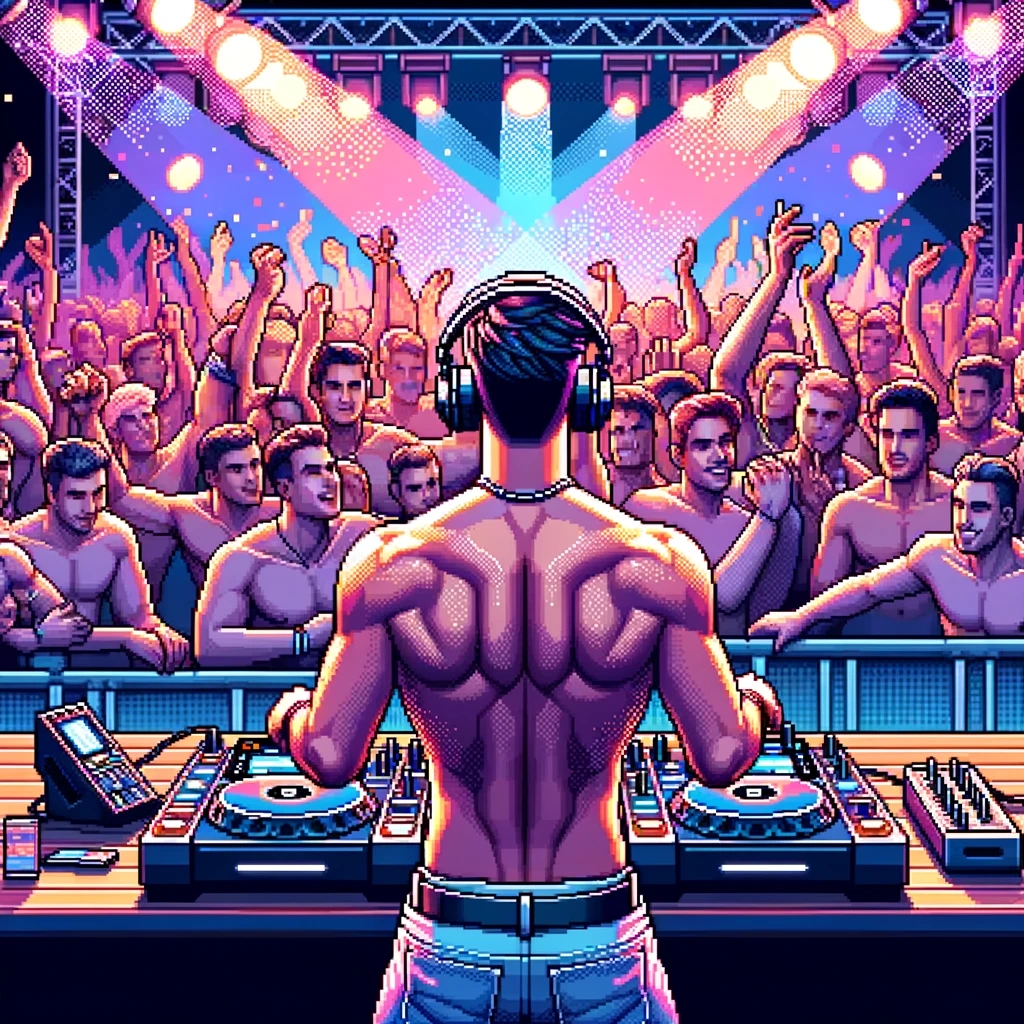
Is hard techno the new EDM? And why it keeps denying the far-right in its parties
Yesterday at the PEW (Paris electronic week), the conference on hard techno ended up spiraling a bit and left us worried. Voices were raised, and the atmosphere turned tense. I’m going to tell you about it.
To clarify: tomorrow I’ll tell you about the conference where I spoke on MusicToo, and later about the one on slowing down in the age of capitalism. But let’s stay with this one for now.
EDM: a dirty word?
First, let’s agree: when we talk about EDM, we’re talking about the big room of the 2010s. And it’s not an insult. It was a mainstream scene that made people happy, a stepping stone to other types of music. The conference gave me the impression that some of the speakers didn’t have that memory (they were a bit younger too 🙂 ).
LESSSS, DJ and producer, explained that they could allow themself, in front of a hard techno crowd, to play other styles without being judged. But that’s exactly what EDM used to do: blending pop, rap, country into one euphoric whole.
Pre-recorded sets: an old story
Another debate: planned sets. SOMNIAC ONE stated that pre-recorded sets were everywhere in festivals like Qlimax. LESSSS added that they had to, like others, submit their tracklist in advance to avoid overlapping tracks. The result: no improvisation, no reading the dancefloor. A performance, not a set. Afrojack told me exactly the same thing in an interview at Electrobeach 2012. The hard techno audience, just like the EDM one back then, comes for the tracks, not the DJing experience.
The taboo subject: the far right
Then came the sensitive point: the presence of the far right. I had told the moderator, Tommy from Technopol, that I intended to bring it up (for transparency). The answers were disarming:
“Maybe that’s just in France.” from the non-French speakers.
“We need to stop hating each other, everyone is welcome.” from the French.
Total denial.
When Leah, a Belgian host on GIMIC, asked a question mixing women’s safety and the far right, the discussion obviously shifted to women’s issues and erased the far right. I then decided to ask my question, a bit shakily (strangely, I get very anxious speaking in public, even though it’s my job):
“Regarding the question about the far right, you mentioned ‘stop the hate,’ but the only hate I see comes from the far right.
We are all white here, but if you talk to Black people or LGBTQ people, they don’t want to be around those people because it means they are not safe.
And I’m not saying this lightly.
I work with other bigger journalists on the presence of the far right in hard techno parties, and it is there: in the crowd, among promoters, even with some club owners.
Don’t you think that stating more clearly your willingness not to have those far-right people in your parties could change things?”
The response? A kind of irritation (my question wasn’t a personal attack but a reflection about the hard techno scene as a whole):
“But what do you actually want us to do? If we talk about this, we have to talk about everything.”
No. Precisely no. Because this problem has an immediate consequence: it makes minorities invisible or vulnerable. Some people no longer go to these parties because they don’t feel safe or welcome.
Why taking a stand matters
Taking a stand isn’t “excluding,” it’s saying clearly: we do not accept ideologies that threaten our audiences. Words are already a filter. Refusing to say them means protecting the comfort of those who can afford to say “everyone is welcome.”
The audience also pressed: who owns the hard techno festivals and agencies? Not that they are themselves far right, but their privilege blinds them. And as long as we keep our eyes closed, the people directly targeted – queer folks, racialized people – know they cannot “party together.”
The full video will be out soon. It should be watched before criticizing. But one thing is certain: the debate has only just begun.