

No products in the cart.
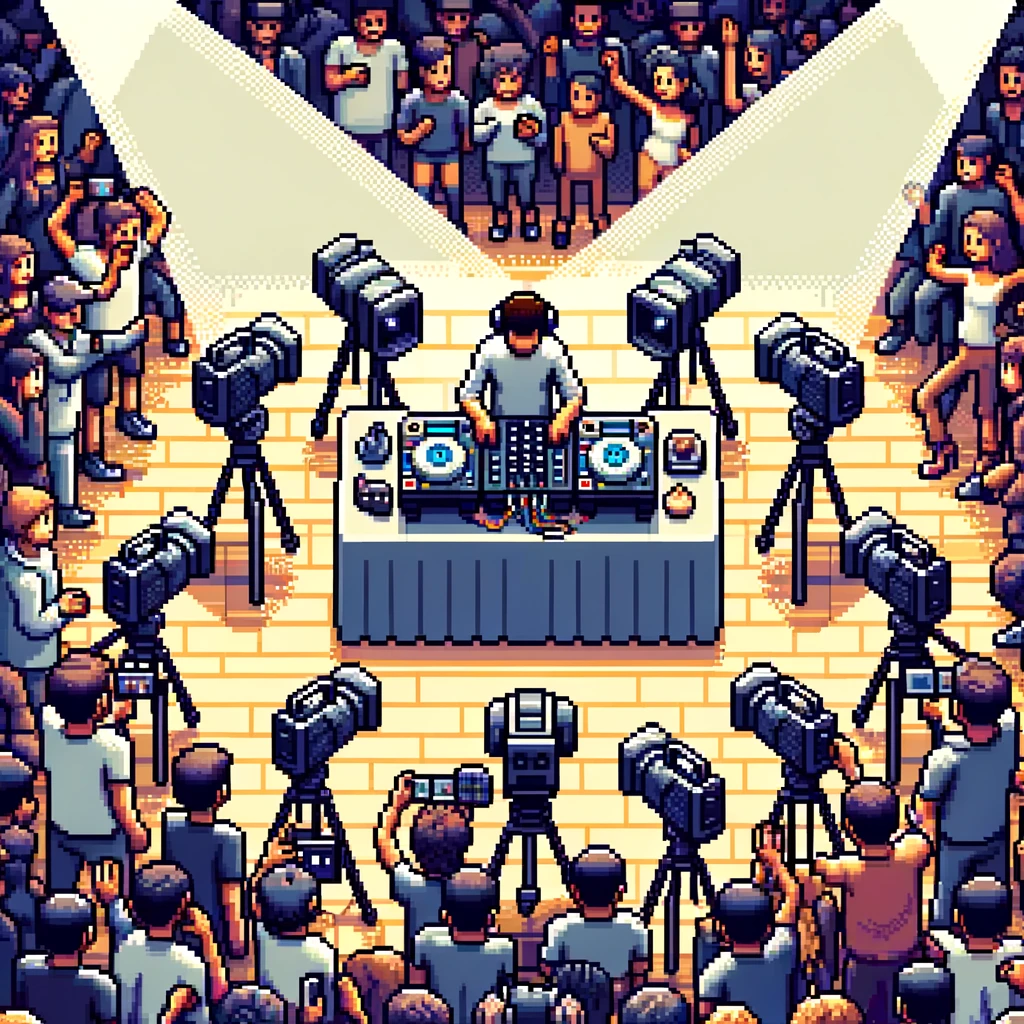
Long livestreams don’t lie
The way we consume electronic music has radically changed over the past ten years. Back in the days of Be-At TV or DanceTrippin, you could watch entire sets from your couch, sometimes four or five hours straight. The experience wasn’t clean: shaky cameras, uneven video quality, but the essence was there. You could see a DJ build their story over time, a crowd evolving with them, the energy circulating.
Then came the reign of the short format. Boiler Room and Cercle set new standards: one hour max, spectacular locations, hyper-polished images. Very quickly, livestreams stopped being a tool for documentation and became a product tailored for social media — and above all, for aggressive marketing. And what we gained in aesthetics, we lost in truth.
Today, livestreams hardly exist as a space of freedom. They’ve merged into the logic of social platforms: capture a strong moment, a drop, a photogenic instant. The DJ set becomes content, designed for algorithms and fast consumption.
Most managers know it: what’s being asked are one-minute clips, not marathon sessions. Some even dictate the framing (true story): less crowd, more focus on the DJ, as if the artist’s ego should outweigh the collective energy. Control has overtaken spontaneity.
Yet DJing was born from improvisation. The magic of a set comes precisely from what escapes the artist: a technical glitch, a skipping record, a crowd that needs to be won back, a dancefloor that fills up slowly. All of this disappears when the performance is turned into a communication tool.
A three-hour livestream doesn’t lie. You see technique stretched over time, a DJ’s ability to hold a room, to vary intensity, to surprise. You also hear the crowd: their shouts, their silences, their fatigue at times. This realism is precious because it documents the real life of the dancefloor, while short formats only offer an idealized snapshot.
Carl Cox, for instance, never gave in to the temptation of a shortened set. Every time we filmed him, he delivered a minimum of two hours of music. Because he knows he can handle it. Same for Nina Kraviz, who continues to do real streams. Because a real DJ has nothing to fear from duration.
The dominance of short-form content has also reshaped the audience’s taste. We’ve learned to consume music like fast food: quick, sweet, without rough edges. As if we’d gone from free radio to a commercial station without even noticing.
Expectations are now aligned with that format. Crowds wait for “the Instagrammable moment” rather than the gradual build-up, the long wave. And entire generations of emerging DJs have abandoned livestreaming, either for lack of resources or because organizers demanded “cinema quality” without the budget to fund it.
The underground stepped back, but not everyone
It has to be said: many so-called “underground” DJs abandoned the tool. They had neither the time nor the desire to deliver a polished product that didn’t reflect their practice. But some continued, often in audio, sometimes in video, with modest means. And they proved there’s still an audience for these longer, truer experiences.
Because in the end, what we’re looking for in a livestream isn’t perfection: it’s the feeling of being there. Shaky cameras, ambient noise blending with the bass, sweaty faces — all of it is part of the experience.
For more than eleven years, we filmed over 500 hours of sets for festivals, free of charge. It was possible because there was a collective will: to document the scene, to make visible what was happening live. That model is no longer viable today. But we remain convinced that with a minimum of support — contributions, cost-sharing, without ever touching artistic direction or rights — it’s possible to revive these long formats.
Long livestreams don’t lie. They are the necessary counterpoint to the fast-food culture of social media. They remind us that electronic music is an art of duration, endurance, and construction. And that it deserves to be experienced in full, even through a screen.