

No products in the cart.
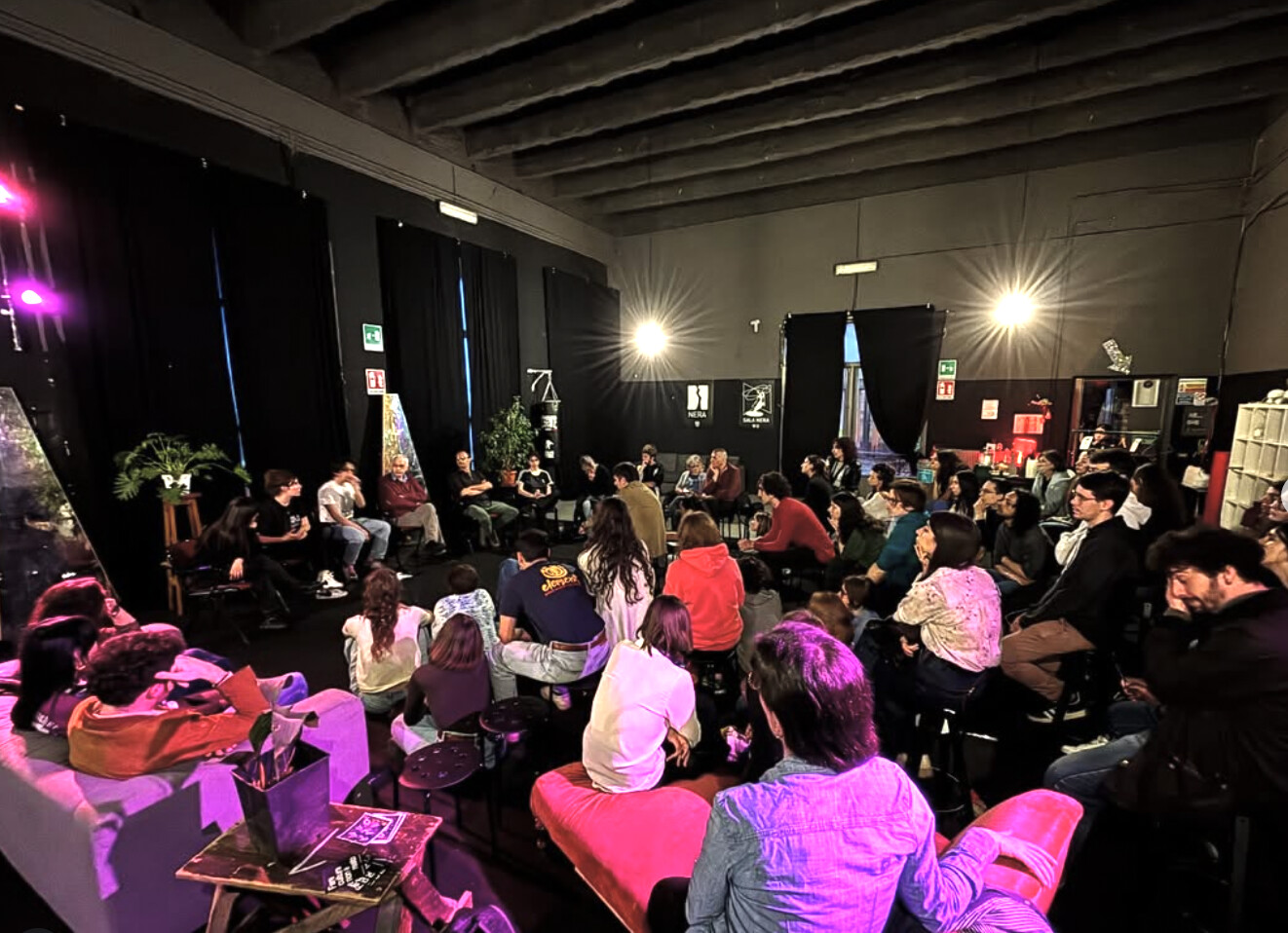
Milan: when a club opens a mental health support space
What if mental health finally became part of cultural life?
In Milan, a nightlife venue has just taken a step that is still rare in the European cultural landscape. Tempio del Futuro Perduto, an emblematic alternative space on the Milanese scene, has launched Tempio della Mente, a listening and psychological support center directly integrated into its venue.
Designed for young people aged 18 to 35, this initiative offers individual and group support at reduced rates. A groundbreaking move in the world of clubbing, where mental health is often talked about but rarely addressed in a concrete and structural way.
Once again, nightlife shows that it can be ahead of the curve when it comes to care, rather than sweeping problems under the rug the way daytime life so often does.
A cultural space before being a club
Tempio del Futuro Perduto is not a club in the traditional sense of the word. Housed in a former abandoned railway factory, the venue was born as a multidisciplinary cultural project, driven by a generation of artists, cultural workers, and activists. Officially recognized in Italy as a cultural center, it brings together underground techno parties, exhibitions, artist residencies, workshops, a community library, and outdoor spaces open to the public.
The venue’s economic model is based on an associative logic. Access to events is tied to a membership card, often free or symbolic in price, and many activities are offered free of charge or at very accessible rates. Some events even operate on principles of solidarity-based contribution rather than traditional ticketing. A deliberate way of defending an inclusive culture, far removed from purely commercial logics.
This social dimension is not a recent layer of polish. From its very beginnings, Tempio del Futuro Perduto was conceived as a direct response to the gradual disappearance of independent cultural centers in Milan, under the combined effects of gentrification and increasingly repressive policies. The project emerged from a clear desire to create a genuinely safe space for minorities, marginalized communities, and politically engaged artistic practices, breaking away from a nightlife scene often marked by racism, sexism, and exclusion.
Over the years, the venue has become much more than a party space. Today it hosts support programs for refugees, community workshops, inclusive events for people with disabilities or experiencing mental health issues, as well as one of the largest clothing-sharing initiatives in Italy. Every weekend, a singular coexistence takes place between clubbers and solidarity-driven activities, asserting a vision of clubbing as a tool for social cohesion rather than a simple entertainment product.
From the dancefloor to the listening space
It is within this continuity that Tempio della Mente takes shape. The center does not present itself as a traditional medical practice, but as a space for pause, listening, and dialogue, designed by and for young people. The objective is clear: to make psychological support accessible, without endless waiting lists or prohibitive costs.
At a time when younger generations are particularly exposed to anxiety, precarity, and isolation, the project puts forward a simple yet political idea: mental health is part of cultural life, just as much as music, art, and community.
A cultural and social statement
The opening of Tempio della Mente comes as Tempio del Futuro Perduto was celebrating its eighth anniversary and securing its future with a lease extension through 2030. A detail that is anything but insignificant. The venue thus affirms its long-term commitment and its role within Milan’s social fabric.
This initiative raises a broader question: what role should clubs and cultural venues play today? Simple spaces of nighttime consumption, or platforms capable of offering support, connection, and care?
In a sector where discussions around mental health, burnout, or addiction are increasingly present, yet still often disconnected from concrete action, Tempio della Mente provides a structural and deliberate response.
Toward a more responsible club culture
By integrating a psychological support service into its operations, Tempio del Futuro Perduto opens up a path that is still marginal but potentially transformative: that of a club culture which acknowledges that partying, creativity, and vulnerability can coexist.
At a time when many artists are calling for slowing down, for setting boundaries and rethinking the sustainability of their careers, this initiative serves as a crucial reminder: the transformation of club culture cannot rest solely on individuals. Venues also have a role to play.