

No products in the cart.

We might just be a little snobbish toward progress. So, are we looking at AI the way boomers looked at mobile phones or electronic music? The way acoustic musicians once reacted when the electric guitar appeared in the 70s — as a betrayal. At the 1965 Newport Folk Festival, Bob Dylan walked on stage with an electric guitar, in front of purists for whom acoustic strings were sacred. It was chaos — he was booed. That night, 24-year-old Dylan didn’t just plug in an amplifier: he plugged into a current of change that was about to electrify the world, as PMAmagazine puts it.
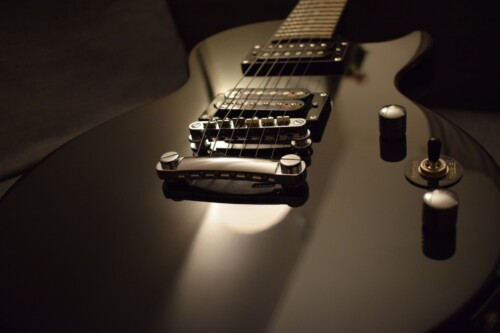
Maybe we’re overreacting to the threat of being replaced. Maybe fully AI-generated music is not a sign of artistic decay, but rather the next mutation in the evolution of sound. Maybe, for thousands of future Bob Dylans, this is the logical continuation of music technology. Or, if we’re brutally honest, maybe making a track from a prompt is the final step before total absurdity.
Between visionary genius and pure laziness, the line has never been thinner.One thing still belongs to us — art. Give AI spreadsheets, boring emails, your high-school essay on oceans — but art?
When Spotify removed 75 million AI-generated tracks, the gesture meant something. Symbolically, because taking them down implies that not everything published counts as “music.” Legally as well, since ownership remains blurry and poorly understood by the general public.Can we really say that the hand typing a prompt is the “creator” of an original work? And where does the money go when someone streams it? If Spotify suddenly deletes tracks, it’s not because ethics won — it’s because ethics never entered the room.
A question of transparency
The real issue is not AI as a tool — transparent, collaborative, supporting artists creatively — but its darker sides: cloning, vocal impersonation, unauthorized dataset training, and the theft of artistic identity.Yet removing the most popular tracks sparked backlash. Under a post from @edmmusic about the removal (and rapid reinstatement) of viral hit I Run, comments were split:
“Producers been sampling for decades — what the fuck is the difference?”
“WE DO NOT want AI music on Spotify. At all.”
“I had no idea this song was AI 😳”
View this post on Instagram
So maybe the solution is transparency. As one user wrote:
“Even if I’m not into AI-generated music, I’m not saying delete it. Just be transparent.
If it’s AI, say it. Let people know what they’re hearing. Let them choose between real or hollow.
It might sound great — catchy, polished — but the moment we learn it’s AI, the magic vanishes.
We lose the artist. We lose the story. The soul is gone, even if the sound is perfect.
Humans crave heart, not just harmony.”
Today, no streaming platform clearly labels AI-generated music. There’s no “AI-generated” tag, except on YouTube — and even there, it’s optional. Listeners often have no idea whether they’re hearing a human composition, a fully artificial one, or a hybrid that imitated someone else’s voice or melody.
This isn’t just cultural deception — it’s a legal vacuum.
By streaming algorithm-friendly, soul-less tracks, we may be participating, unknowingly, in the erosion of artistic identity.
And also a question of usage

Like every technological shift, AI itself is not the enemy. The issue lies in how we use it — with intention, restraint, and ethics.
Here, the case of Berlin-based artist Rania Kim (aka Portrait XO) — featured in ARTE’s mini-report “Can AI-music move us?” brings nuance. She performs duets with an AI-replica of her own voice. Trained on her vocals since 2015, her model creates electronic harmonies beyond physical capacity. She calls it creative liberation, not substitution. She even made her voice-model open-source with a 50/50 revenue split, ensuring fairness.
In this setup, AI is not erasure — it’s extension.
And she’s not alone. In Les Échos de l’IA, Jean-Michel Jarre describes AI as “a modern muse”, a tool like any other in the long lineage of musical innovation. “Don’t fear progress,” he argues, because you can’t stop it only understand it and respond intelligently. A grounded view, yet one that recognizes the paradox: unlike the electric guitar, AI can fully replace the creator.
So progress or absurdity?
Probably both.AI does not announce the death of music, nor a utopian future. It exposes the best and worst in us — because everything depends on how humans use their intelligence, their ethics, and their imagination.Will we share creativity, or extract it like oil?Technology is only ever a tool. Meaning is ours to assign. Music will not die with AI but how we create it, and how we value it, may change forever.
In the meantime, feel free to form your own opinion on I Run by Haven & Katlin Aragon removed, then reinstated on Spotify.
🔗 https://soundcloud.com/haven49167/i-run