

No products in the cart.
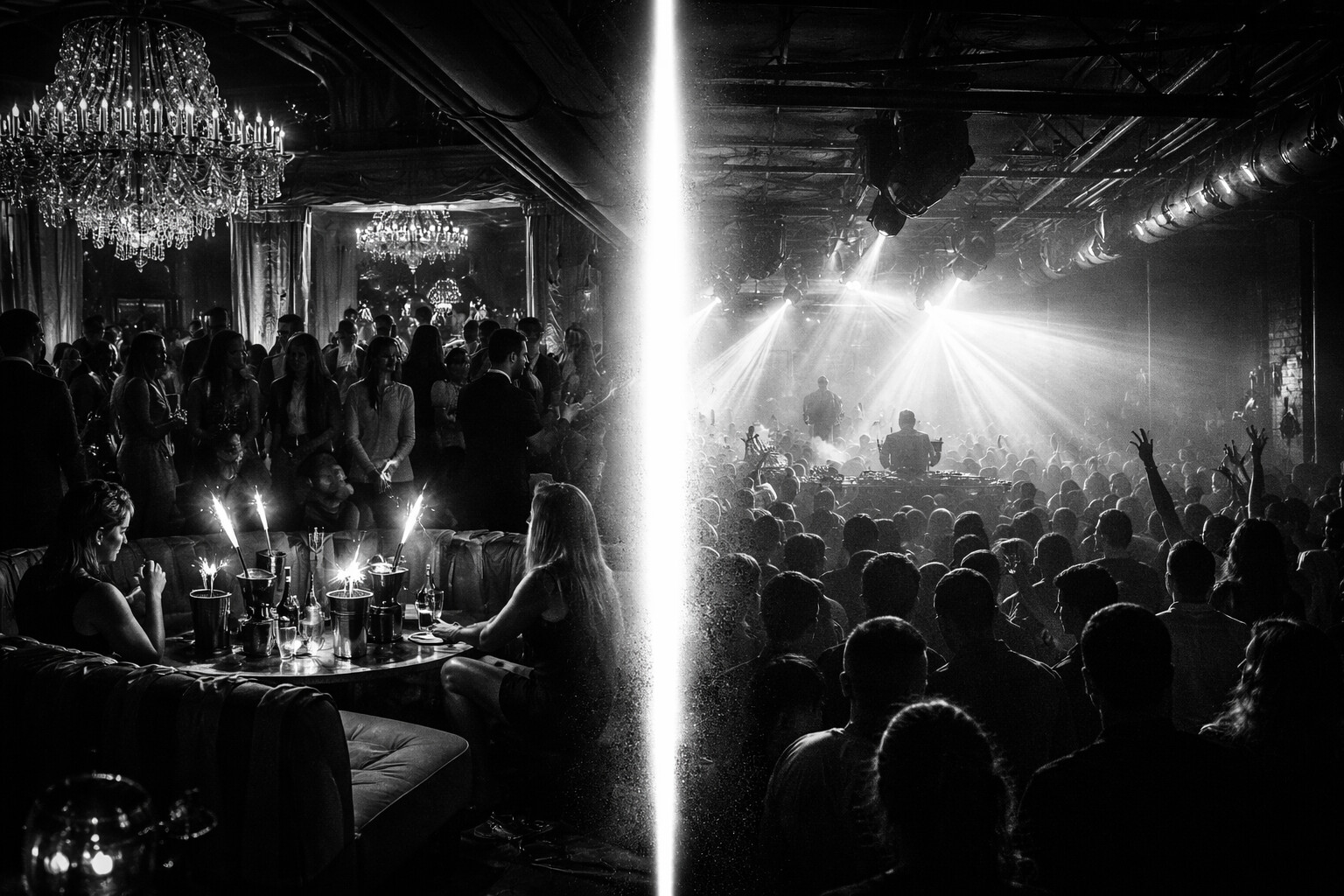
We could pretend not to see it. Blame TikTok, “the times,” “people go out less.” But that story is comfortable. The reality is more pragmatic and measurable: partying is being gentrified. Not as a stance, but as a mechanism. And that machinery is producing a bifurcation: on one side, the palace; on the other, the sanctuary.
The metaphor is perfectly framed in Midnight rebels article , which describes a nightlife culture split between the “Content Palace”, the club designed to be seen, and the “underground sanctuary”,the place designed to be lived. The middle is dying, and that’s not just a feeling.
The problem isn’t only that the middle class goes out less because social life is becoming digital and everyday life more expensive; it’s also that their venues are being taken away. When that balance is disrupted, a kind of polarization appears: only the two extremes remain. The argument is dichotomous, sure, but it’s interesting because it offers a global framework that applies to many major cities known for their nightlife.
First: the club crisis
In the UK, for example, reporting points to a steep decline in late-night venues since 2020 (nearly 800 closures), with the drop accelerating in 2025. The Guardian
In France, the post-Covid shockwave has also left lasting traces: for nightclubs, “20 to 25% of venues won’t reopen,” and nearly 400 establishments (out of 1,600 in 2020) were still shuttered at that time, according to the sector. Challenges
And over a longer period, the trend is even harsher: thousands of nightclubs have disappeared over the past decades, shaped in part by the rise of rave culture and by tighter regulations in traditional clubs—so while free-party culture becomes more widespread, the “club” model increasingly loses ground. Maire-Info
Why clubs upscale (and why it kills the vibe)
You can hate VIP-ization (which is creeping into the underground too), but you have to understand the logic: when fixed costs rise, the “rational” strategy often becomes the same—charge more. But the “Content Palace” isn’t just a matter of taste; it’s an economic model with prices, codes, and a whole social staging. The result? Partying turns into a filter. No, you’re not just paying for entry anymore, you’re paying for status too. Without naming names, where you go out says something about you.
One last reason—including for the “underground”: what costs the most is the line-up. If the club becomes a palace, it’s because DJs become stars.
The underground sanctuary: resistance?
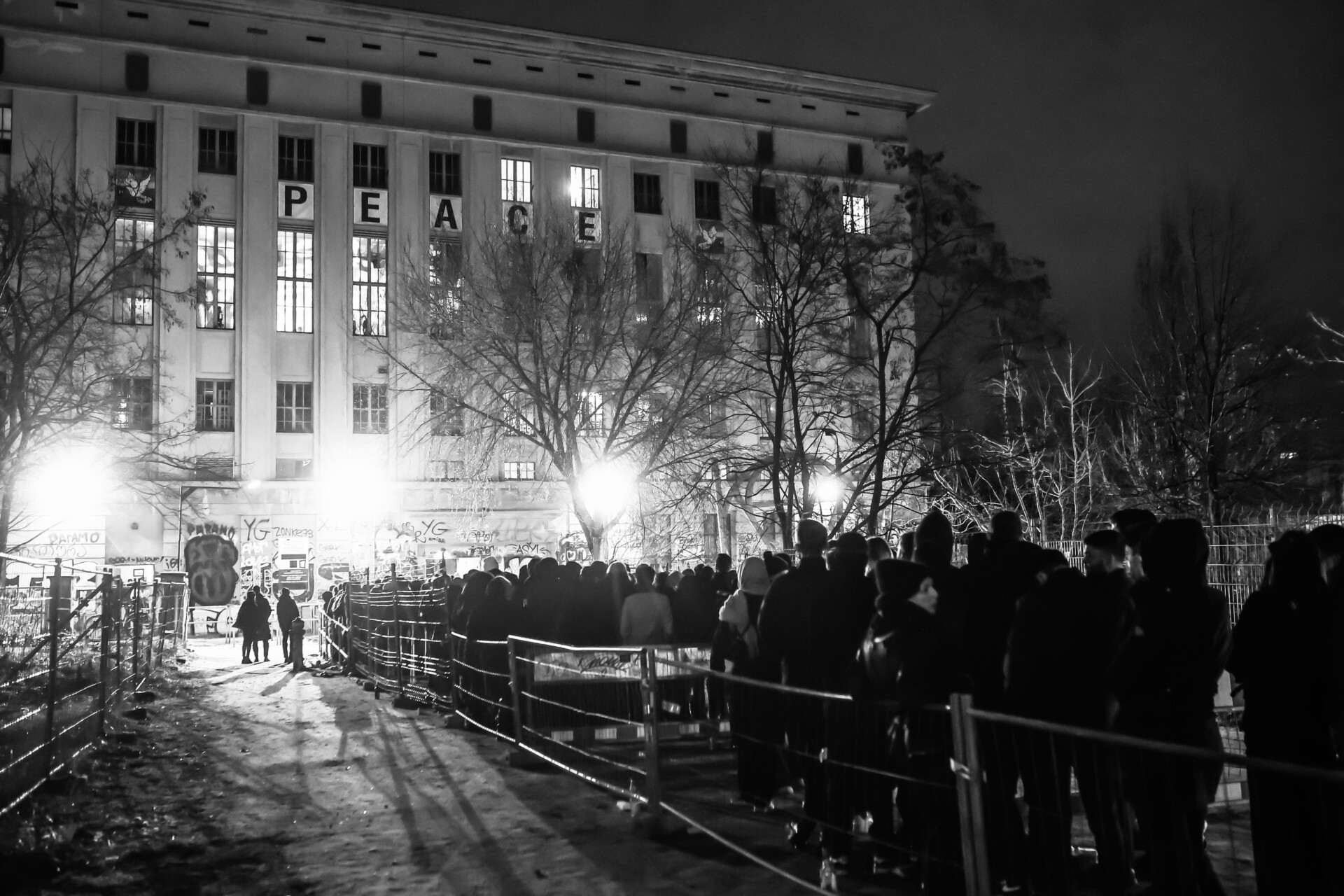
On the other side, the underground retreats however it can, without fully escaping gentrification: warehouses, temporary spots, suburbs, wastelands, mobile formats. Here again, Midnight Rebels frames the Sanctuary as the other pole of the bifurcation, its codes standing in opposition to those of the palace.
Except this sanctuary is fragile by nature: it depends on intermittent spaces, precarious legal balances, and above all on an urbanism that always ends up “recovering” the land. The space isn’t fragile only because it’s semi-legal or loud; it’s fragile because it often occupies a dead moment in real-estate time. When the city restarts a project, that dead time ends. A perfect example is the Babcock Factory: even when a project remains “cultural,” the urban planning logic changes.
On this point, even a text far from techno clubbing sums up this spatial logic well. In an article about Macumba, a mythical 1980s club chain often located on the outskirts, Le Monde links the disappearance of this nightlife institution to the transformation of peri-urban spaces and to changes in our urban planning models.
The pyramid lives off the base… that’s dying
There’s something deeply paradoxical about nightlife: the brighter it shines at the top, the more it fades at the bottom. Arenas sell out, headliners become brands in themselves… while small venues and clubs—the ones that build scenes, audiences, and going-out habits—are holding on by tape.
Recently, The O2 Arena pledged to donate to the Music Venue Trust for each “new headliner” it hosts (Mixmag). On paper, it sounds like a form of vertical solidarity: a gesture that finally says out loud what everyone knows—without the base, the top doesn’t exist. It’s a rare moment where the industry admits that the 300-cap club, the venue struggling with bills, the risky Wednesday-night programming, is the matrix of everything else.
But the gesture can also taste a little bitter: like a bandage. Because if donations become necessary, it’s because the machine is already broken.And this is exactly what Music Venue Trust +1 documents: a ground-level economy with margins that are almost nonexistent. In other words, we’re organizing waves of solidarity because we’ve also let the situation become unsustainable.
So yes: eat or be eaten
The palace is often an admission of cultural surrender, not because it’s inherently musically “bad,” but because it replaces the party with its representation. On the other side, the nomadic sanctuary isn’t a political solution; it’s an emergency solution. It protects the culture, but it doesn’t protect the ecosystem. It can even become a bunker, tolerated as long as it stays marginal, expelled as soon as land pressure rises.
Maybe we should defend a third space, the one we’re losing (even if it still exists in places): clubs that aren’t perfect, aren’t elitist, just accessible. And if we want to avoid nightlife becoming either a luxury product or a struggle in the far outskirts in a derelict warehouse (even if it has its own charm), we have to stop pretending: we need a rebalanced economy (in an ideal world, we don’t have all the solutions yet).