No products in the cart.
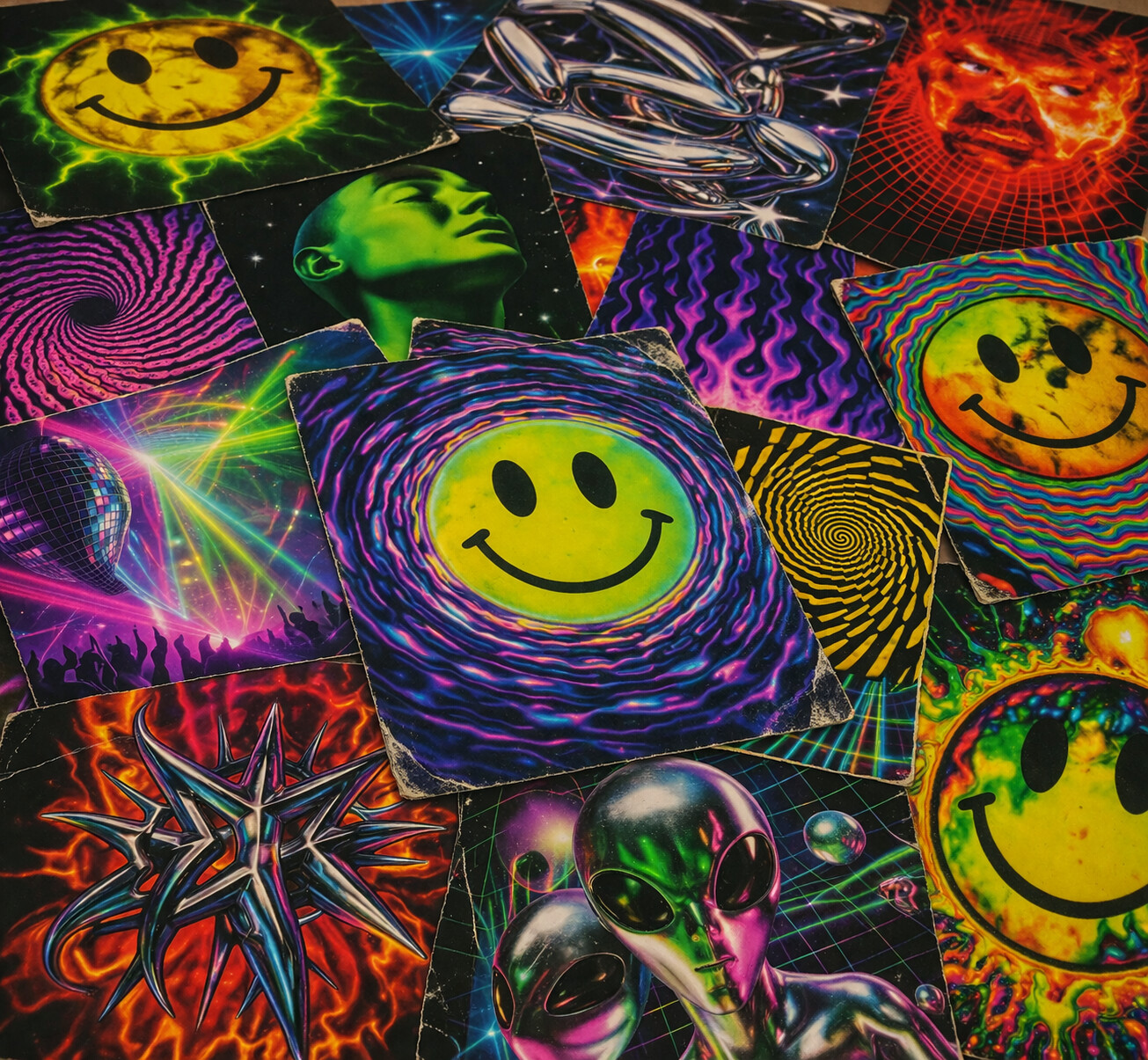
For a long time, announcing a date was simply part of the game. Before social media, club and rave scenes lived through flyers, posters, word of mouth, and support networks between collectives, residents, DJs, and audiences. Promotion was not separate from the party because it was part of it. Today, now that everything goes through Instagram, that practice is starting to disappear.
More and more promoters say how difficult it has become to get even a simple repost from an artist: a flyer share, a story, a date announcement, sometimes even when it is clearly written into the contract. Of course, the electronic scene did not wait for Instagram to exist. But in an ecosystem where visibility has become the central driver of ticket sales and attendance, refusing to communicate about an event you are playing is far from insignificant.
Because the issue goes well beyond posting a flyer. What is really at stake here is the gradual transformation of the DJ into a brand.
From the club to personal branding
On Instagram, many artists now build highly controlled profiles: consistent color palettes, storytelling, carefully timed posting rhythms. In that logic, a party flyer, often crowded, text-heavy, and sometimes not especially “cool” visually, is seen as something that disrupts the feed.
The problem is that this personal branding logic ends up creating an implicit hierarchy between content considered valuable for the artist’s image and content that is not. A polished teaser, a festival video, a viral recap, or an ultra-bankable line-up easily finds its place. But a date at a club, in a warehouse, in a small venue, or with an independent collective often disappears from the radar.
In other words: the party that pays sometimes becomes the content people avoid showing.
The people taking the risk are not the most visible ones
And yet, in most cases, the people paying artists are not the platforms. They are the clubs, the collectives, the festivals, the promoters. They are the ones taking the financial risk: venue rental, production, security, staff, technical setup, harm reduction, communication, ticketing, and artist fees. Since the post-pandemic period, many people in the sector have been warning about rising fees and budgets that are becoming increasingly difficult for local structures to defend.
That is where the imbalance lies. On one side, promoters absorb most of the risk. On the other, some artists increasingly act as though promoting the date is not really part of their role, or only marginally so.
Of course, nobody is claiming that a single Instagram post can fill a club on its own. But pretending that the visibility an artist brings does not matter is just as unrealistic. A few well-placed reposts can make a real difference, especially for independent events that do not have advertising budgets or the reach of major players.
Just one date among many
This evolution also says something about the relationship some artists now have with the events they play. When tours pile up, when one weekend includes several gigs, when a schedule starts to look like a logistics chain, it becomes easier to treat a booking as just another stop along the way. One date among many. You arrive, you leave.
But a party is never just a box in a calendar. For the people organizing it, it often represents weeks, sometimes months, of work, follow-ups, budgeting, stress, and risk-taking. The minimum expected is not to turn artists into salespeople or social media managers. It is simply to recognize that an event is more than a fee and a set time.
Announcing your appearance, reposting the flyer, mentioning the venue, highlighting the collective that invited you: these are not heroic gestures. They are basic gestures in a culture that was historically built on circulation, mutual support, and commitment to local scenes.
The vicious circle of non-promotion
What is most perverse is that this lack of support often fuels a vicious circle.
A party is barely announced, or badly promoted, by some of the artists on the line-up. It fills less well. The atmosphere is less packed than expected. The images from the night look less flattering. So they are posted less afterward. And the event, which had already suffered from a lack of visibility beforehand, also loses visual memory after the fact.
And yet, photos and videos from a party are not only there to feed an artist’s ego or social media presence. They also document the existence of a scene, keep a venue alive, build desire for the next edition, and help collectives continue.
When that support disappears, it is not just an event’s communication that weakens. An entire ecosystem becomes more fragile.
Small events cannot compete on equal terms
The hypocrisy becomes even clearer when you look at which events do get shared — and which do not. International giants, already sold-out festivals, the most photogenic stages, or events with strong symbolic value for an artist’s image continue to be reposted without much difficulty. Tomorrowland for the commercial scene, Berghain for the others. The issue is not the clean feed itself. It is often what is considered worthy of entering it.
Small structures, local clubs, independent collectives — the ones that need support the most — are also often the ones that benefit the least from the visibility of the artists they book. Promotion is acceptable when it reinforces brand value, much less so when it simply means supporting an event that is taking a real risk.
The unspoken reality of grey areas
There is also another issue, one that is spoken about less publicly but often mentioned behind closed doors: some gigs, some payment arrangements, or some working setups may fall into grey areas, or even into situations that make public communication more delicate. In France, undeclared work — also known as concealed employment — refers specifically to work or activity not declared to the authorities, and it is illegal.
This is not to present it as a general explanation or to cast suspicion over an entire scene. But this unspoken reality does exist in some professional conversations too: sometimes people prefer not to expose a date too much when its formal setup is not entirely solid. Once again, it is often the most fragile structures that end up trapped between economic necessity, inherited practices, and lack of visibility.
What this moment says about the scene
Ultimately, the question is not whether a DJ should promote an event as if it were some special favor. The real question is more political: what does an artist owe to the scene that gives them work?
If the answer becomes “not much, as long as the set gets played,” then we also have to accept the consequences of that logic: increasingly fragile events, clubs struggling to break even, collectives disappearing, and a culture of nightlife being replaced by a culture of image.
At a time when many observers already describe the electronic scene as increasingly dominated by the logic of spectacle, large financial flows, and social media, this shift is far from insignificant. It says something about a moment when the dancefloor risks becoming merely a secondary backdrop to a system centered first and foremost on visibility, optimization, and perceived value.
Nobody is asking artists to turn their account into a permanent billboard. But announcing the event you are playing remains one of the simplest, most basic, and most coherent ways to support the people who chose to book you.
Otherwise, perhaps we should stop talking about a scene and admit that all that remains is a market.