

No products in the cart.

We could not believe our eyes and ears watching this very 2026 crossover. Rosalía performs “Berghain”, a single from LUX, as her tailor made miniature of the Berlin club that stands for Art with a capital A, right at the BRIT Awards, the ultimate mainstream temple. A place where the televised moment is rarely this chaotic, in the best possible way, was not on our 2026 bingo card. Or actually, maybe it was. It is extremely trendy, but you cannot say it was poorly done.
Televised ceremonies work like memory making machines. They do not only sell songs, they sell moments. In that sense, the grammar of rave is perfect material: instantly legible (darkness, warehouse, bodies in trance), instantly spectacular, instantly outside the frame. On stage, club culture becomes an aesthetic of deviance made presentable. A thrill that dazzles, and above all, a thrill that works.

The aesthetic of hybridization
You cannot deny the appeal of the subversive. Stepping slightly outside pop’s lines works well, and techno is fashionable, let’s be honest. Still, you have to salute Rosalía’s project, since she has always cared about reinventing her tradition and offering something musically rich, diverse, hybrid. For this performance, she delivers something coherent, not just a bankable concept but a show that is thought through and carefully built. It honors both the most legitimate arts, with choirs and a symphonic orchestra, and an underground staging, topped with a surprising appearance by the queen of experimental pop: the Icelandic Björk. The singer appears very rarely, especially on stages like this one. Through that avant garde figure, Rosalía sends a strong message about her place in the industry, a place that is visibly innovative and engaged.
So the question is not whether Rosalía has the right to summon rave (that debate wears out fast). The more interesting question is how and why she summoned it.
Rosalía and (LA)HORDE: making the margins rigorous without neutralizing them
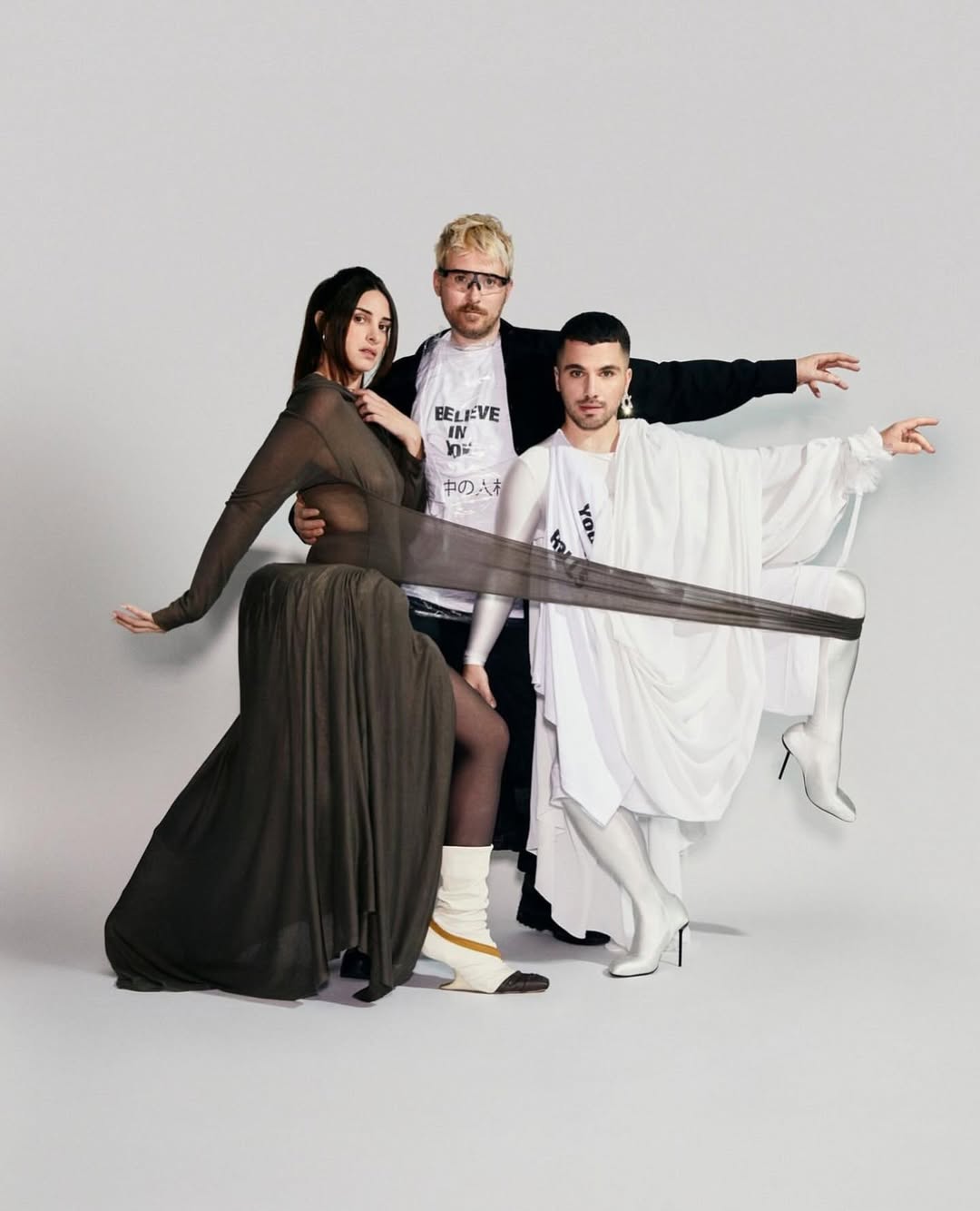
If this performance avoids simple cosplay, it is because it is built, not just dressed up with half absorbed codes. At the controls: (LA)HORDE, a Marseille based collective (Marine Brutti, Jonathan Debrouwer, Arthur Harel), leading the Ballet national de Marseille since 2019. A troupe known in particular for A ROOM WITH A VIEW, a committed, striking work danced entirely to custom made productions by RONE.
The window onto rave that Rosalía opens comes with choreographic material that tells a story. (LA)HORDE works precisely in zones of friction, in what circulates between vernacular dances and “legitimate” stages and dances, between gestures born in clubs and in the street, and their rigorous rewriting on a theatrical platform. Their own presentations speak of a mapping of popular uprisings “from raves to traditional dances”, passing through jumpstyle and movements that recall the hakken of the hardcore scene.
In other words, the form is there, but the substance is too. Each presence carried a social story. And what they bring onto the BRITs stage is a respected, choreographed hybrid energy: an organized crowd, a tension between fiery discipline and an ultra controlled release, classical rigor inside warehouse energy.
Deep down, this rave moment is not only a clever staging trick, it also tells a story about our time. A time when pop needs to borrow the club’s intensity, its darkness, to reinvent itself as an event.
But it would be too easy to see it as automatic plunder. Here, the intelligence of the show still deserves praise, because it relies on meticulous making. The bigger question goes beyond Rosalía: when the subversive becomes an official language, does it lose its force, its soul, or does it finally gain the right to be seen, understood, and passed on?
credit : IG Rosalia and LA (H)ORDE