

No products in the cart.

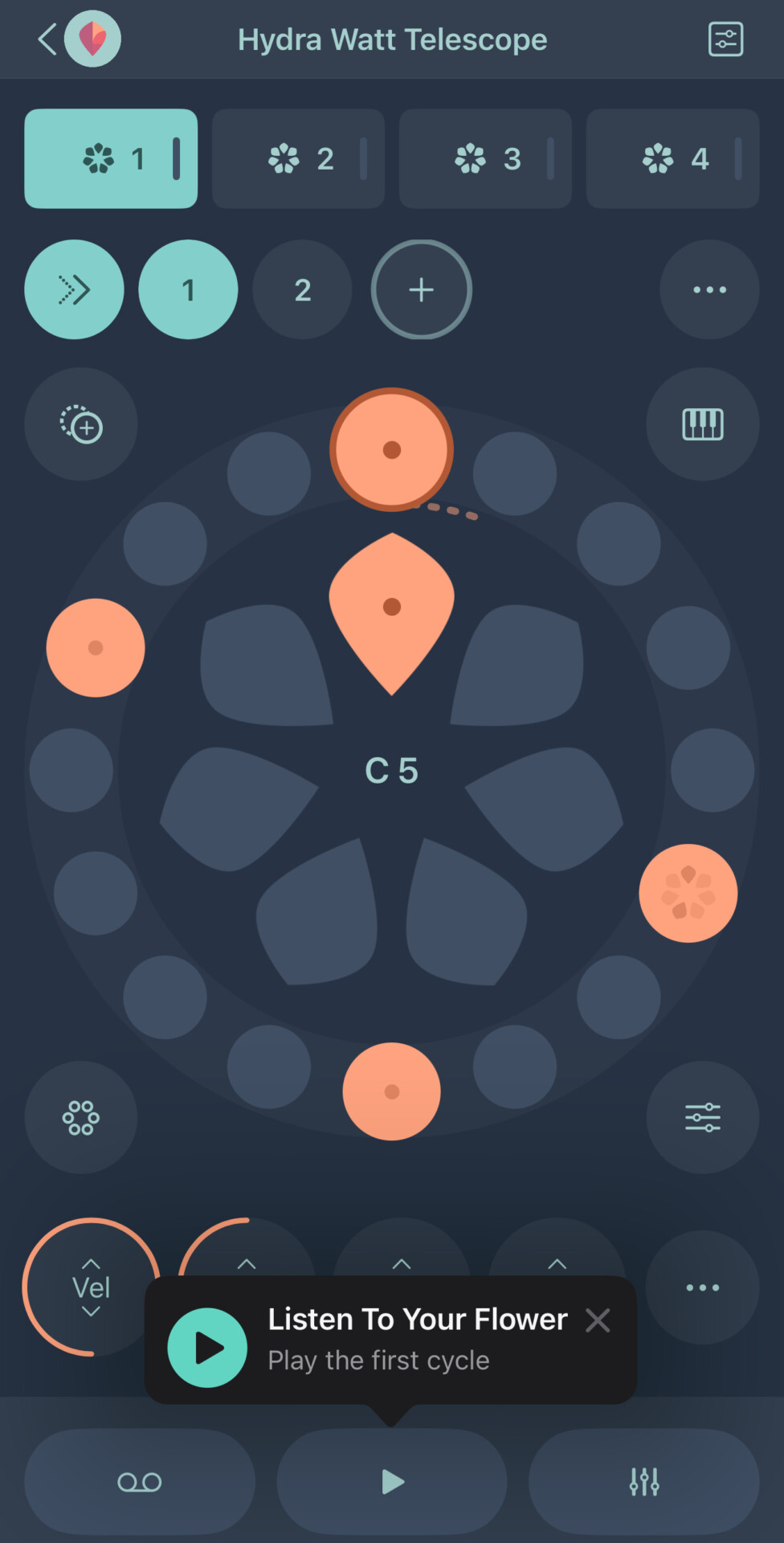
Paris-based studio Tones Garden has just launched Sound Flowers, a new iPhone app designed to rethink how we make music. Instead of sticking to traditional linear sequencers, the app introduces a rotating step sequencer, a circular playground where rhythms and melodies sprout in loops rather than grids. The result is both playful and surprisingly intuitive, aimed at beginners and seasoned producers alike.
A sequencer as a creative playground
The app’s main innovation lies in its circular interface, which invites users to “grow” their tracks like sonic plants. While most DAWs (Digital Audio Workstations) present music as a timeline, Sound Flowers opts for a more organic workflow, where ideas evolve through gestures and experimentation. It recalls some gamified approaches to music-making—half-instrument, half-toy—but with the potential to unlock genuine inspiration.
The anti-AI stance
CEO Hakim Hantat’s positioning is almost contrarian in today’s climate. As the music industry rushes headlong into generative AI, he insists: “The joy of composing cannot be replaced by an algorithm.” Sound Flowers doesn’t want to write the music for you—it wants to make you want to write. That’s a bold, almost political statement, following in the footsteps of the studio’s earlier release, Flower For Live, a MIDI tool for Ableton Live now used by professional producers.
Design meets accessibility
With its handcrafted sound library and elegant, stripped-down UI, the app aims to please both ears and eyes. But beyond aesthetics, there’s a bigger ambition at play: to democratize music-making, at a time when the line between amateurs and professionals grows thinner every day. The real question is whether this circular sequencer can carve its niche in a world increasingly enchanted by AI-driven creativity.