

No products in the cart.
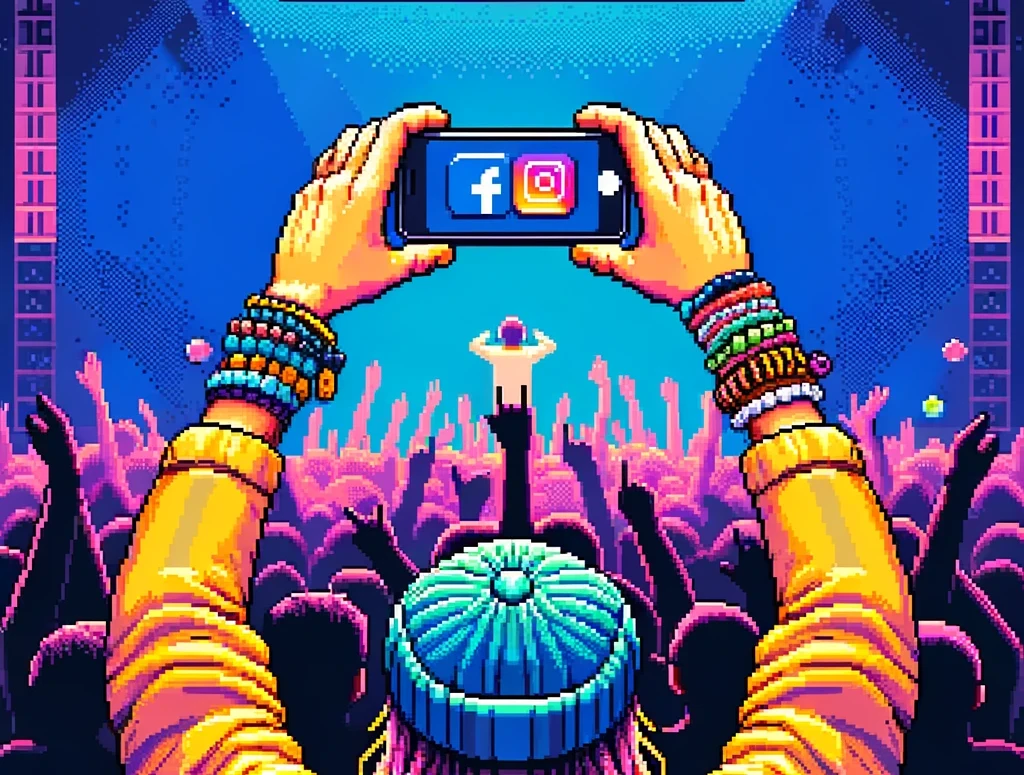
The dance floor is not a content factory
The dance floor is not a content factory. It is, or should remain, one of the last places where the gaze stops judging, where you can simply be, without having to narrate yourself. Yet a new breed of actors has invaded the night: the so-called “nightlife content creators,” waving their phones like multipasses to the party.
We’re not talking about photographers, videographers or journalists who document nightlife with intention. They work, often in the shadows, with a strong sense of distance and responsibility. They know what they’re filming, why, and for whom. Behind their images lies ethics and awareness. No diploma is required, many are self-taught, but they’ve all learned the same essential rule that anyone wanting to work in this scene should understand: it’s not you you’re putting forward, it’s your work.
Where these creators document, influencers showcase themselves. Where the first observe, the second perform. That nuance changes everything.
Some film without consent, capturing people dancing to mock them or to decorate their own curated version of the night. It’s easy to forget that the dance floor is a refuge — one of the rare places in the world where we can still feel free, unguarded, imperfect. Collectives like Kluster have found an elegant and simple response: giving out bracelets to those who don’t want to be photographed. It’s a small gesture, but one that reminds us that the party doesn’t need to be watched to exist.
What these influencers forget is that in clubs and festivals, you need accreditation to cover an event. You can debate whether that’s right or not, but it exists for a reason — to protect the artists, the audience and the integrity of the moment. Those who arrive with a phone to “document” without permission often don’t realize they’re crossing the line between testimony and intrusion.
The issue isn’t just the aesthetics of the club selfie, but the system it reinforces. These influencers often have no notion of critique, because their business model relies on automatic positivity: being invited, drinking for free, producing “feel good” content. You can’t question a club, festival or DJ if you want to keep getting invited. This structural bias silences genuine analysis and accountability. And this silence benefits those already in control: the large groups that own clubs, festivals, agencies and sometimes even artists. Criticizing one can mean being blacklisted from the rest — and when your livelihood depends on invitations, that’s an easy choice to make.
Meanwhile, independent media, photographers, videographers and journalists who document nightlife with respect are financially strangled, often invisible. Yet they are the ones who hold the memory of this culture. The ones who remind us that the night has a history, a code, and a politics.
Today, giving strength back to independent photographers, videographers and journalists is urgent. They are the ones documenting the scene without filters, sponsors or fear. Because in parallel, another force is quietly advancing: the far right. It’s already here — on the dance floor, in agencies, in the corporations that own clubs, festivals, even artists. It no longer hides; it adapts, with seductive aesthetics and ideologies ready to infiltrate.
Club culture has long been a stronghold, a space of resistance. But if the image becomes the only value, if content creators replace observers, if critical documentation gives way to pure entertainment, then that stronghold collapses. What’s left is a marketplace, ripe for takeover by those who never danced for the same reasons we did.
This is the moment to act. Not tomorrow, not after the next festival season. Because when everything is owned, formatted and sanitized, it will be too late.
The dance floor never needed cameras — but it’s always needed memory. And that memory still belongs to the independents, who carry it against all odds.