

No products in the cart.
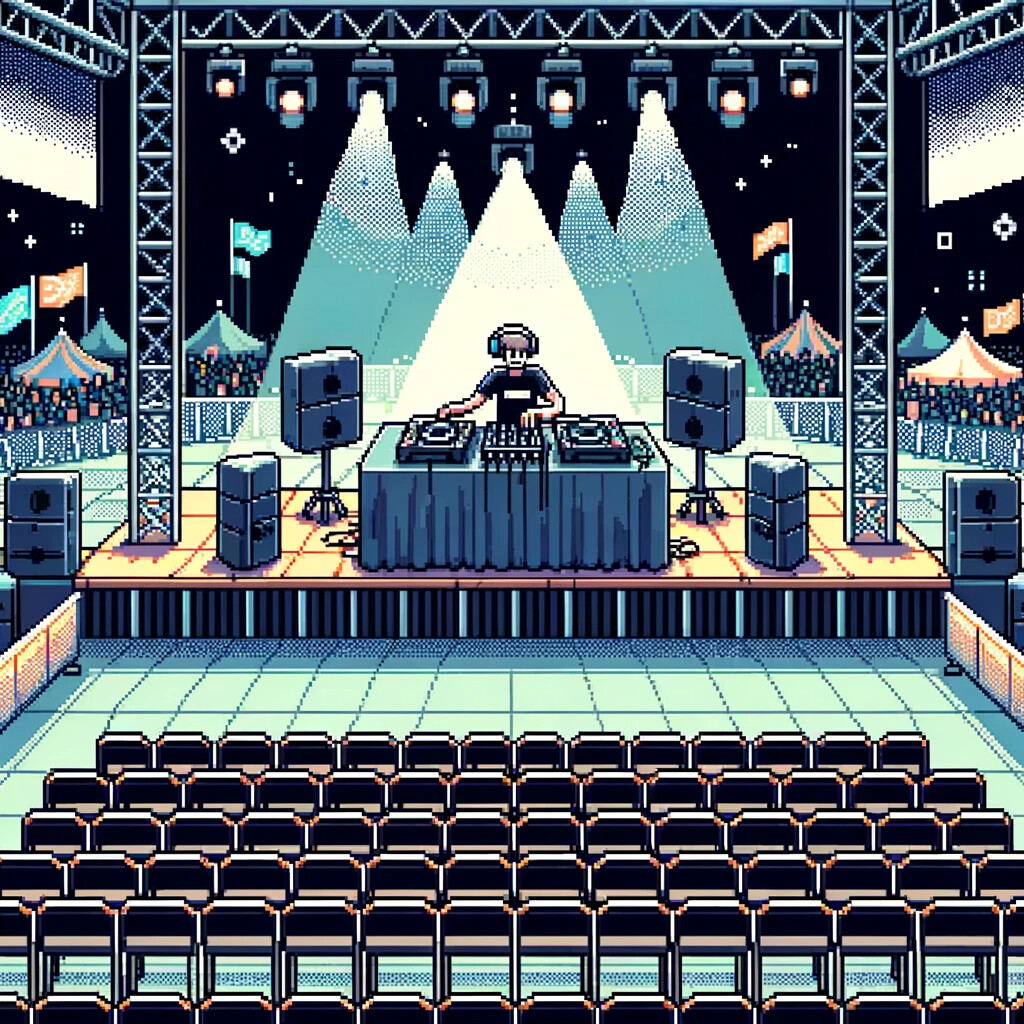
In today’s club and festival culture, the warm-up remains a blind spot. Too often perceived as a transitional slot before the “real” night begins, it is treated like background noise — something to drift through while waiting for the headliner.
That perception misses the point entirely.
A warm-up is not decoration. It is not foreplay. It is a discipline of its own. Opening a night means reading a room that is still empty or slowly filling up. It means accepting that the energy is not at its peak — and resisting the urge to force it. It requires building tension without burning it, creating movement without triggering the sprint too early. It demands patience, musical depth, and a strong sense of narrative control.
Paradoxically, this complex task is often given to young DJs — sometimes competition winners or emerging local talents offered visibility through early slots. The intention is positive. The outcome is more complicated.
For a developing artist, the pressure to stand out is intense. The room is not yet full. The crowd is not fully engaged. The temptation is strong to push the BPM too early, to drop the most impactful tracks, to prove one’s value immediately. Not out of ego, but out of fear of being overlooked.
The warm-up then becomes a showcase, when it should function as architecture.
Its role is not to reach the peak, but to make the peak meaningful.
On social media, warm-up DJs are rarely highlighted. They are often missing from promotional posts, barely tagged in recaps, sometimes publicly criticized for playing certain tracks “too early” or pushing the tempo “too high.” It is a paradoxical pressure. These artists carry one of the most delicate responsibilities of the night, yet receive little of the recognition.
And yet, some of the most respected figures in electronic music are known for their mastery of opening sets. Their strength lies in subtlety, in pacing, in restraint. They build carefully. They privilege coherence over impact. They understand that a night is not a sequence of climaxes, but a progression.
Revaluing the warm-up is not just a programming issue. It is a cultural one.
Arriving earlier at a club or festival transforms the experience. There is more space, more attention, less saturation. Supporting the early hours means supporting the artists performing one of the most demanding roles of the night. It also means experiencing the event as a full narrative, not just a collection of drops.
A successful night is not a highlight reel. It is a curve. A construction. A rhythm of tension and release. Without a strong beginning, even the best headliner cannot fully unfold their story.
The opening slot is not a waiting room. It is the first chapter. And without a first chapter, there is no story.