
No products in the cart.
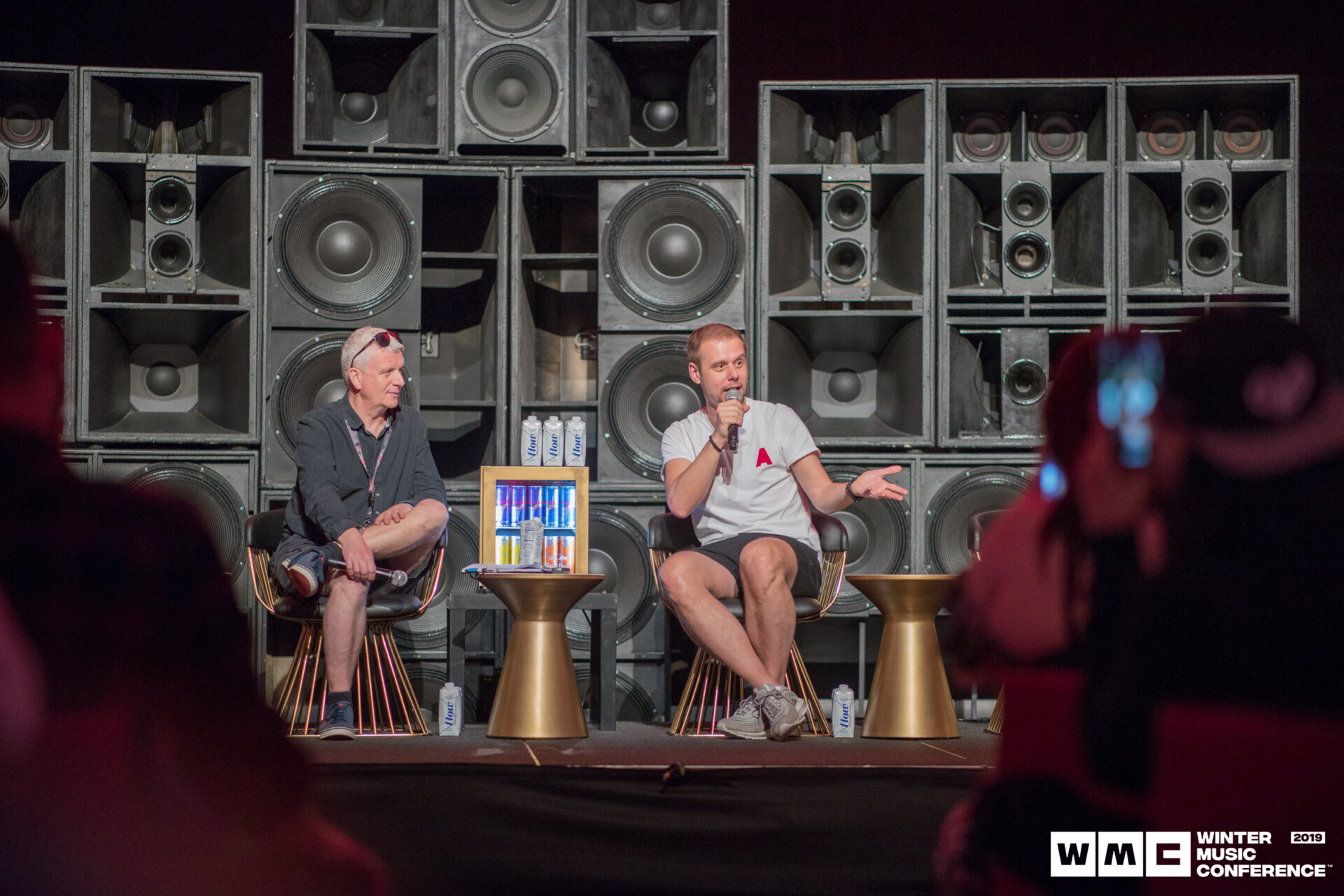
As Miami prepares once again for its annual electronic music takeover, Winter Music Conference is positioning itself not just as a legacy institution, but as a forum determined to stay relevant in an industry being reshaped by algorithms, creator culture and platform power.
Set to return from March 24 to 26, 2026 at the Kimpton EPIC Hotel in Downtown Miami, WMC has unveiled the final wave of programming for its upcoming edition. And while the conference remains rooted in its longstanding identity as a meeting point for dance music professionals, this year’s themes suggest a more pointed ambition: to reassert the value of human taste, artist-led storytelling and real-world connection at a time when electronic music is increasingly mediated by tech platforms and fragmented digital audiences.
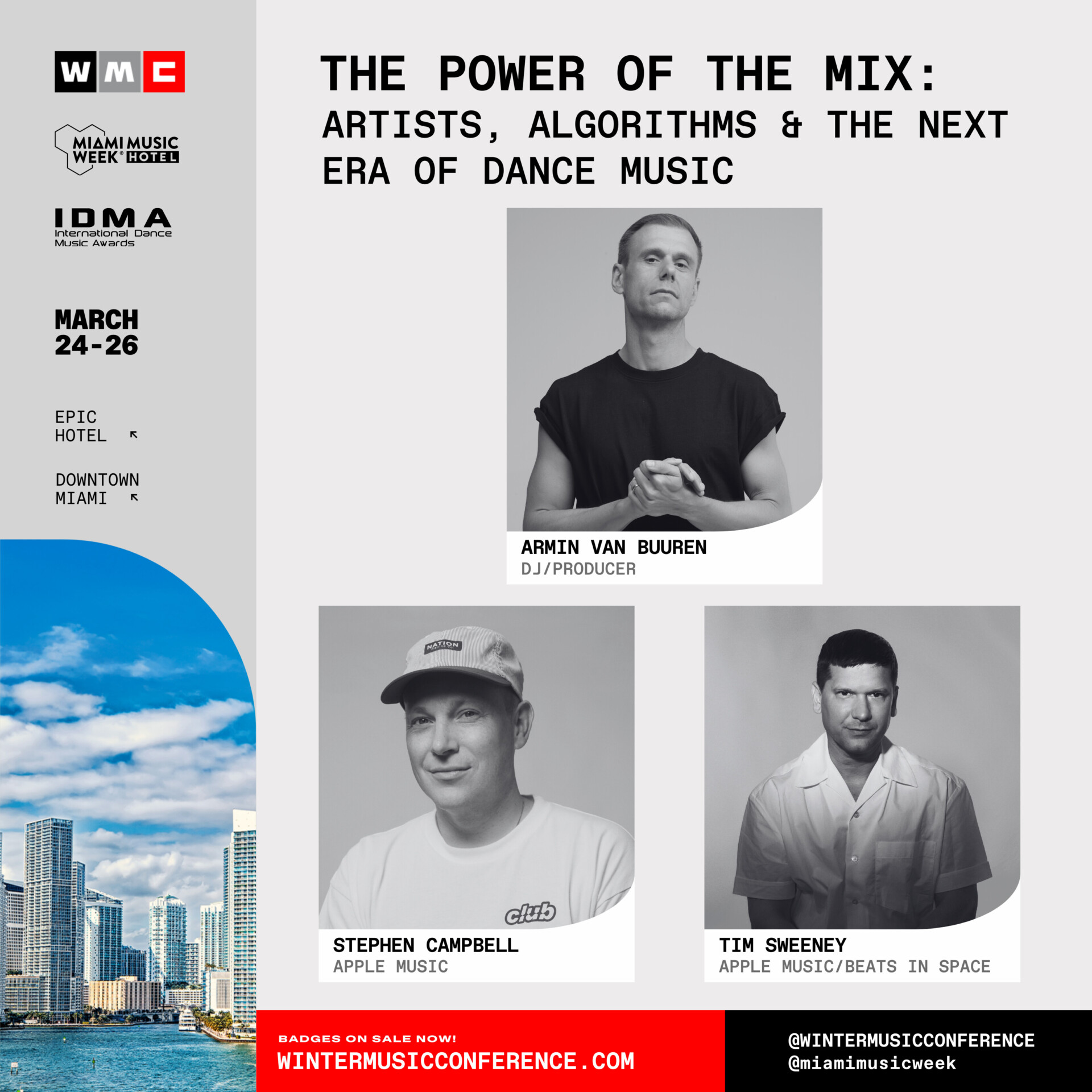
The clearest expression of that comes with one of the headline conversations of the week. Armin van Buuren will join Stephen Campbell and Tim Sweeney of Apple Music for a keynote titled “The Power of the Mix: Artists, Algorithms & The Next Era of Dance Music.” It is a fitting centerpiece for a conference that seems intent on tackling one of the most defining tensions in dance music right now: who shapes discovery in 2026 — DJs, curators, artists, or the platforms that increasingly sit between them and listeners?
That question runs through much of the newly announced program. If streaming has changed the way audiences consume music, and social platforms have changed the way artists are expected to perform their identity online, WMC 2026 appears keen to bring the conversation back to craft. Nowhere is that more obvious than in “The Art of the DJ Set – Selection, Storytelling & the Dancefloor,” the AlphaTheta-presented panel featuring Sasha, Dubfire, Alison Wonderland and Danny Daze.
On paper, it is a discussion about track selection and performance. In practice, it points to something bigger: a defense of the DJ set as an art form in its own right. At a moment when visibility, content output and personal branding often compete with musical depth, the panel promises to refocus attention on the skill that made DJs culturally powerful in the first place — knowing what to play, when to play it, and how to move a room with intention.
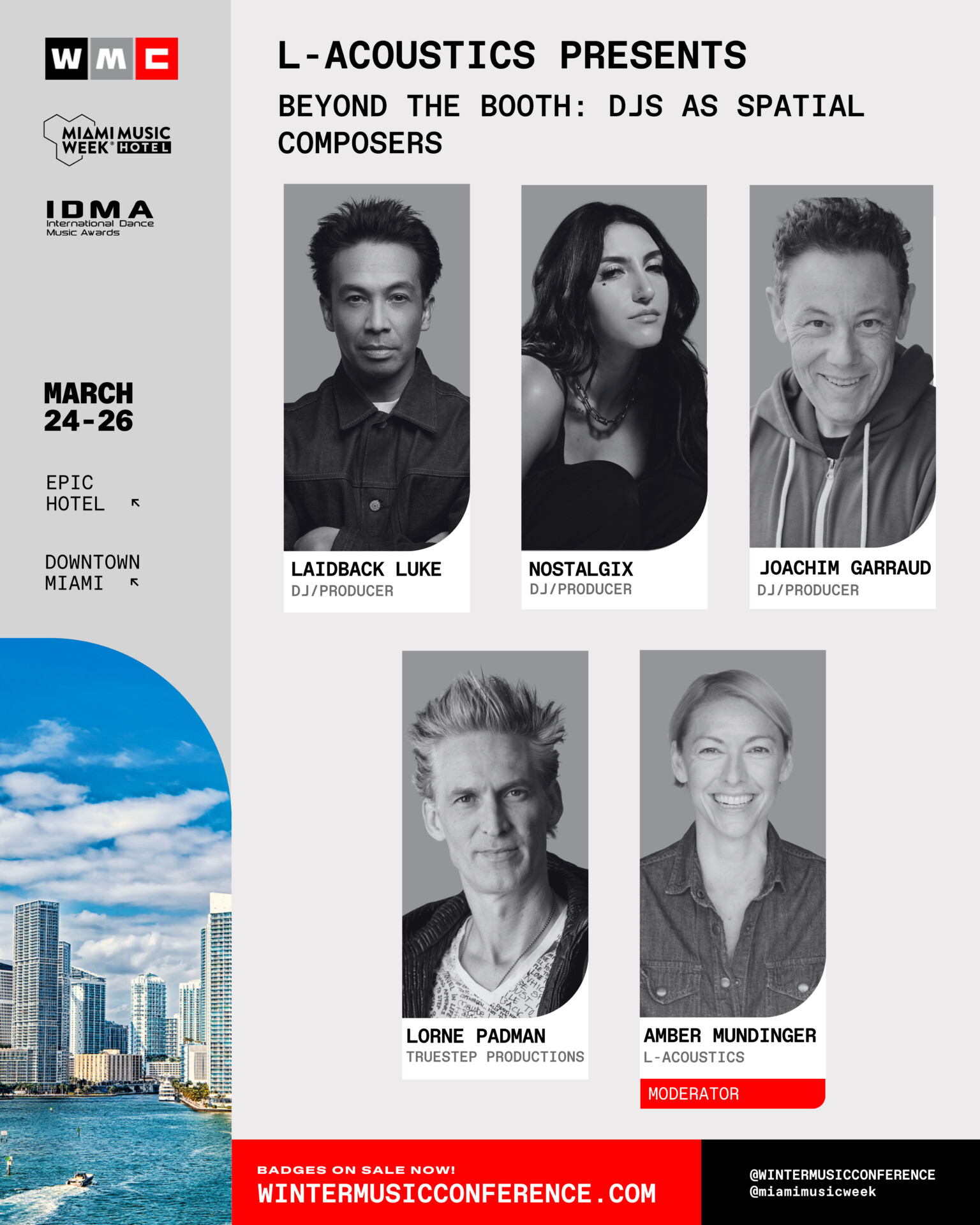
That same reframing of the DJ role continues in “Beyond the Booth: DJs as Spatial Composers,” presented by L-Acoustics and featuring Laidback Luke and Joachim Garraud. Built around immersive and spatial audio technologies, the session suggests a future in which DJs are no longer seen simply as selectors or performers, but as designers of physical, three-dimensional sonic environments. In other words, the booth becomes less of a station and more of a compositional space.
More broadly, WMC’s final programming drop reflects an event trying to address the full complexity of the contemporary electronic music ecosystem. The conference’s two-track format — WMC // Industry and WMC // Creators — is designed to speak both to established business players and to emerging artists trying to navigate a scene that now demands fluency in branding, distribution, content strategy, audience data and tech innovation alongside musical ability.
The panel topics make that clear. Across the three days, conversations will touch on AI in music production, streaming ethics, physical media’s return, fan ownership, artist entrepreneurship, sustainability, radio royalties, U.S. artist visas, and the ever-blurring line between artistic identity and startup logic. It is a program that acknowledges a truth many artists already know: success in dance music no longer depends on records and sets alone, but on the ability to operate across a web of platforms, partners and business models.
One of the more telling sessions is “Fixing the Fragmented Fan: How Artists Can Finally Own Their Audience,” featuring voices from Bandsintown, BUDDY, StubHub and AFTR DARK. The title alone captures one of the central anxieties of today’s music business. In a platform economy where audience relationships are split across streaming services, ticketing tools, short-form video apps and mailing lists, artists are under increasing pressure to rebuild direct access to their communities. WMC is clearly betting that this issue is no longer a niche business concern, but one of the defining challenges for electronic artists trying to build long-term careers.
There is also a deliberate emphasis on access. With the launch of its A&R Pop-Up Lounge in partnership with Label Radar, WMC is leaning into one of the few things conferences can still offer that digital culture cannot fully replicate: proximity. Labels including Dirtybird, Dirty Workz, Spinnin’ Records, Ultra Records, Too Lost and several Create Music Group imprints will take part, offering badge holders a chance to meet representatives directly through scheduled sessions, demo handoffs and curated introductions. In a crowded market where visibility is abundant but meaningful access remains scarce, that may prove one of the conference’s most practical selling points.
Of course, WMC is still inseparable from the wider energy of Miami Music Week, and the event’s industry-facing agenda remains tightly bound to club culture and live performance. Alongside its conference schedule, WMC and Beatport Live have also revealed the full lineup for their three-day pool party series at the EPIC Hotel, with showcases curated by Mood Child, Rekids, and Hot Creations x Three Six Zero Recordings. Artists set to perform include Danny Tenaglia, Radio Slave, DJ Minx, Skream, DJ Sneak, Manda Moor and more, reinforcing the conference’s long-running attempt to bridge professional conversation and dancefloor credibility.
That balance may ultimately be the key to WMC’s continued relevance. In a global landscape now crowded with summits, brand activations, boutique festivals and creator-economy conferences, Winter Music Conference is no longer competing on legacy alone. Its 2026 edition suggests an event trying to redefine its purpose by focusing on the pressure points that matter most right now: the fight between curation and automation, the changing language of DJ performance, the search for sustainable artist careers, and the need for genuine connection in an increasingly platform-mediated culture.
WMC may still trade on its history, but this year’s programming makes a stronger case for its present-day value. More than a nostalgic institution, it wants to be a place where electronic music thinks out loud about what it is becoming.
Full schedule HERE!