

No products in the cart.
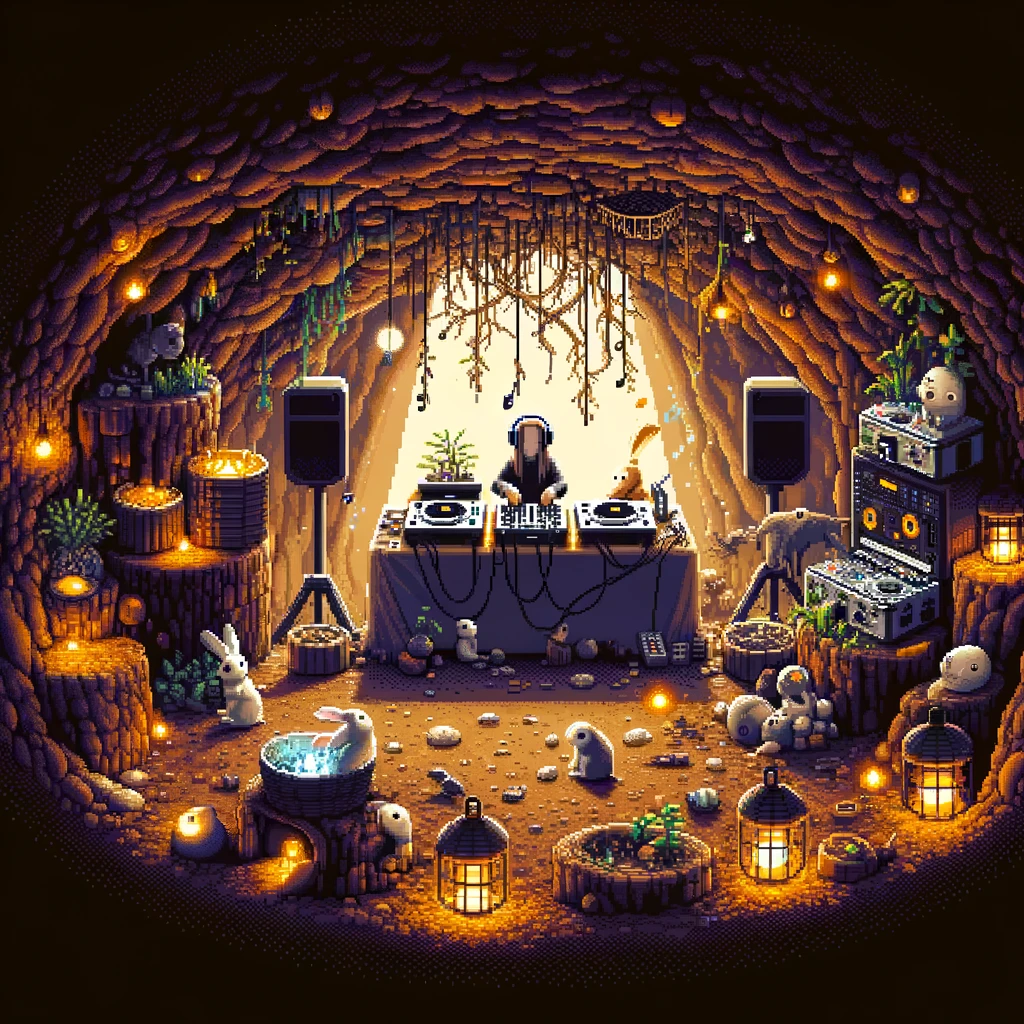
YOU DON’T HAVE TO BE UNDERGROUND
We’ve stripped the word “underground” of its meaning. Today, it’s slapped onto parties that play techno or house in clubs and festivals, as if choosing a genre were enough to claim belonging. But underground has never been just a matter of style. It’s a culture, a set of values, a way of thinking and inhabiting the scene. Being underground is not about releasing an obscure vinyl EP or refusing to post your tracklists. It’s about making the scene safer for the communities who built it, taking political stances, redistributing what you receive. It’s making sure the party remains accessible, and that money is never the only driving force.
In New York, the collective Dweller offers an exemplary illustration. Their festival, centered on Black artists, goes beyond programming. It’s a space where the history of electronic music is acknowledged, where legacies are protected, where the party becomes again what it always was: a tool of survival and resistance for marginalized communities. In Detroit, Underground Resistance embodies the same spirit. In a conversation with Mark Flash, one of its members, he reminded us how much his role extended beyond music. Food drives, neighborhood actions, educational workshops: music was a weapon, but also a bridge to the community. “I will keep my torch lit as long as possible to light yours,” he explained. A phrase that sums up what underground should be: a collective force, not a marketing slogan. Read the full interview here.
And yet, not everyone has to be underground. Not everyone has the will, or even the means, to carry this kind of responsibility. The commercial scene has always existed, and it has its role: it’s a gateway. For many, the first contact with electronic music comes through commercial radio, club hits, or mainstream festivals. And that’s not a problem. These formats often allow broader audiences to eventually explore more radical, more intimate scenes. Plurality is vital: without mainstream, there’s no underground. Without accessibility, there’s no counterculture.
The problem arises when the word “underground” is hijacked, flaunted by artists, labels, or festivals that don’t embody its values. This is where bitterness is born. When a festival charging €80 entry calls itself underground. When a DJ billing €30,000 a set presents themselves as “resistance.” When hyper-professionalized structures drape themselves in a DIY aesthetic while running on the same profit-driven logics as major commercial nightclubs. This appropriation generates confusion and anger. Because it pretends to be counterculture, when in fact it’s just business as usual.
This is also why criticism sometimes targets the wrong people. We expect certain artists to speak out about war, about gender-based violence, about queer rights, as if it were self-evident. But why would they? These artists are not underground, their careers rest on structures that exploit or co-opt those very struggles. Expecting radical stances from them is asking an industry to behave like a social movement. It’s mixing up two different worlds. Humility should be the rule: you can be an entertainer, commercial, mainstream. But you cannot call yourself underground if you’re not.
David Guetta understood this long ago. He never claimed the underground legacy. He calls himself an entertainer for most of his shows. And he owns it. He doesn’t lie to his audience, he doesn’t lean on a rebellious imagery. His role is to entertain. And there’s nothing shameful about that. The danger lies in selling an illusion. In twisting a word that carried decades of struggle into an empty label.
Accepting not to be the main character of the scene is also a form of maturity. Not everyone is meant to take the spotlight, nor to embody the underground. Some structures, collectives, and media have a different role: to observe, to document, to analyze. That’s ours. We don’t produce music, we don’t organize events, we don’t try to shine in place of the artists. We see ourselves as witnesses, as transmitters. Knowing your place avoids distorting your role and leaves space for those who create, innovate, and carry the values that define the underground.
Underground is a responsibility, not an aesthetic. It’s a way of inhabiting the scene, of sustaining it, of giving back what you’ve received. It’s not a branding exercise. The electronic scene needs headliners as much as grassroots collectives, commercial clubs as much as self-managed warehouses. But above all, it needs clarity. As long as the word underground is used as a marketing argument, it will lose its substance. And as long as this confusion persists, criticism will keep pointing fingers. Not out of hate, but out of demand. Because this culture doesn’t deserve to be swallowed by the very logics it once promised to transcend.