

No products in the cart.
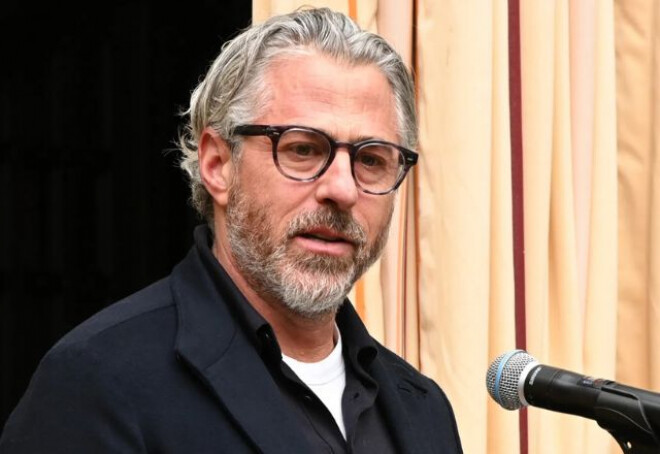
Casey Wasserman’s announcement that he is selling his talent agency marks a significant development in the fallout following the release of newly unsealed court documents related to Jeffrey Epstein.
The CEO of the Wasserman Group confirmed he has begun the process of selling the company after his name appeared in documents recently made public by the U.S. Department of Justice. In a memo sent to the agency’s 4,000 employees, he wrote:
“I have become a distraction… That is why I have begun the process of selling the company.”
Old Correspondence Revealed
The released documents reference exchanges dating back to the early 2000s between Wasserman and Ghislaine Maxwell, who was sentenced in 2021 to 20 years in prison for child sex trafficking.
They mention in particular:
- A 2002 trip aboard a plane owned by Jeffrey Epstein, as part of a delegation connected to the Clinton Foundation, described as a humanitarian trip
- Emails exchanged with Maxwell in 2003, including messages with personal undertones
In a statement published in early February, Wasserman said he never had a personal or business relationship with Jeffrey Epstein and stated he “deeply regrets” the exchanges from more than twenty years ago.
Artists Depart and Speak Out
Several artists represented by the agency publicly announced their departure, including ODESZA, Levity, dj pressed and Chappell Roan.
Others, such as John Summit and Louis The Child, indicated they intended to leave or called for Wasserman to step down.
The sale of the agency is reportedly already underway. Meanwhile, Wasserman remains chairman of the Los Angeles 2028 Olympic and Paralympic Games Organizing Committee.
Shockwaves Beyond the United States
While the case directly concerns an American agency, its repercussions raise broader questions about the relationship between cultural power, institutional networks and moral accountability.
In France, the debate takes a different shape but raises similar questions about memory and accountability.
Jack Lang, former Minister of Culture, founder of the Fête de la Musique and current president of the Institut du Monde Arabe, is mentioned in the U.S. court documents related to the Epstein case. Following these revelations, France’s National Financial Prosecutor’s Office opened an investigation for “aggravated tax fraud laundering.” He has since proposed his resignation from the presidency of the IMA.
Jack Lang, is also regularly cited for having signed a 1977 petition published in Le Monde calling for a revision of certain legal provisions concerning relationships between adults and minors. The petition, co-signed by several intellectual figures of the time, continues to draw retrospective criticism — and remains a subject that should not simply disappear from public discussion.
Jack Lang has never been convicted of any crimes related to child sexual abuse. However, his signature on that text remains a recurring point of controversy in public debate.
Now president of the Institut du Monde Arabe, he continues to hold a central institutional position within the French cultural landscape. His past presence in emblematic Parisian nightlife spaces such as La Concrete, or his recent interviews in specialized media including Radio FG, had until now generated little public reaction.
Reputation, Memory and Responsibility
The situation highlights a recurring tension: warnings often exist long before scandals explode.
For years, feminist activists, child protection organizations and collectives within cultural sectors have denounced blind spots in systems of power, opaque networks of influence and institutional complacency. Their voices are frequently marginalized, dismissed as excessive, or ignored — until revelations become impossible to contain.
Why must judicial documents be released, or media momentum build, before public positions shift? Why does moral accountability often activate only once reputations are at risk?
Protecting artists, audiences and, more broadly, vulnerable individuals should not be a crisis response. It should be structural. Music, nightlife and culture are not spaces outside society. They reflect its power dynamics.
The issue ultimately extends beyond individuals. It concerns an ecosystem’s ability to listen to warnings before they become scandals — and to make protection a constant priority rather than a delayed reflex.