

No products in the cart.

In the 2010s, EDM reshaped electronic music on a global scale. Its spectacular shows, high production values, and superstar DJs brought electronic sounds into stadiums and arenas, introducing millions of new listeners to dance music. For many, EDM was a gateway: a way to discover more specific, experimental, or underground sounds later on. Its audience was nd remains joyful, welcoming, often defined by a spirit of celebration rather than exclusion.

Today, another genre is experiencing a comparable boom: hard techno. From Berlin to Amsterdam, from TikTok feeds to packed festival stages, its rise has been fast. What was once a niche style has become one of the fastest-growing sectors of electronic music, propelled by BPMS soaring past 150, aggressive aesthetics, and an endless stream of viral clips. Like EDM before it, hard techno is not just a sound but a spectacle. Sets are often shorter (Remember Verknipt) and more choreographed, DJs perform for cameras as much as for dancers, and entire careers are launched on the back of a single viral video.
The economics follow a similar path. Booking fees have exploded, pricing these DJs out of smaller clubs and pushing them into arenas and massive festivals. Tickets of €60 or €70 for two hours of music are no longer unusual. Promoters, many trained in business and marketing, run their events with corporate precision: influencer-style street teams, Instagram strategies that mimic media outlets, and branding exercises designed to maximize visibility. Hard techno, like EDM, has become a professionalized industry as much as a cultural scene. None of this is inherently negative; artists have every right to monetize their art, and fans clearly find value in these experiences.
But where EDM cultivated an image of inclusivity and euphoric escape, hard techno is flirting with more troubling aesthetics. In certain pockets of the scene, symbols reminiscent of far-right codes appear: logos resembling the chi-rho or the number “88,” banners whose militaristic visuals evoke the specter of World War II. One prominent brand, IMPACT TECHNO, claims its inspiration comes from Star Wars, yet the iconography calls to mind something much darker. Add to this the glorification of shirtless, hyper-masculine bodies, and the authoritarian undertones become harder to ignore. These are not the values techno has historically championed, values of resistance, collectivity, and inclusivity.
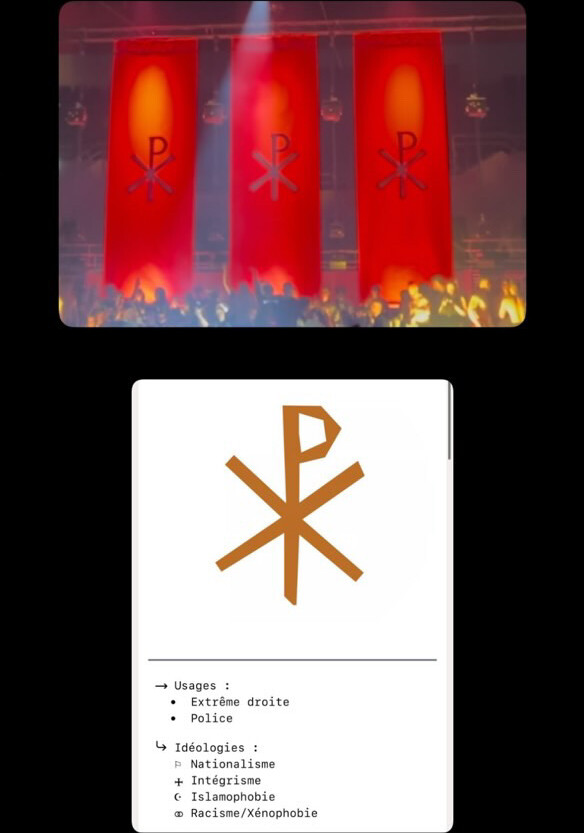
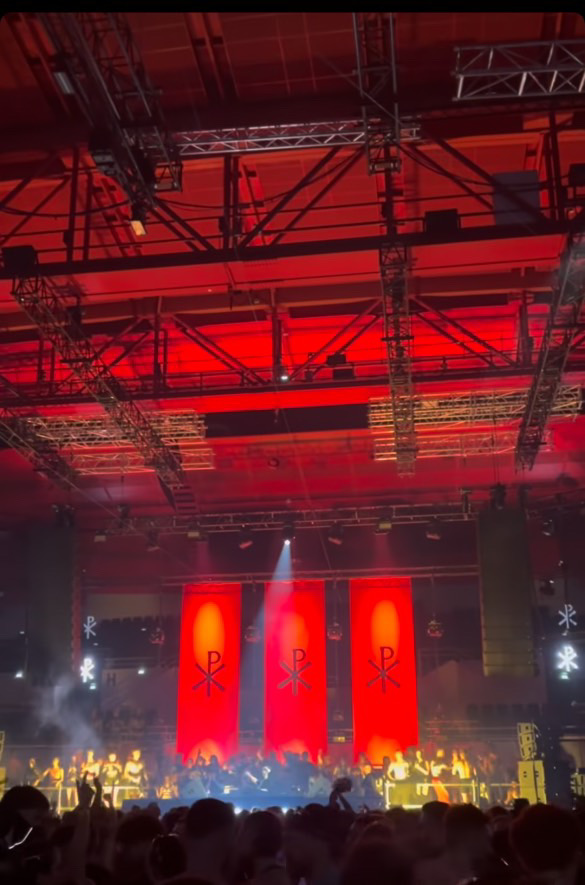
To be clear: the hard techno audience as a whole is not defined by this. Dancefloors are still filled with diverse crowds, often young, generous, and full of human warmth. Like EDM fans, they are there for joy, for intensity, for togetherness. But the appearance of extremist imagery on these stages, even if isolated, poses a challenge. Because when these symbols are tolerated or normalized, they risk attracting an audience that sees hard techno as a space for exclusion rather than liberation.
This is where the responsibility shifts to the artists themselves. The leading figures of the hard techno boom cannot remain silent. When crowds bring fascist symbols, when aesthetics borrow too heavily from authoritarian codes, DJs face a choice: to reject that presence openly, or to let it slide. Too often, the biggest names opt for passivity. In doing so, they allow ambiguity to fester. And in times where music scenes can be rapidly politicized, ambiguity is a luxury that techno cannot afford.
Hard techno’s contradiction is clear. It markets itself as rebellious, anti-system, even underground, yet it follows a commercial trajectory that mirrors EDM, while failing to uphold techno’s deeper political commitments. It thrives on the language of resistance but risks becoming a product that sells transgression without substance. The question is not whether hard techno can coexist with professionalism or mass popularity. It is whether it can do so while defending the core values of the culture it claims to inherit.
For the dancers on the floor, the magic is still there: the collective surge, the heat, the suspension of time when sound overwhelms everything else. That remains untouched, and perhaps it is what keeps people coming back despite the contradictions. But the future of hard techno depends not only on its ability to fill arenas, but also on the willingness of its stars to decide what kind of world they want their music to build and who they want to dance within it.