

No products in the cart.
When a Miami club lets the far right sing along on the dancefloor
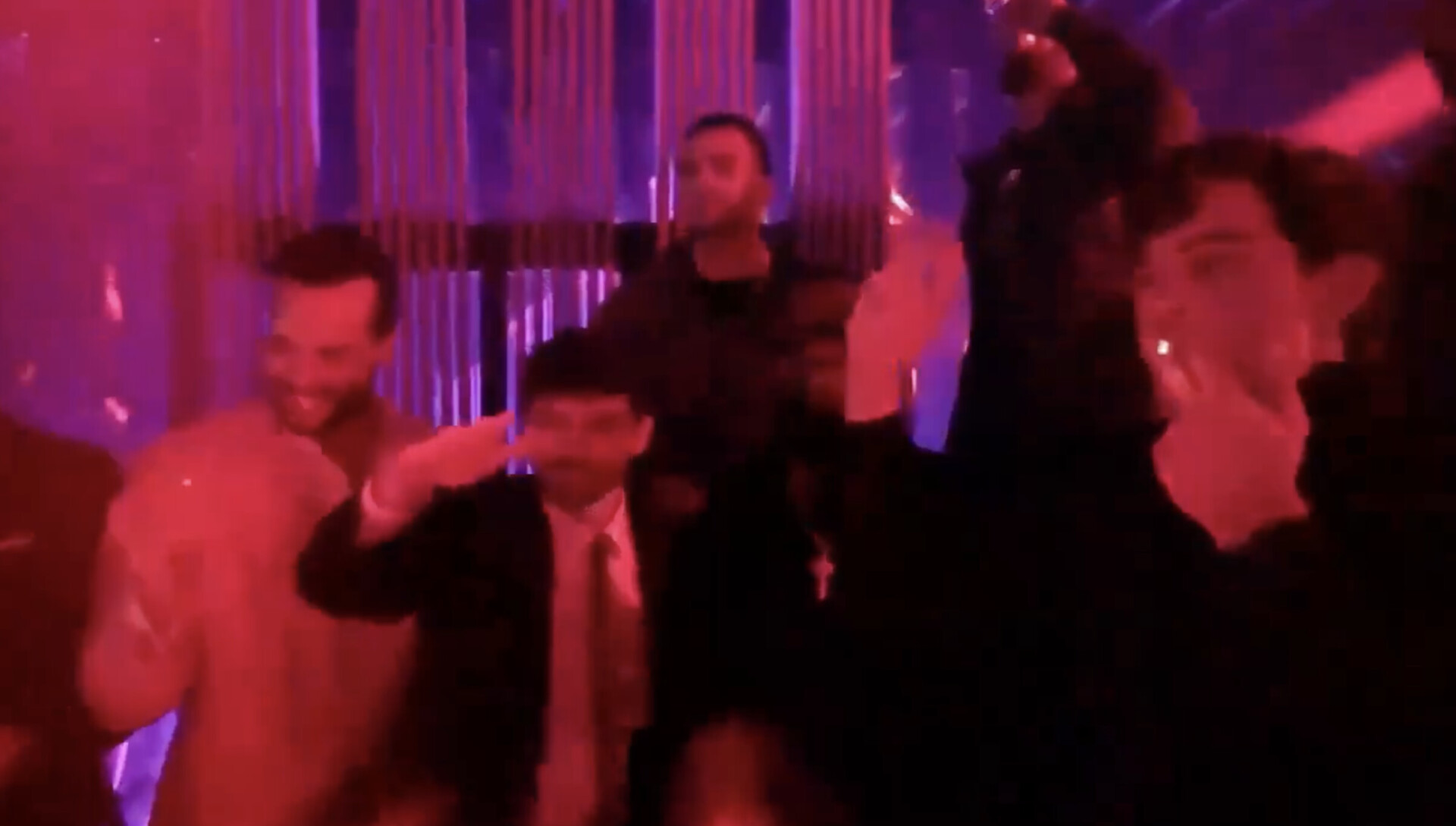
A Miami club now finds itself at the center of a controversy that goes far beyond a simple “musical incident.” At Vendôme, a private venue in South Beach, a recent party saw a DJ play Heil Hitler, an antisemitic track by Kanye West, while part of the crowd chanted along and performed Nazi salutes. Among the guests were several well-known figures from the American radical and misogynistic right, including Andrew Tate and far-right activist Nick Fuentes.
Nazis doing nazi things👀
— Mario (@PawlowskiMario) January 18, 2026
Nick Fuentes, Sneako, Clavicular, and Andrew Tate were at a Miami nightclub where Ye’s song “Heil Hitler” was played at their request. pic.twitter.com/Y7IrMAlhje
The club’s management quickly issued an apology, stating that it tolerates “neither antisemitism nor hate speech,” and announced an internal investigation to understand how this track could have been played at a key moment of the night. A classic, almost automatic response. But it no longer suffices to mask a deeper reality: clubs are no longer politically neutral spaces, and pretending otherwise now amounts to willful blindness.
UPDATE :
Following the backlash, Miami nightclub Vendôme has issued a new statement announcing the conclusion of its internal review. According to the venue, the incident involved three individuals who have since been terminated from their positions and permanently banned from the club.
Vendôme reiterated its zero-tolerance policy toward antisemitism and all forms of discrimination. The club also stated that it has introduced new protocols, including stricter content controls, increased management oversight, and reinforced enforcement measures, in order to prevent the venue from being used as a platform for hate, antisemitism, or harmful ideologies.
In its statement, Vendôme acknowledged the harm caused to the Jewish community and to Miami Beach more broadly, reaffirming its commitment to providing a respectful and inclusive environment for all members of the community.
While this response represents a clear attempt to regain control of the situation, it also raises a broader question that has repeatedly surfaced in our recent articles: where does responsibility truly lie? Beyond individual sanctions, the incident invites deeper scrutiny into the structural conditions, booking choices, and cultural signals that allow such moments to occur on a dancefloor in the first place.
Music as a signal, not an accident
Playing an explicitly antisemitic track in a club is not a simple “bad DJ choice.” Nor is it an isolated or decontextualized gesture. Music functions as a signal. It indicates who is welcome, who can feel comfortable, and who is meant to understand that they do not belong here.
What happened at Vendôme is not only the responsibility of a DJ or a single guest. It is the symptom of a space that failed—or refused—to set clear boundaries. And as always, that void is filled by the loudest, most aggressive, and most exclusionary ideologies.
The myth of festive neutrality
For months now, the electronic music scene has been grappling with the same debate. Can we still say that “everyone is welcome” when certain presences render other audiences invisible or unsafe? Can we continue to frame the party as a space outside the world when racist, misogynistic, or antisemitic ideologies sometimes find refuge within it?
The Miami incident brings back an uncomfortable truth: refusing to take a position is already a position. In this case, in favor of those who know how to exploit blur, ambiguity, and silence.
Clubs, promoters, and DJs share responsibility
Clubs like to present themselves as simple venues, DJs as mere service providers, promoters as simple organizers. But this fragmentation of responsibility no longer holds. A club chooses who it welcomes, a promoter chooses their audience, a DJ chooses what they play. Each contributes to the construction of a social space.
When far-right figures feel sufficiently at home to chant a Nazi anthem on a dancefloor, it is not an accident. It is the result of an environment perceived as permissive—or complicit through omission.
What this incident says about partying today
What shocks in this story is not only the song itself. It is the fact that it could be played without anyone intervening immediately. It is the fact that Nazi salutes were performed in a club without the music stopping. It is the fact that it took a viral video for the red line to finally be acknowledged.
The party has always been political, whether we like it or not. It can be a space of liberation, care, and community. Or it can become a stage for the normalization of hatred. The difference rarely lies in the size of the club or the quality of the sound system, but in the clarity of the values being defended.
After apologies, action
Apology statements have become a ritual. But they fail to answer the essential question: what is actually being done to prevent this from happening again? Where are the lines drawn? Which symbols are refused? Which discourses are excluded without ambiguity?
The Vendôme episode should not be treated as an isolated scandal, but as a warning. In trying to please everyone, some spaces end up becoming welcoming to those who exclude others.