

No products in the cart.
Hot take: Sold out is no longer a guarantee of a good night
For a long time, being sold out was seen as the ultimate proof of success. A packed venue, tickets gone, a date crossed out in red. In the collective imagination, a sold-out event was necessarily a good night. Even a night you absolutely couldn’t miss (hello FOMO).
Today, this equation deserves to be seriously questioned.
Because while sold out remains a powerful economic indicator, it says almost nothing about the experience itself. Not about sound quality. Not about comfort. Not about the real intensity of a dancefloor. It measures above all an ability to sell, not an ability to make people feel something.
@americanfille This is scary no water at keinemusik in Paris in 30 degrees heat #keinemusikparis #paris #keinemusik ♬ original sound – Amanda Rollins
Sold out as a marketing trophy
In today’s music and events industry, sold out has become a communication argument in its own right. It’s waved in stories, displayed in capital letters, repeated like an automatic quality label. Sometimes, what actually happens inside matters less than the fact that the event was full.
This shift turns sold out into an end goal, rather than the natural consequence of a strong proposition. The aim is no longer just to host a good night, but to produce an external sign of desire and fill the venue at all costs. Filling the room becomes a narrative.
Full doesn’t mean successful
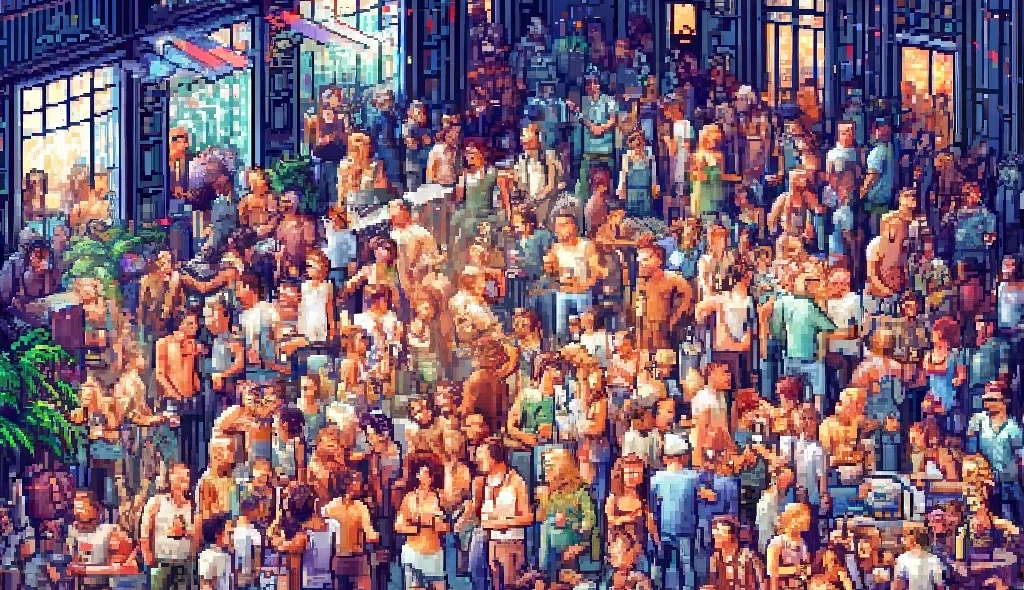
A packed venue can also be a saturated one. Too many people on the dancefloor (and you can all testify to this every weekend), endless lines at the bar and toilets, impossible circulation, stifling heat, sound adjusted for the crowd rather than for listening. In many cases, sold out degrades precisely what makes a night good.
The paradox is clear: the fuller an event is, the more compressed the experience often becomes. The audience ends up consuming a night they partially endure, but still validate—because they were there, because it was sold out.
Sold out as a social badge
Attending a sold-out event has become a symbolic marker. The ticket acts as a social passport, proof of belonging to a moment deemed desirable. This logic fuels a powerful FOMO effect, where the goal is less to live the night than to not miss it (and to show it on social media).
In this context, disappointment is often neutralized. Even when the experience is average, simply having been there is enough to compensate. The narrative takes precedence over the feeling. “I was there” becomes more important than “how was it?”.
The lie of sold out
Added to this is the fact that sold out is not always what it claims to be. In some cases, it is more a strategy than a real state.
Announcing a sell-out strengthens the event’s image, increases desirability, and activates FOMO. A few days later, last-minute tickets suddenly reappear. On the night itself, tickets are still sold at the door. Sold out creates urgency and legitimizes fast purchasing, without fully stopping sales.
This isn’t a systematic manipulation, but a gradual drift where the line between information and staging becomes blurred. The audience no longer really knows whether the event is genuinely full, or simply presented as such to maximize its impact.
When sold out shields events from criticism
Another perverse effect: sold out tends to defuse any form of criticism. A full night is rarely questioned in terms of its actual quality. The numbers act as a shield. If it was full, it must have been good. The logic is circular. And it serves investors, sponsors, and future ticket buyers…
This mechanism pulls standards downward. Audiences get used to imperfect, sometimes uncomfortable experiences, as long as the packaging looks good. Over time, expectations erode—and we accept it because everyone else does.
Other indicators do exist
Yet a good night cannot be measured solely by its occupancy rate. It is measured by the attention paid to sound, the space left for bodies, freedom of movement, and the quality of collective listening. By the way the audience inhabits the space, rather than by crowd density.
Some of the most memorable experiences take place in venues that aren’t completely full. Nights where you can breathe and dance. Where sound circulates properly. Where you truly listen. Nights remembered for how they felt, not for their status.
We need to rethink what success means
Questioning the myth of sold out does not mean rejecting success or profitability. It means distinguishing between indicators. An event can be economically viable without being saturated. It can be memorable without being sold out. At a time when electronic music is questioning its own excesses—starification, overproduction, standardization—it becomes urgent to rethink what we celebrate. Perhaps a good night isn’t the one where there were no tickets left, but the one where there was still space to listen, dance, and live.
Tagged with :