

No products in the cart.
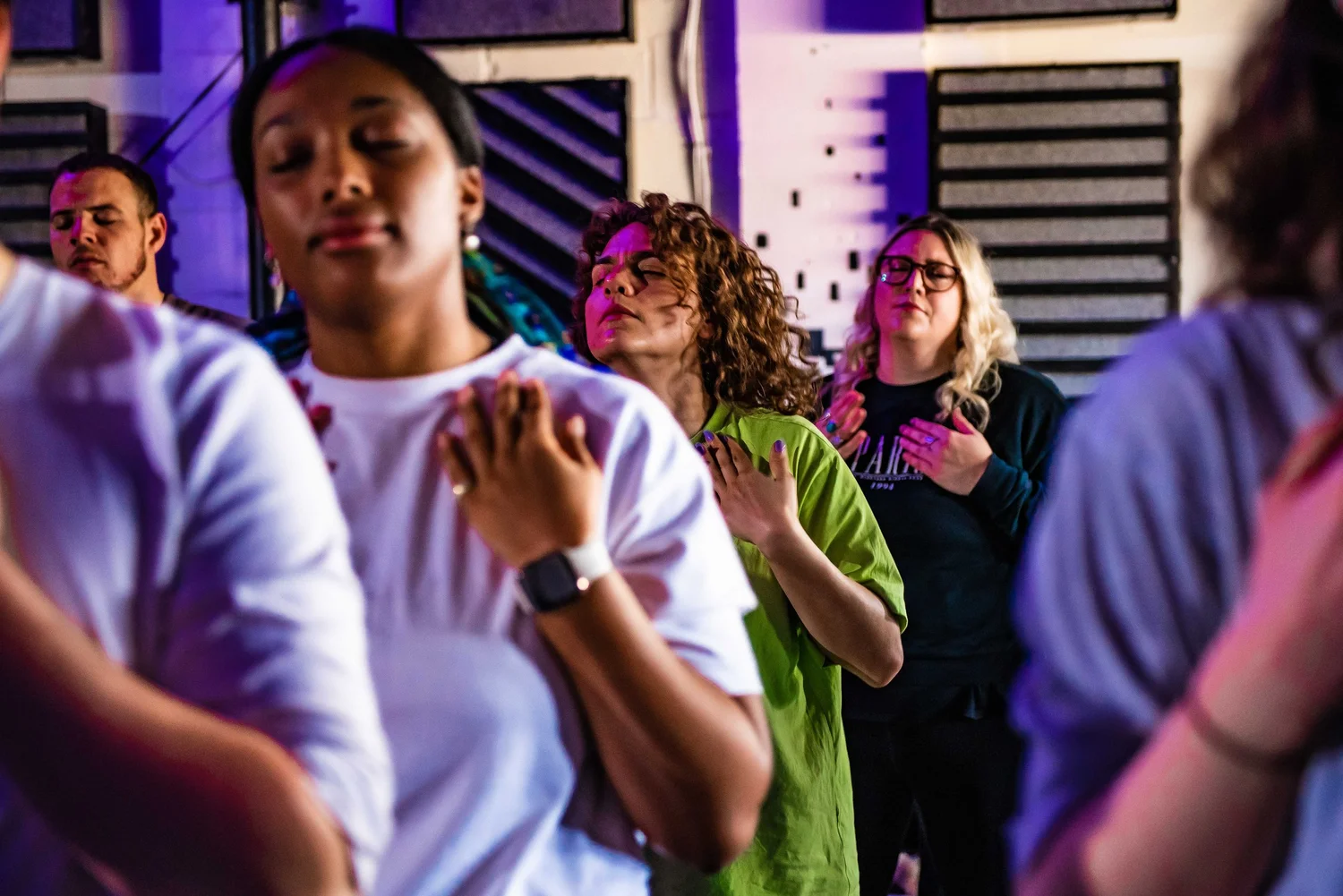
For years, nightlife has been defended with the wrong language. We talk about culture, freedom, heritage, tourism, the night-time economy, creative cities. All of that matters. But sometimes the most obvious argument gets lost: for many people, dancing simply makes life feel more bearable. Not in a vague “good vibes” way. Not only because you go out with friends or forget your inbox for a few hours. Dancing can help the body come down. It can give stress somewhere to go.
La version Française est ici
A new study by Music and Movement is Medicine, in collaboration with Professor Paul Dolan from the London School of Economics, AlphaTheta and Broadwick Live, gives data to something many clubbers have always known without being able to prove. At Drumsheds in London, around 120 participants took part in two one-hour guided sessions built around a deliberate sequence: quiet listening, breathing, seated micro-movements, standing, marching and finally free dance. Some participants wore sensors tracking heart rate, heart rate variability and movement intensity.
The interesting part is not just that dancing raises your heart rate. Anyone who has tried to get through a long stretch of jungle without pretending to need water already knows that. During the free dance sections, participants reached a level of effort close to vigorous exercise. But the most revealing moment came before the peak. During guided breathing and seated movement, heart rate variability rose by 18.5%, suggesting activation of the parasympathetic nervous system — the part associated with calm, recovery and regulation.
In less clinical terms: the bodies did not just get excited. They settled first.
That is where this study becomes important for electronic music culture. Clubbing is still too often described through the language of excess. Too loud, too late, too intense, too risky. And yes, sometimes that is fair. Nightlife can be exhausting, unsafe, badly managed, inaccessible and exclusionary. A dancefloor where someone feels watched, harassed, priced out, out of place or in danger is not healing anyone. A good sound system does not automatically make a room a community.
But the opposite is also true. A room where you can move without being judged. A moment where nobody asks you to explain yourself. Music that gives the body something to follow when the mind has run out of space. Strangers moving in the same direction without needing to know each other’s names. For some people, that is rare. For others, it is survival.
The study does not say that electronic music replaces therapy. It does not say that clubbing cures anxiety. And we should be careful with the current obsession with turning every human experience into a wellness product, a brand partnership or an institutional solution. Dance music does not need to become breathwork under LEDs to be taken seriously.
But the research does suggest something meaningful: when music, movement and environment are structured together, they can produce a measurable physiological arc. Calm, build, peak, recovery. That sounds like science, but it also sounds like a good DJ set. A good DJ is not simply playing tracks. They are holding a room. They hold energy back, release it, let people breathe, push them forward, bring them down. That is not only taste or technique. It is a way of working with bodies.
One of the strongest ideas in the report is progression. Participants did not jump suddenly from rest to intensity. Their heart rate dropped first, then rose gradually through different stages before reaching a sustained plateau during free dance. After the peak, recovery was quick: heart rate fell within minutes and heart rate variability rebounded strongly. The data points more towards exercise and immersion than anxiety.
That distinction matters. A body can be highly activated without being in danger. A room can be intense without being hostile. A build-up can be physical without being aggressive. Maybe that is part of what club culture can teach us: how to move through collective intensity without being swallowed by it.
The study also has limits, and they should not be ignored. This is a first phase, not a final answer. Wrist-worn sensors are imperfect, especially during intense movement. Some audio recordings were not fully comparable between sessions. Automatic BPM extraction was unreliable, and future research will need randomised controlled trials comparing this protocol with unstructured dancing and other wellbeing interventions. In other words: this is not definitive proof that dance music is medicine.
And honestly, that is probably a good thing.
Reducing dance music to medicine would miss half of what makes it powerful. Its value is not only usefulness. It is also disorder, pleasure, humour, anonymity, sensuality, release, and the possibility of leaving yourself for a while without being asked to become a better, more productive person the next morning.
But at a time when clubs are closing, when nightlife is still treated by many authorities as a problem to be managed, and when electronic music spaces are constantly forced to justify their existence, this kind of research offers another language. It allows us to say: these spaces are not only sites of consumption. They can also be sites of regulation, connection, movement and recovery. Not automatically. Not magically. But when they are designed with care.
So maybe the real question is not: “Does electronic music heal people?”
Maybe the better question is: “What could nightlife become if we stopped treating it only as a risk?”
A dancefloor is not a hospital. It is not therapy. It is not a public health programme by itself. But it can be a place where people return to their bodies. Where breathing gets easier. Where connection stops being a corporate word and becomes something physical again.
Sometimes it is just that: bass, a room, strangers, and the strange but very real feeling that, for a few minutes, the world weighs a little less.