No products in the cart.
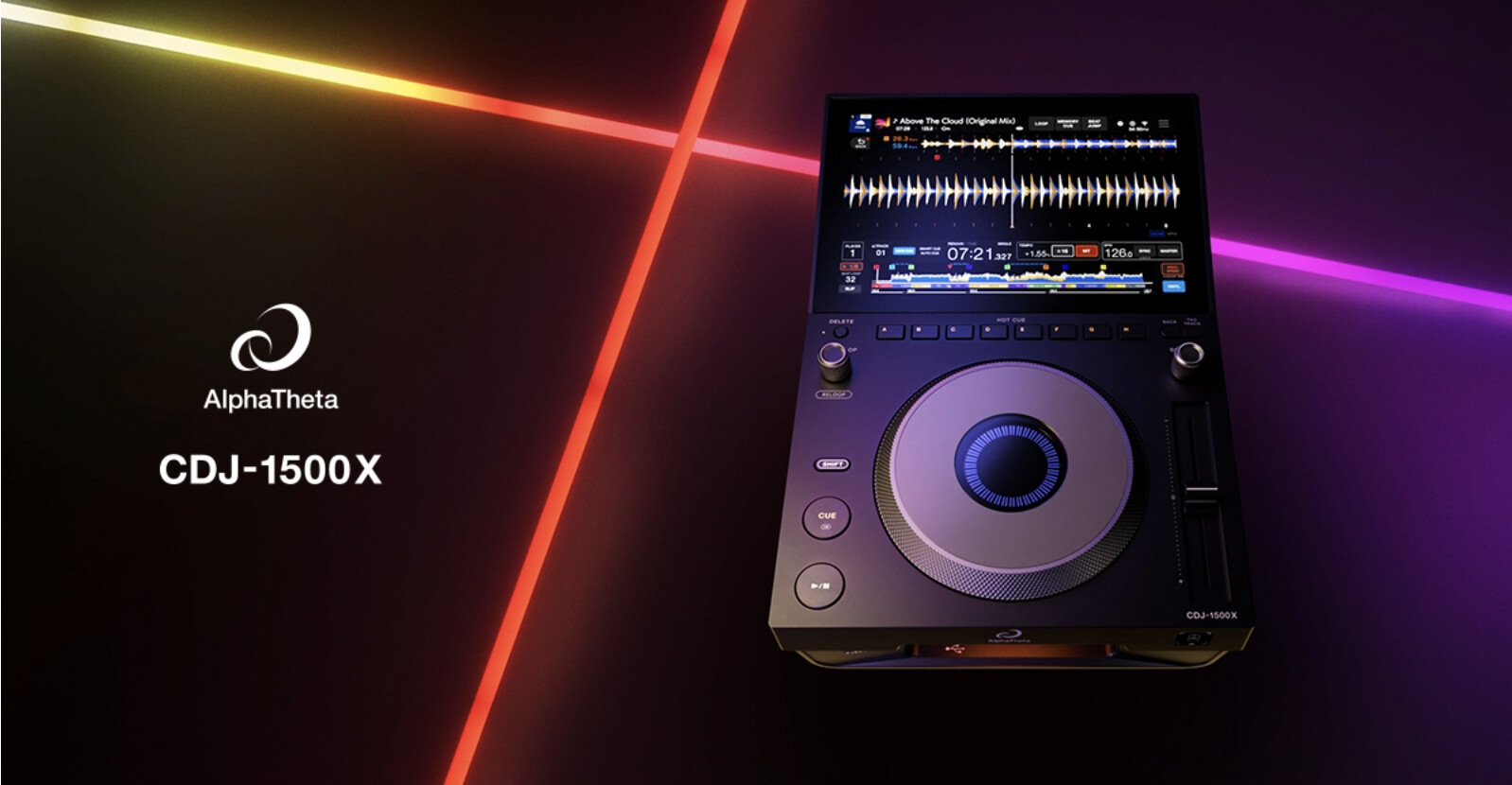
AlphaTheta vient de sortir la CDJ-1500X, une nouvelle platine pensée pour les bars, les petits clubs, les DJs mobiles et les personnes qui veulent s’entraîner chez elles sur du matériel proche des standards de club sans vendre un rein, puis le deuxième.
Article in english here.
Elle coûte tout de même 1 699 € l’unité.
Une paire revient donc à 3 398 €, avant même d’avoir acheté une table de mixage. Nous allons donc rester assez prudents avec le mot « abordable ».
Qu’est-ce que cette nouvelle CDJ apporte réellement ? Qu’est-ce qui a été retiré par rapport aux modèles plus chers ? Et pourquoi certains DJs paniquent-ils déjà à l’idée de recevoir des demandes de morceaux directement sur leur écran ?
Voici la CDJ-1500X expliquée aux gens normaux. Mais si vous n’avez pas envie de lire et que vous vous considérez comme expert-e :
Alors, concrètement, c’est quoi ?
La CDJ-1500X est une platine indépendante, comme celles que l’on trouve généralement dans les clubs. Elle peut lire de la musique depuis une clé USB, un ordinateur, un téléphone, une bibliothèque stockée dans le cloud ou certains services de streaming.
Elle se place sous la CDJ-3000X, le modèle haut de gamme d’AlphaTheta. L’idée est de conserver une partie du confort et des fonctionnalités du modèle premium dans une machine plus petite, plus légère et moins chère.
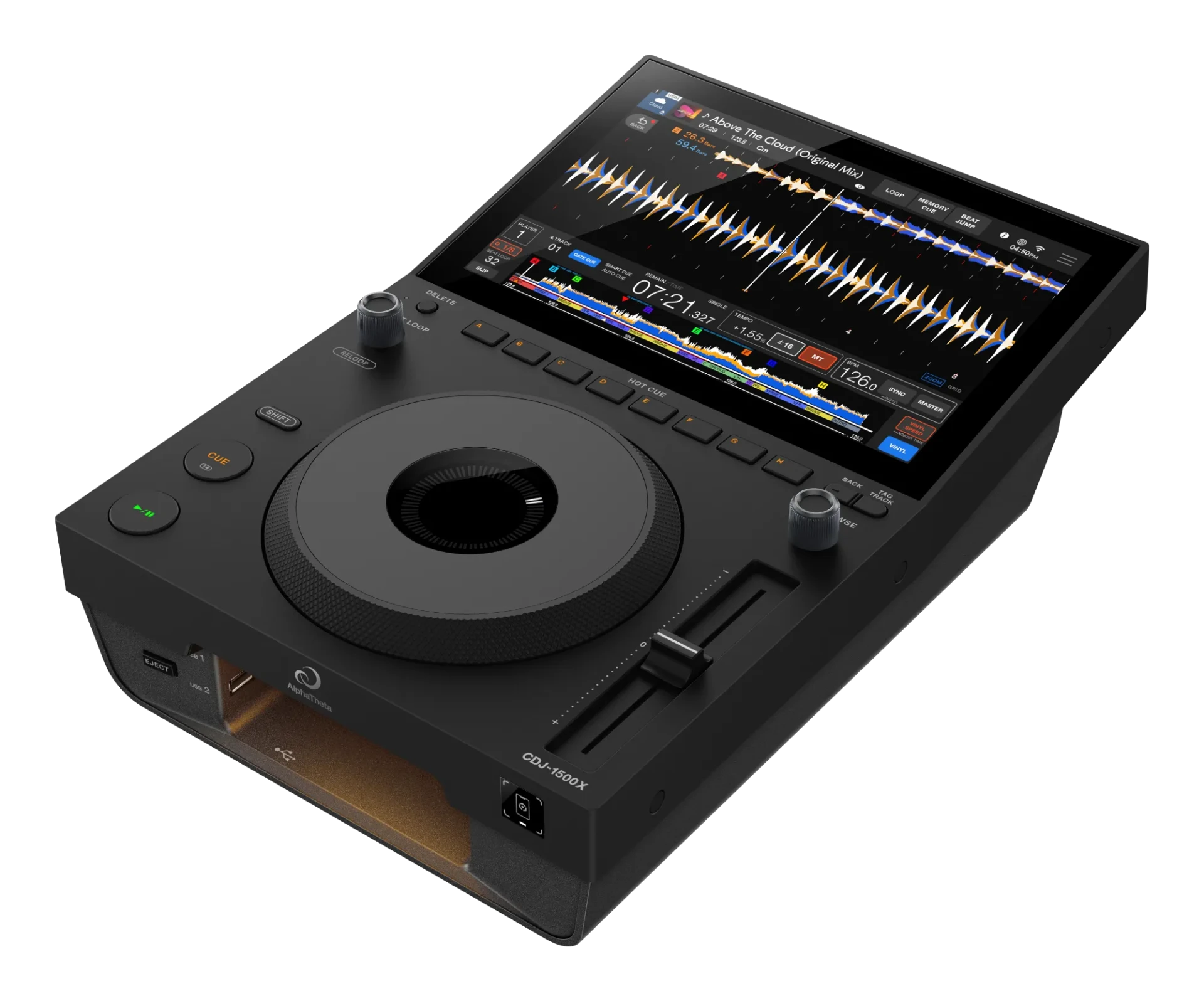
La 1500X pèse 3,6 kg et mesure environ 25 cm de large, contre 6 kg et presque 35 cm pour la 3000X. Elle est donc beaucoup plus facile à installer dans une petite cabine, dans votre setup de stream installé dans les toilettes, à transporter d’un événement à l’autre ou à placer à côté de platines vinyles.
Elle reste une platine séparée. Il faut en acheter deux pour disposer d’un setup confortable à deux decks, puis ajouter une table de mixage. Les débutant-es qui espéraient trouver un club entier dans la boîte viennent de perdre plusieurs milliers d’euros imaginaires.
Le grand écran est probablement son meilleur argument
La CDJ-1500X utilise le même écran tactile de 10,1 pouces que la CDJ-3000X.
Elle peut afficher jusqu’à 15 morceaux dans le navigateur, avec leurs formes d’onde, leurs BPM, leurs tonalités et différents repères analysés par rekordbox. L’écran peut indiquer les passages contenant des voix, les changements de BPM et la structure des différentes phrases du morceau.
Pour le dire simplement, la platine vous aide à comprendre ce qui va se passer avant que cela arrive.
C’est pratique pour éviter de superposer deux voix ou de découvrir, au milieu d’une transition, qu’un morceau change soudainement de tempo. Les DJs expérimenté·es continueront évidemment à expliquer qu’iels font tout à l’oreille après avoir fixé l’écran pendant six minutes.
La fonction Playlist Edit permet aussi de réorganiser une playlist directement depuis la platine, sans devoir revenir sur son ordinateur. C’est le genre de petite amélioration peu spectaculaire qui devient très utile lorsque vous avez préparé votre set dans un train avec 7 % de batterie.
Oui, vous pouvez toujours utiliser une clé USB
Comme une grande partie de la communication tourne autour du cloud, du Wi-Fi et du streaming, clarifions immédiatement un point : les clés USB n’ont pas été interdites.
La CDJ-1500X dispose de deux ports en façade, un USB-A classique et un USB-C. Les supports compatibles peuvent toujours être utilisés pour lire des morceaux normalement.
La platine utilise cependant le format OneLibrary. Les DJs qui travaillent encore avec un ancien format de bibliothèque rekordbox devront convertir leur collection avant de l’utiliser. Ce n’est pas très compliqué, mais c’est exactement le genre de détail que l’on découvre cinq minutes avant son set, pendant que la personne qui joue avant refuse déjà de faire cinq minutes de plus parce qu’elle n’a pas assez de morceaux.
À quoi servent le Wi-Fi et le cloud, et qu’est-ce qui pourrait mal se passer ?
Grâce au Wi-Fi intégré, la platine peut accéder à une bibliothèque rekordbox stockée dans le cloud. Elle peut aussi lire des morceaux depuis Apple Music, Beatport Streaming et TIDAL, à condition de disposer des abonnements nécessaires.
La connexion NFC permet d’approcher son téléphone de la platine pour accéder à son compte, à ses réglages et à ses playlists.
Sur le papier, un DJ peut donc arriver uniquement avec son téléphone, se connecter et retrouver sa musique sans sortir de clé USB.
Dans la vraie vie, construire l’intégralité de son set autour du Wi-Fi d’un club reste un acte de foi impressionnant. Le cloud peut servir de solution de secours, permettre d’accéder à des titres récemment ajoutés ou de retrouver un morceau absent de sa clé. Remplacer complètement les supports physiques par une connexion internet imprévisible demande toutefois un niveau de confiance que peu de technicien·nes partagent.
Nous savons de quoi nous parlons, cela fait dix ans que nous réalisons des streams dans des clubs et des festivals, et il n’y a pas une seule fois où nous n’avons pas rencontré de problème de bande passante.
Prenez une clé USB de secours. Puis une deuxième.
Les Hot Cues ont enfin de vrais boutons
La CDJ-1500X dispose de huit boutons physiques pour les Hot Cues.
Les Hot Cues permettent d’enregistrer différents points d’un morceau et d’y accéder immédiatement : une intro, un break, un drop ou n’importe quelle autre section préparée à l’avance.
C’est une amélioration importante par rapport à certains anciens lecteurs « budget » de la marque, sur lesquels plusieurs fonctions n’étaient accessibles que depuis l’écran tactile. Les commandes les plus susceptibles d’être utilisées pendant le mix restent ici physiques : Play, Cue, Hot Cues, Beat Jump et les contrôles de boucle.
D’autres réglages, dont Sync, Master et Slip, ont été déplacés sur l’écran. Certains DJs détestent l’idée de dépendre davantage d’un écran tactile. D’autres, notamment sur Reddit, rappellent que ces fonctions ne sont généralement pas activées et désactivées toutes les quinze secondes pendant un set.
Cette disposition posera donc principalement problème aux performances très techniques qui exigent un accès physique immédiat à chaque fonction.
Pour la plupart des sets, il devrait rester possible de jouer sans donner l’impression de commander un Mcdo sur une borne.
Pourquoi le jog est-il plus petit ?
Le jog wheel, cette grande roue utilisée pour ajuster la position ou la vitesse d’un morceau, est plus petit que celui de la CDJ-3000X. Sa résistance ne peut pas non plus être réglée.
Pour les DJs qui scratchent beaucoup ou qui tiennent réellement à la sensation d’un jog de taille standard, la différence pourra être importante. Pour celles et ceux qui l’utilisent principalement pour effectuer de petits ajustements de tempo, elle devrait compter beaucoup moins.
C’est l’un des compromis les plus visibles de la machine. AlphaTheta voulait réduire sa taille, et un grand jog wheel occupe énormément de place.
Une réaction sur Reddit a résumé la question avec une subtilité impressionnante :
« Jog de taille standard : NON. »
Le contrôle des boucles a changé
À la place des boutons habituels servant à sélectionner différentes longueurs de boucle, la CDJ-1500X utilise une molette Beat Loop.
On choisit la longueur de la boucle en tournant la commande, puis on appuie dessus pour l’activer. L’objectif est de permettre aux DJs de créer instantanément une boucle de la longueur souhaitée, sans passer par plusieurs manipulations.
Plusieurs utilisateurs ont comparé ce système à des fonctions déjà disponibles sur Traktor et certains autres produits AlphaTheta. Cela ne devrait probablement pas bouleverser l’histoire du DJing, mais cela semble plutôt pratique.
CoBeat : le public peut désormais demander des morceaux depuis son téléphone
Nous arrivons à la fonction qui a immédiatement réveillé Internet et nous a profondément trigger.
La CDJ-1500X est la première platine à prendre en charge CoBeat, un nouveau service d’interaction avec le public. Les personnes présentes sur le dancefloor peuvent scanner un QR code, consulter une sélection préparée par le DJ, voter pour des morceaux et envoyer des demandes ou des messages.
Ces requêtes apparaissent ensuite directement sur l’écran de la platine.
Avant d’imaginer une foule entière demandant collectivement « Sandstorm » au milieu d’un set de techno profonde et hypnotique, précisons que la fonction est optionnelle. Le DJ peut décider quels morceaux sont proposés, accepter ou ignorer les demandes, et désactiver complètement CoBeat.
Donc, détendez-vous. Le service semble principalement pensé pour les bars, les mariages, les événements privés et les espaces où les demandes du public font déjà partie du travail. Il pourrait remplacer la personne qui hurle le titre d’une chanson dans votre oreille en tenant son téléphone à six centimètres de votre visage.
Son intérêt paraît moins évident dans un club construit autour d’une direction artistique précise. Certains utilisateurs de Reddit imaginent déjà des demandes de Spice Girls et de country rap envahir l’écran. D’autres ont rappelé que personne n’oblige le DJ à activer la fonctionnalité, un détail apparemment beaucoup trop raisonnable pour arrêter la panique.
CoBeat ressemble donc moins à la mort de la curation musicale qu’à une boîte à demandes numérique que l’on peut éteindre.
Qu’est-ce qui manque par rapport à la CDJ-3000X ?
Le prix inférieur implique plusieurs compromis.
La CDJ-1500X ne possède pas de jog wheel de taille standard avec résistance réglable. Elle ne propose pas Key Sync ni Key Shift, des fonctions qui permettent d’aligner automatiquement ou de modifier la tonalité musicale des morceaux. Elle dispose uniquement d’une sortie analogique RCA, sans sortie audio numérique.
Ses caractéristiques audio annoncées sont également inférieures à celles de la CDJ-3000X, avec un rapport signal-bruit de 105 dB contre 115 dB pour le modèle haut de gamme. La différence devrait probablement davantage compter sur un gros système de son professionnel que dans un home studio ou un petit bar.
Certaines commandes physiques ont aussi été déplacées vers l’écran tactile.
En contrepartie, la 1500X est nettement plus petite et légère, tout en conservant le grand écran, les Hot Cues physiques, l’accès au cloud, le streaming, le Wi-Fi, le NFC et PRO DJ LINK.
Pourquoi son prix fait-il débat ?
À 1 699 €, la CDJ-1500X coûte beaucoup moins cher qu’une CDJ-3000X neuve. Elle reste toutefois très loin d’être bon marché.
Le principal problème soulevé par plusieurs DJs concerne le marché de l’occasion. Les CDJ-3000 de première génération peuvent parfois être trouvées à un prix assez proche. Elles sont plus grandes et moins centrées sur les fonctions cloud, mais restent des lecteurs professionnels haut de gamme avec un grand jog wheel et davantage de commandes physiques.
Faut-il acheter une 1500X neuve, plus petite et plus moderne, ou une CDJ-3000 d’occasion, plus complète mais plus encombrante ?
Il n’existe pas de réponse universelle. Tout dépend de l’espace disponible, de l’importance que vous accordez au cloud, de l’état du matériel d’occasion et de votre manière de mixer.
Plusieurs personnes estimaient que la 1500X aurait été un achat évident autour de 1 200 €. À 1 699 €, elle entre dans une gamme de prix où les comparaisons deviennent inévitables.
À qui s’adresse-t-elle réellement ?
Pour un bar ou un petit club, la proposition a du sens. Deux platines professionnelles indépendantes prennent moins de place, peuvent être connectées à la table de mixage choisie par le lieu et remplacées séparément en cas de panne.
Pour un DJ mobile, le poids et la taille comptent réellement. Une paire de 1500X pèse 4,8 kg de moins qu’une paire de 3000X, avant même de prendre en compte la taille réduite des flight cases.
Pour un home studio, elle propose un workflow proche d’une cabine de club sans obliger deux énormes lecteurs à coloniser la table de la cuisine.
Pour les DJs qui scratchent, utilisent beaucoup Key Sync, veulent un grand jog ou recherchent les meilleures caractéristiques audio possibles, elle pourra sembler trop limitée.
Pour une personne qui souhaite simplement commencer à mixer chez elle, elle reste très chère. Un contrôleur ou un système tout-en-un offrira un setup complet pour beaucoup moins d’argent.
Alors, bonne ou mauvaise platine ?
La CDJ-1500X ressemble à un compromis plutôt cohérent vendu à un prix premium. MAIS nous ne l’avons pas encore testée et ne pouvons donc pas encore vous donner une réponse réellement honnête.
CoBeat attirera probablement davantage l’attention que tout le reste, parce que l’idée de recevoir des demandes de morceaux directement sur une CDJ touche l’une des peurs les plus profondes du métier : voir apparaître « Tu peux mettre un truc dansant? » sur un écran à 1 699 €.
Heureusement, on peut l’éteindre.
La CDJ-1500X ne remplace pas vraiment la CDJ-3000X. Elle propose une version plus légère, plus connectée et conçue pour les petites cabines, avec suffisamment de fonctions professionnelles pour éviter de ressembler à un jouet.
Même si, selon Reddit, elle ressemble quand même un peu à un jouet à 1 699 €.