No products in the cart.
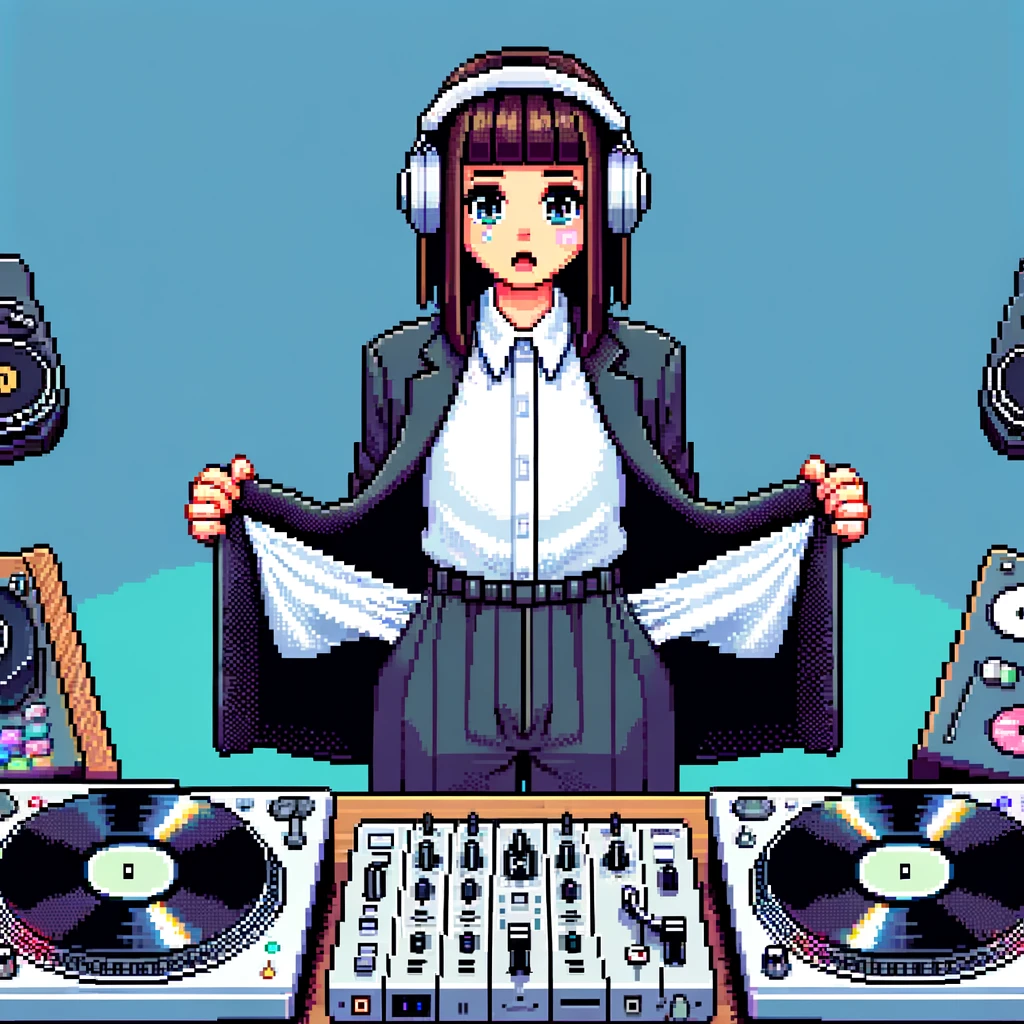
We keep confusing artistic careers with profitability. It is unfair, and deeply classist.
Article en français ICI.
We all know the myth: a “real” artist is supposedly someone who lives entirely from their music. No day job, no side hustle. Just the studio, the bookings, the trips, the gigs, the hotels, the restaurants, and the Instagram posts to show it all off.
Except that image is mostly fiction. A very sellable one, I’ll admit, but rarely one that reflects reality. Most DJs, producers and artists do not live exclusively from their art. And yet, they create just as much, sometimes even more, than others. So why do we keep acting as if not making a living from music is proof of failure?
The myth of the full-time DJ
In the collective imagination, being a full-time artist is still presented as the final stage. The goal. The moment when it “works out”. You quit your job, live off your gigs, turn your passion into your profession, and everyone is supposed to crown you as a real artist, a real DJ.
But in reality, making a living from music says very little about the artistic quality of a project. It says much more about several factors that are not accessible to everyone: an economic model, a network, good timing, access to the right opportunities, and often a certain level of financial security.
We have turned one possible consequence — managing to generate enough money from your art — into a criterion of legitimacy.
But spoiler: income is not proof of talent, nor is it proof of artistic depth.
The scene loves talking about passion, but judges through profitability
This is one of the biggest hypocrisies in our current scene. In interviews, people love repeating that music is about passion, sincerity, culture and community. But in practice, recognition is often measured through very capitalist indicators. How many gigs? How many followers? Which agency? Which festival? What fee? And so on.
And those who build more slowly, or in parallel with another job, often end up placed in a less serious category, less considered for important bookings.
It is almost as if art still had to be validated by the market in order to fully exist.
Yet many artists who have a job on the side are not waiting for a “real” career to begin. They are already artists. They simply exist within a system that does not allow everyone to survive solely through music. And sometimes, it is also a choice.
Full-time is not accessible to everyone
We also need to stop pretending that everyone starts from the same place, or has the same chances of succeeding.
Dedicating yourself entirely to your art often requires much more than talent and discipline. It requires time, a safety net, sometimes family support, the ability to survive periods with no income, and the capacity to invest in equipment, classes, travel, communication, content and networking.
Some people can accept underpaid gigs because they are “strategic”. Others can spend entire days producing without wondering how they are going to pay rent. Some can afford PR, creative direction, sponsored social media campaigns, and a professional image before the project itself has even been truly recognised.
None of this is necessarily a problem in itself. But pretending that this level of professionalisation is only the result of artistic merit is what keeps a classist illusion alive.
Everything listed above costs money, time, or both. And in a scene where image matters so much, these starting differences inevitably shape the way artists are perceived. Being full-time is not simply a matter of ambition.
Having a job on the side can also be a form of freedom
We often talk about the day job as a burden, or as something slightly embarrassing that should be hidden. But it can also offer a form of independence.
Having another source of income can create a kind of freedom that many full-time professionals can no longer afford. The freedom to turn down certain gigs. The freedom not to shape your entire practice around what works commercially. The freedom to create without turning every track, every gig, every post into a question of survival.
Of course, this is not about romanticising struggle. It is exhausting. Working during the day and producing at night, rehearsing after work, DJing on weekends, answering emails between shifts — none of this is ideal. But it is not proof of a lack of seriousness either. On the contrary, it requires huge discipline, especially when recognition is limited.
We need to stop believing that only full-time artists are truly committed to their practice. Many artists with jobs on the side show a level of rigour, patience and endurance that the scene does not value enough.
Artistic independence is not just a slogan
In a scene where political and social positions are increasingly expected, the question of independence becomes central.
Turning down a problematic booking, boycotting an event, refusing to play alongside certain people, taking a public stance — all of this comes at a cost. And that cost is not the same depending on whether or not your rent depends on your presence in the scene.
When your entire financial survival depends on your gigs, saying no can become much more complicated. This is not an automatic excuse. But when you reach a certain fee level, you should at least be taking a stand on social issues — war, sexual and gender-based violence, homophobia, transphobia, and so on.
Values are easy to display when they do not directly threaten your income. They become much harder to uphold when they mean potentially losing work, visibility or access to networks.
In that context, having a job on the side can also give you room to manoeuvre, and to avoid betraying your moral and human values. And that, too, is a form of artistic power.
Who gets to decide who is legitimate?
So, who decides who counts as a “real” artist?
Today, legitimacy often comes through highly visible signs: bookings, followers, streams. But these indicators are deeply biased, and sometimes manipulated. They do not say everything about someone’s work. They do not measure singularity, research, local impact, or the sincerity of an artistic approach.
What they mainly show is that, at some point, a project managed to enter a circuit profitable or visible enough to be considered serious.
The problem is that when we use these criteria as our main filters, we make many profiles invisible. Artists who are less bankable, less available, less market-ready 🤢, but sometimes just as important to the scene.
The ones building collectives, playing in smaller venues, experimenting outside expected formats, keeping culture alive without necessarily being able to live from it. These are also the people who help parties keep ticket prices accessible.
You can be an artist without being profitable
This is not about glorifying precarity. Nor is it about saying that making a living from music is suspicious. Being properly paid for your art should obviously be possible, desirable, and why not normal.
But we need to stop treating full-time as the only respectable horizon.
Having a job on the side does not mean you have failed. It can mean that you refuse to put yourself in financial danger. That you choose another timeline. That you protect your practice. That you want to create without depending entirely on booking, visibility and profitability logics.
The electronic music scene needs hybrid paths. It needs DJs who are not always available, but who have something to say. It needs artists who do not fit perfectly into the industry’s boxes, but who keep feeding the culture.
Being an artist is not an administrative status. It is a practice.
And having a job on the side does not make that practice any less real.