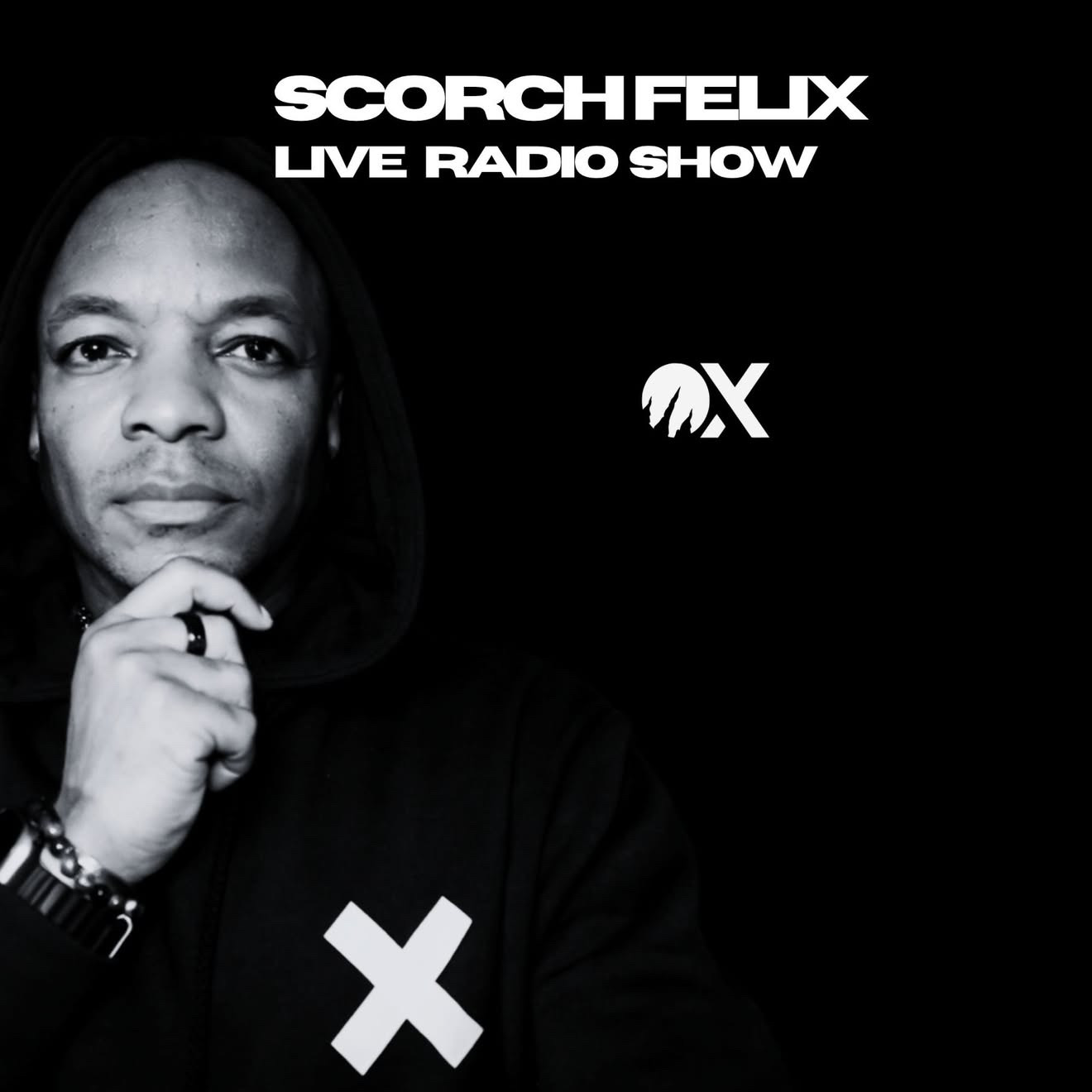
Our Clubbing TV resident Scorch Felix has just celebrated the 500th episode of Scorch Felix Live. It’s a good moment to ask what we still look for in a radio mix when a streaming platform can serve up music at any hour. We’ve probably never had access to so much music. We’re swimming in a constant stream of information, with a fair amount of mediocrity thrown in that we gradually get used to. For all that abundance, it’s easy to end up listening to more of the same. And it still takes patience to give a track a proper listen. Scorch Felix talks about the records that took him in a new direction and the freedom he still finds behind the decks.
Digging for Someone Else
On a streaming platform, it’s easy to keep a mood going. You put on a track and the next one picks up where it left off. When you tune into a radio mix, you get to spend some time with someone else’s obsessions. A track might leave you wondering what it’s doing there, only for you to find yourself waiting for it the second time around. There’s a little trust involved. You let a DJ take you somewhere before you know whether you’ll want to stick around.
Asked where radio fits into all of this, Scorch Felix talks about what it brings to his work as a DJ.
“Human discovery. With years of great music passing by my ears, you get an emotional connection to good music that algorithms, streaming platforms, and playlists just don’t have. You still need the human ear, so having a radio show you can move very quickly whilst the algorithms and machine learning are chugging along, you’ve already discovered great artists and music before they can even try and replicate us.”
To hear the difference that “human ear” makes, listen to what he picks and pay attention to what he leaves out. In his early live shows, he brought on guests and talked about the local scene. These days, his point of view comes through mostly in the sets themselves.
“On my live show I used to have guests and talk about the local scene, etc., but since having my own radio show I mainly focus on the music and showcasing new artists, as well as digging into those crates to find gems that really move me. I avoid the charts, etc., as I try to carve my own sound with my sets.”
Leaving the charts out of the process makes a tangible difference for artists. Once a track makes it on air, it gets the time the DJ has chosen to give it. In the middle of a set, you can hear a track unfold over several minutes when you might have given it only a few seconds while skimming the week’s releases.
Scorch Felix readily admits that his first pass is quick. It’s one of the more revealing details of the interview. Sometimes digging means knowing within seconds which track you want to keep, then sitting on it until you have the right set for it.
“I basically have it quite organised now. I know my favourite labels and artists, and promo lists. I can listen to a track for a split second. I can tell if I like it very quickly. If I have to go back and listen again, it means it didn’t grab me. I usually have an idea for my show well in advance and I have several playlists building simultaneously, so I usually have tracks up to a few weeks in advance ready to go.”
Subjectivity is part of the deal. A radio show reflects the blind spots of the person putting it together as much as it does their favourite finds. Scorch Felix might meet an artist online and want to give them some airtime. We asked him what happens when the track comes in and the enthusiasm wears off.
“You’d see I’m not feeling it if I played it. Basically, my whole body would stop moving, lol.”
What You Can Play on the Radio
In a club, a DJ can feel the room losing interest and decide to take the set somewhere else. On the radio, that reaction is out of sight. There’s a bit of a thrill in taking that chance. Scorch Felix uses that freedom when he plays his own productions, too.
“Being able to drop brand-new IDs straight from the studio to test, as well as those more creative tracks that wouldn’t necessarily translate to a live floor, but there is something about them that gives you that ‘oh yeah, this is nice’. Basically, you have a bit more creative licence.”
That freedom also helps explain the turn he took after hearing “Camargue”. Moving from trance to hardgroove might sound like switching sides. Listening to him talk about his productions, you get a sense of how naturally he carries the things he loves from one genre into another. A few years ago, that led to a bootleg he still talks about with a smile.
“In the past though I’ve played and released many genres like tech house, electro, trance, even EDM, so I’m versatile on that front. If I’m vibing with the genre I’ll produce and release it. All of it works to building your own sound as you’ll carry things forward from each genre. I did a very naughty bootleg (Binary Finary) a few years ago. I mixed trance with future bass. It got supported by Armin and Dyro. I don’t think the trance scene was very happy with me, but it was fun.”
That same instinct for taking the long way round comes up when he talks about his vinyl days. He remembers looking for the versions that got less play on the B-sides. That detail says something about how we discover music. Sometimes it starts with a record you already know, simply because someone took the time to turn it over. When we ask about younger producers embracing ever-faster sounds, he talks about how long it takes to feel comfortable going your own way.
“I’m super picky but not dismissive. It has to have that something special about it. You can hear it in the production. It’s like the producer has given you part of themselves. In a sea of generic sound I get excited when I hear something that has been produced well. It’s not just a generic track. I think that with time as you develop as an artist, you start to have the confidence not to fit in as much. That’s how great tracks are born.”
Before the Classics Were Classics
When Scorch Felix thinks back to the rave scene he came up in as a DJ, he remembers the pleasure of hearing a record before it had a reputation. Today, we might recognise those tracks in the first few bars. Back then, it took a DJ deciding to play one and a roomful of people wanting to hear it again. Part of what he misses about those years is the way that first listen happened.
“I think the love and sense of community is missing. Everybody is too busy online trying to outdo each other or the algorithm, which neither is helpful for the culture. The scene grew out of people coming together from all walks of life, backgrounds, ethnicities, sexual orientations, etc., for one thing. The music, nothing else, not clout, not one-upmanship, just pure passion, excitement for the music. You’re basically going out and hearing those classics that weren’t classics yet. They were white labels that I was lucky enough to hear and play. I was very lucky to be in the middle of the scene’s early growth, but I never pine for the past. I enjoy the freshness of the scene and its new challenges.”
Ever since he first went on air on Kiss 90 FM, radio has given him a place to do the work that matters just as much to him as mixing: seeking out new music and finding something worth sharing. That might be what those 500 episodes tell us most about his time behind the decks.
“This DJ and producing thing is a lifestyle choice. It’s a lifelong calling. There will be many years where not a lot will be happening, but you have to keep focused through marriages, divorces, ups, downs, lots of gigs, no gigs, rude labels, nice labels. It’s all in there and you have to navigate it all with patience and a strong self-belief, which takes me back to my show. Without fail, every week I deliver a live mix, not software-mixed, live on my decks every week. No people, no dance floor, just the love of what I do and keeping connected with the scene.”
As for what’s next, Scorch Felix talks about getting back into the studio and releasing more music on his label, Frequent. He’d also like to work with some of the artists whose records he’s been playing for years.
SHANA BIZE
In Partnership between Scorch Felix and ClubbingTV