

No products in the cart.
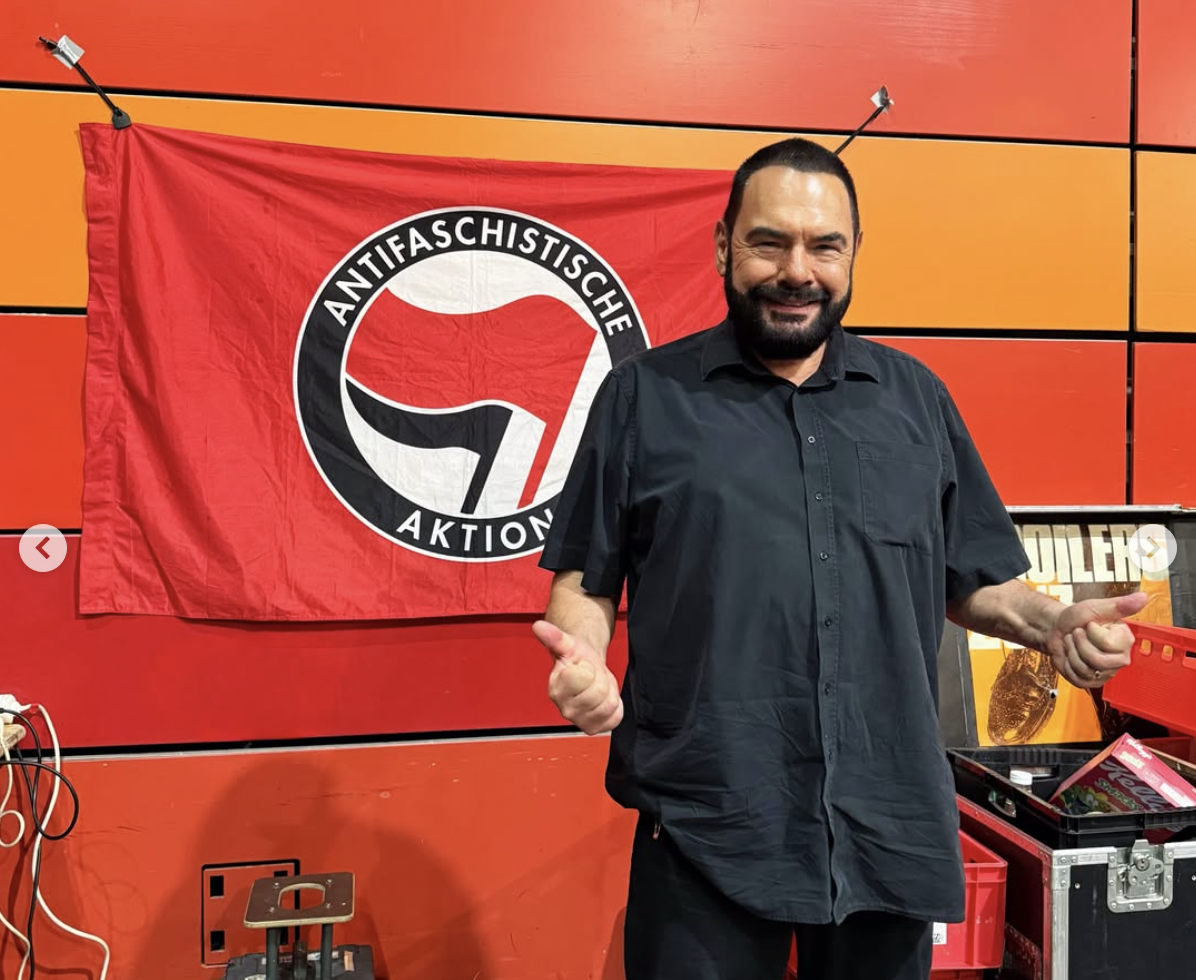
Alphaville were due to perform at the Glücksgefühle Festival at the Hockenheimring on Friday, September 4. Two days before the show, the band announced that their appearance had been cancelled. At the centre of the dispute was a request from the festival that no political statements be made on stage. A position defended in the name of a “completely apolitical” event, but one that becomes considerably more complicated when looking at what Marian Gold had actually been criticised for.
Article en français.
On Wednesday, September 2, Alphaville published an unusually forceful statement. The band explained that its performance at Glücksgefühle Festival, scheduled for two days later, had been cancelled by the organiser, and reproduced part of the message it says it received: the festival would tolerate “no political topics or statements of any kind” on its stages.
Marian Gold described it as a “Maulkorberlass”, effectively a gag order, and argued that freedom of opinion, speech and artistic expression were at stake. Alphaville said it would continue to stand for “freedom, tolerance and democracy”.
Glücksgefühle has not disputed the substance of the story. In the statement published on Instagram, the festival instead confirmed that it had asked the band to refrain from “socially controversial topics and political speeches” on stage.
Its justification can be summed up in three words that have become central to its communication: “GOOD VIBES ONLY”.
The festival says it wants to offer its audience a weekend in which they can forget about everyday life, and argues that its stage should belong to music rather than political confrontation. It also insists that the rule is not aimed at any particular political position: according to the organisers, Glücksgefühle is “completely apolitical”, regardless of whether views come from the right, the left or anywhere else.
It actually started a few weeks earlier in Hamburg
The context is important in understanding what the broad term “politics” means in this particular case.
On July 18, Alphaville performed at the Volksparkstadion in Hamburg as part of Die 80er Live, another production associated with organiser Markus Krampe. During Carry Your Flag, performed with a rainbow flag behind the band, Marian Gold addressed the crowd and directly mentioned the AfD. According to a report published by n-tv the following day, he said people should not allow, through the AfD, “the Nazis to take our country away from us”. WDR also reported that he had spoken out against far-right tendencies and in favour of freedom, tolerance and democracy.
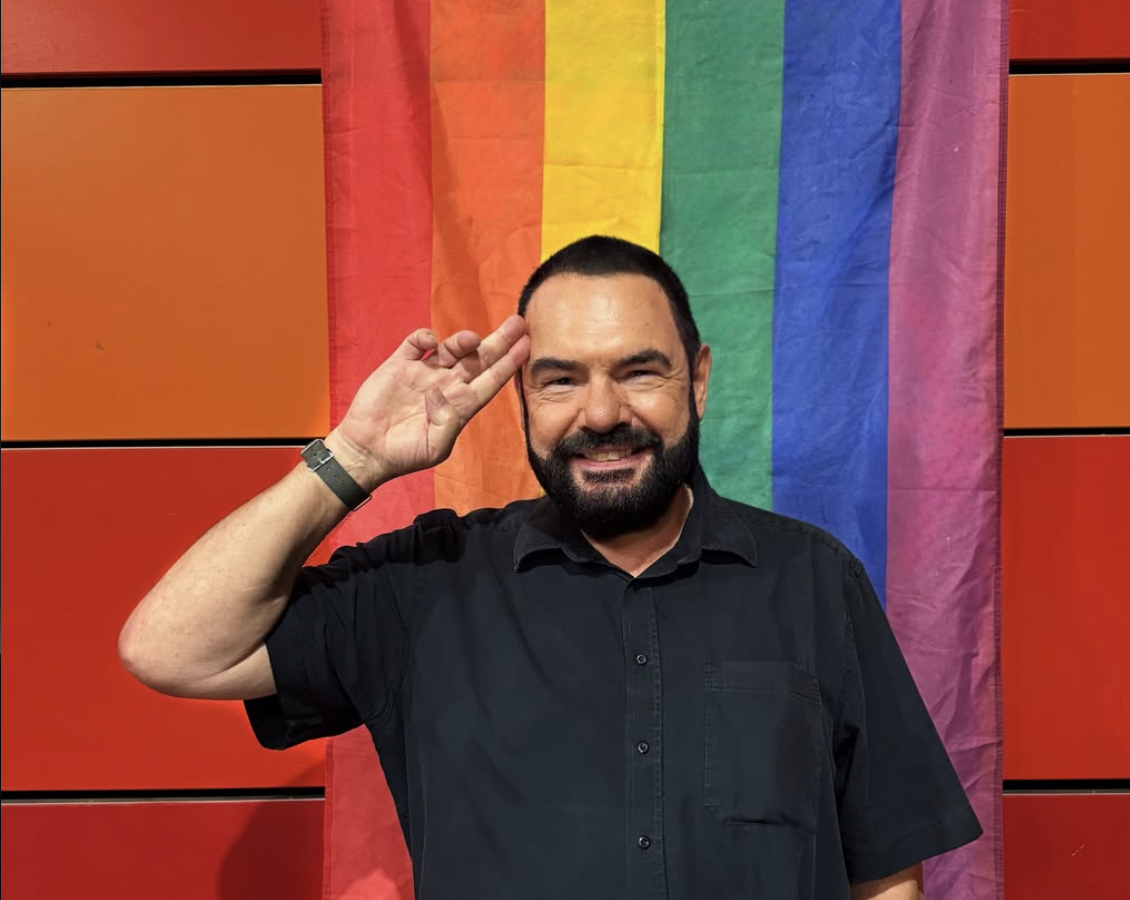
This is the concert that various reports identify as the origin of the dispute.
In its latest statement, Glücksgefühle says it subsequently received complaints from some attendees who felt that the political interventions had affected the atmosphere. The festival says it then asked Alphaville, ahead of a second collaboration, to focus solely on the music. According to the organiser, the band accepted and respected that request.
One detail is worth clarifying: the organiser does not name this second date. Alphaville had been scheduled to perform at Die 80er Live in Gelsenkirchen on July 25, but cancelled after Marian Gold was injured. The group did, however, perform at Die 80er Live in Frankfurt on August 8. That therefore appears to be the most likely second appearance, although Glücksgefühle has not explicitly confirmed this.
Ahead of the Hockenheimring performance, the festival says it reminded the band of the same requirement once again. This time, no agreement could be reached. Alphaville were removed from the line-up.
Glücksgefühle had already made its position clear before the controversy
This justification was not invented once the backlash began.
In an interview with SWR in mid-August, Markus Krampe had already said: “I am a major opponent of political statements at a festival.”
His reasoning was that people with different political views come together in the same audience to have a good time and forget about their everyday lives. Politics, he argued, could return “on Monday” once the weekend was over.
That chronology matters. Glücksgefühle did not invent its concept of being “apolitical” retroactively to justify Alphaville’s cancellation. It is applying an idea of what a festival should be that one of its organisers had already publicly expressed. Whether that idea can actually work is another question.
What does an “apolitical” stage actually mean?
Glücksgefühle draws a fairly clear distinction: Marian Gold is free to hold whatever political opinions he wishes, but the festival believes it can determine what he expresses while using its stage.
From the perspective of a private organiser, that distinction can be defended. Automatically describing the situation as censorship in a legal sense would therefore be inaccurate, particularly since the contractual terms between the two parties are not public.
Culturally, however, things become considerably less straightforward.
The incident that appears to have triggered the dispute was apparently not an artist turning a concert into an electoral rally. It involved a statement against the AfD and the far right, made during a song performed in front of a rainbow flag. By placing that intervention among the subjects that should disappear from its stages in order to preserve a consensual atmosphere, the festival is inevitably making a decision about what becomes too political to be heard.
And that line may prove particularly difficult to maintain this weekend.
The festival’s own line-up already complicates the rule
Glücksgefühle’s official programme includes Nura, Marteria, Zartmann and Culcha Candela, among others — artists whose work or public statements have already dealt with political issues. SWR specifically highlighted the political engagement of Nura and Marteria in its analysis of the dispute.
Since Alphaville’s cancellation, the question is no longer theoretical.
According to Express and Rolling Stone Germany, Culcha Candela has said it intends to maintain — and even strengthen — its anti-AfD message during the festival. Zartmann also has a track in his repertoire containing an explicit statement against the party.
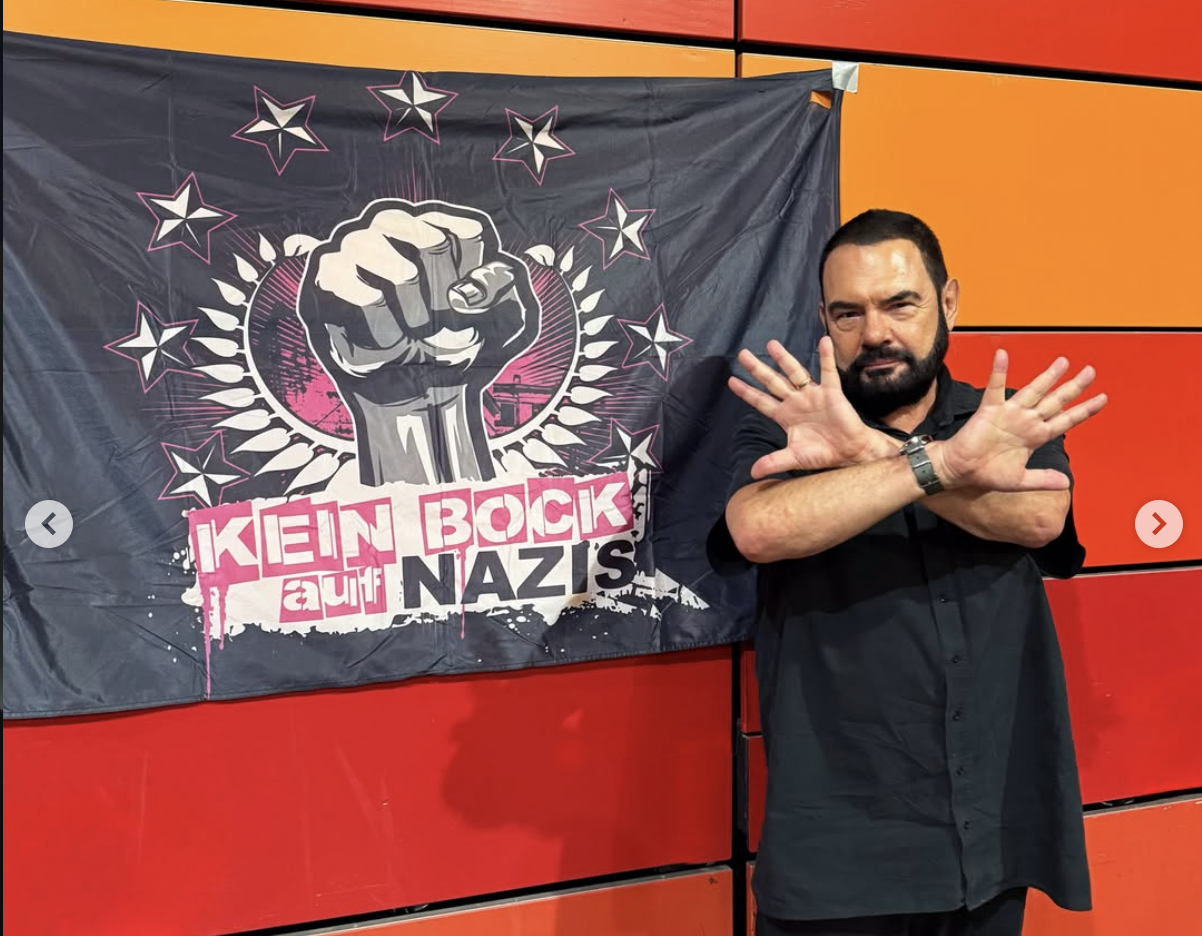
Glücksgefühle will therefore either have to apply its rule consistently or explain which forms of expression are ultimately compatible with “GOOD VIBES ONLY”.
By trying to remove politics from the festival, Glücksgefühle made it the headliner
The reaction from the music community was swift.
On Wednesday night in Münster, Campino devoted part of Die Toten Hosen’s concert to the controversy. He called it “absurd” to exclude an artist over statements against the AfD or Donald Trump. Marian Gold then appeared on stage and performed Forever Young with the band in front of around 25,000 people. The Donots also publicly supported Alphaville. Peter Brings said that his band would have refused to perform under those conditions had they been booked this year.
The episode has therefore produced exactly what Glücksgefühle wanted to avoid: before the festival’s main weekend has even begun, its relationship with politics has become one of the central conversations surrounding the event.
An organiser can obviously want to offer its audience a few hours of escape. But a concert has never consisted solely of the tracks written on a setlist. Artists speak, decide what they stand for and bring a history with them that does not disappear when they walk through the gates of a festival.
There is also one final distinction that the word “apolitical” risks dangerously erasing. Racism, homophobia and xenophobia do not suddenly become ordinary “opinions like any other” simply because they are now defended or normalised within political discourse. German law itself draws limits: incitement to hatred and certain attacks on the dignity of groups are criminal offences, while racist, xenophobic or sexual-orientation-related motives are explicitly recognised when determining sentences.
By 2026, we may have become so accustomed to seeing these ideas treated as simply another side of a debate that pointing out how directly they target other people’s rights and dignity is itself almost framed as the “political” position. And this is precisely where “Good Vibes Only” gets under our skin: treating a discourse that attacks people for who they are as equivalent to the discourse rejecting that attack creates a false equivalence.
A festival can choose not to become a party-political platform. But asking an artist not to denounce the far right, racism or homophobia in the name of being “apolitical” already says something about what that festival considers acceptable on its stage. “Good Vibes Only” can be a slogan. The moment it becomes a rule determining what can and cannot be said between two songs, it also becomes an editorial decision.
And Glücksgefühle will now have to show just how far it intends to take that rule.