

No products in the cart.
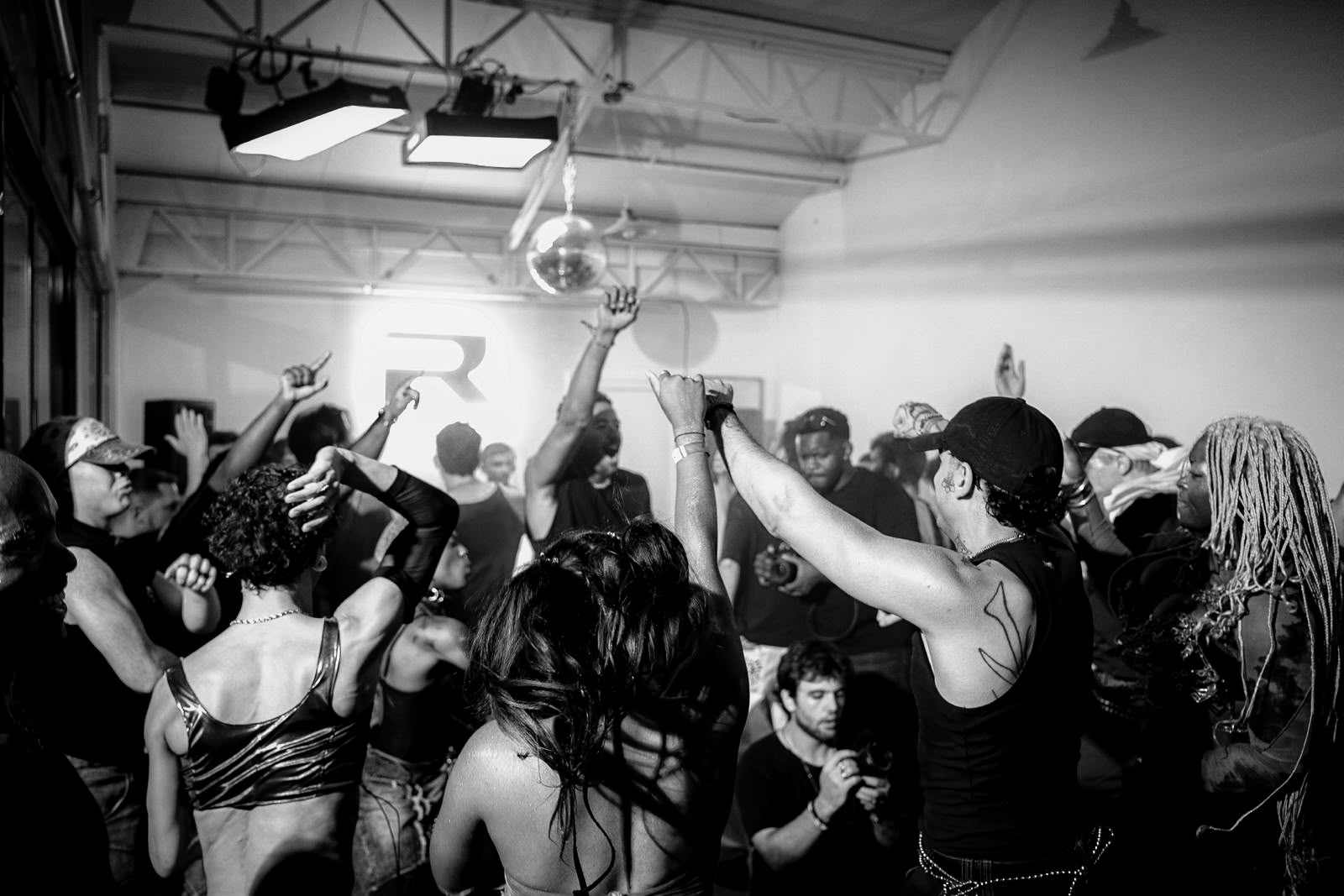
Through our interview with Tecna, founder of the O2ZONE collective, we explore the role of dance in a techno scene where individual expression, performance, and the need to belong sometimes clash, or even collide.
We have to admit, we’ve questioned the point of choreographed or semi-choreographed performances on a dancefloor that seems to be becoming increasingly uniform. We dress alike, we dance, or at least try to dance, in the same way. And when questions arise, who better to ask than the people directly involved? After all, understanding their perspective is the best way to reach more informed, and above all, more nuanced conclusions.
O2ZONE: Who Are They?
Founded by Tecna, a professionally trained dancer you may have spotted at numerous Parisian parties, O2ZONE is a collective of dancers and performers bringing the body back to the heart of the dancefloor. The project traces its origins to New York, where Tecna spent two years dancing at raves and discovering the powerful sense of community that can emerge on the dancefloor.
“We came from very different backgrounds, but we connected through dance,” Tecna recalls, describing a community that eventually became a “chosen family.”
From that experience came a powerful conviction: “Dance and collective energy could save lives.”
To find that energy at its source, the collective naturally begins recruiting dancers directly on the dancefloor.
“We have a few steps, but the best one is when we meet at a party. We want genuine, direct connections, so when we spot someone at a rave, we just go for it,” Tecna explains.
And when asked whether professional training is necessary, their answer is unequivocal:
“Not necessarily. Dance is incredibly broad. We value feeling above all else, and in my experience, that never lies.”
An interesting approach for a performance collective, as it places personal expression above technical qualifications. Yet this commitment to freedom doesn’t exclude rigorous artistic direction. Tecna embraces a carefully considered selection process, bringing together distinctive personalities and original movements. A reminder that the point isn’t to dance “better” than anyone else, but to have something to say through your body.
Blending artistic performance, fashion, and club culture, the collective has developed its own visual identity. It combines improvised movements with more elaborate performances, while leaving space for the crowd to participate.
“Right now, we’re working with roughly a 70/30 balance when it comes to live performance. I love the idea of experiencing things right here, right now. In the moment. But now that we also have members from different artistic disciplines, we’re increasingly eager to create fully developed performances. (…) The idea is really to break down the barriers between us and become catalysts for energy,” Tecna insists.
This philosophy naturally makes sharing one of the project’s core values, but it also raises a more complicated question. Since the collective emerged and gained recognition, there has been something of an epidemic of imitation. So it’s fair to ask: does staging supposedly “spontaneous” dance in clubs contradict the freedom of the dancefloor, or could it become another way of celebrating art in all its forms?
A Paradox?
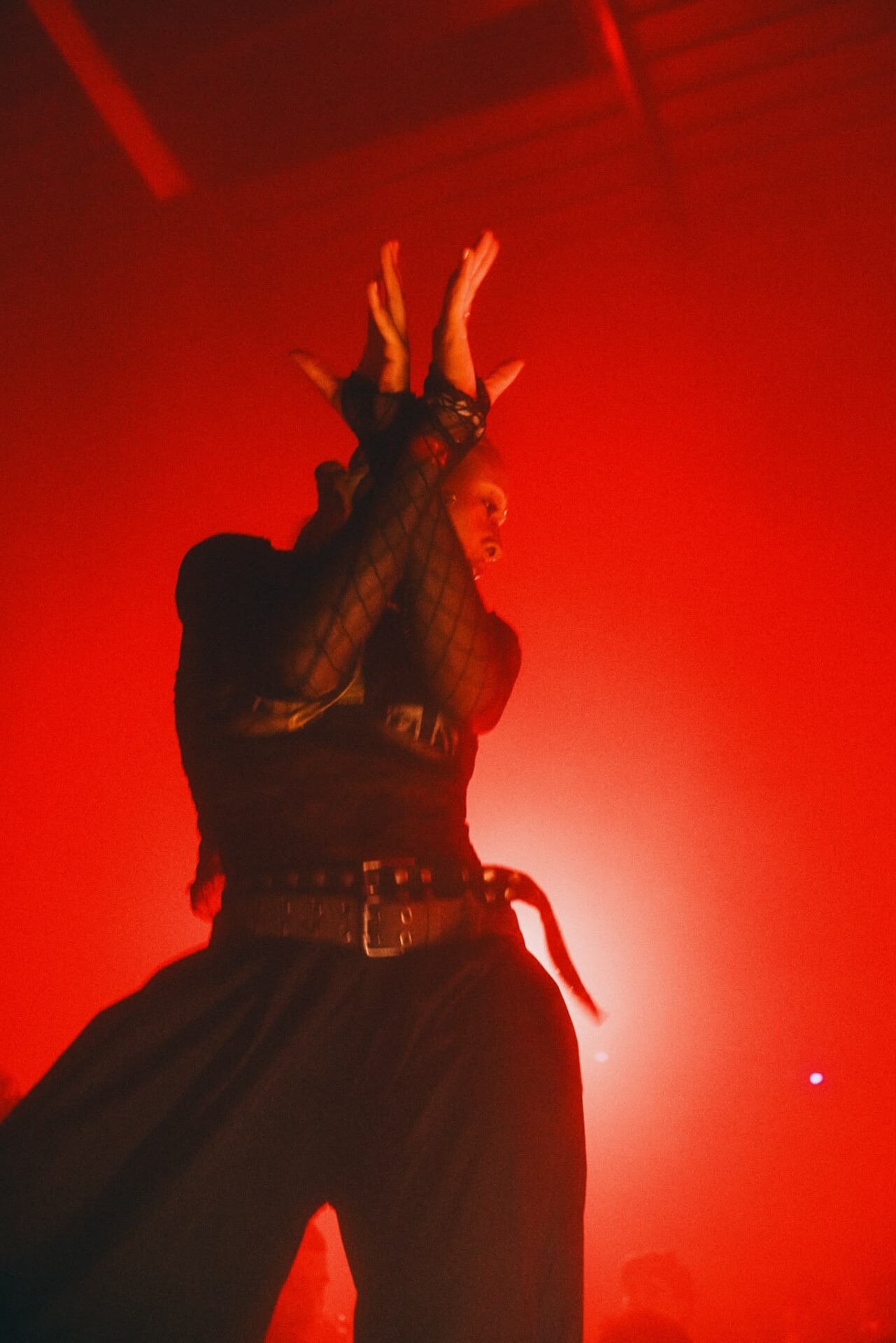
Taken at face value, a rave is anything but a show. Nobody is supposed to be there to show off (at least in theory). Yet, when you look a little closer, raves have far more in common with performance than you might initially think. A group of people comes together to inhabit a space, establishing its own norms, rules, and microcosm for a limited time before disappearing. For Tecna and the dancers of O2ZONE, this becomes a “Zone”: they arrive, occupy a space, and leave, knowing that no two zones will ever be exactly alike. In that sense, it would be hard to argue otherwise: we’re all performers.
Of course, there’s also the idea that we don’t dance to be watched, but simply to let go, even to dance “badly” or without any particular intention. But who decided that every form of dance had to pursue beauty? Watch a performance by Pina Bausch, or contemporary dance more broadly, and you’ll sometimes encounter something unsettling, strange, or difficult to appreciate. Yet it’s precisely through that discomfort that a message can emerge, one that might ultimately be considered beautiful.
For Tecna, this isn’t necessarily a contradiction. Their journey, shaped by both academic training and a passion for nightlife, introduced them to two approaches to dance that aren’t mutually exclusive. Both ultimately lead toward the same goal: discovering oneself first, and then discovering others.
“I think I wanted to expand and express myself. Through dance, I discovered areas of freedom within my body that led me toward a deeper understanding of myself and heightened my raw sensitivity to the world around me.
And techno parties were all about that omnipresent darkness, as if, for one night, you could dive into your unconscious mind and literally swim through it.
In dance, you’re taught that closing your eyes, much like meditation, allows you to focus on so many details. You forget the material world and begin to truly feel what’s around you.”
It would therefore be a little too easy to contrast spontaneous dance, supposedly more authentic, with carefully developed dance, seen as somehow less genuine. After all, mastering your body doesn’t prevent you from losing yourself in the music. Conversely, improvising doesn’t necessarily mean being free from outside influences. We’re all influenced in the way we dance. Like any language, our movements are shaped by everything around us.
And when you watch O2ZONE perform (because yes, you really should see them live, it’s worth it), you discover a language that you may eventually want to share or reproduce yourself. But that’s simply part of how dance works.
Asked about this potential uniformity, Tecna acknowledges the paradox, although it may be easier to unravel than it first appears:
“The problem with trends. The paradox is that we’re part of a historically nonconformist movement, an alternative movement born on the margins, so it’s sometimes contradictory to see it becoming increasingly uniform. But at the same time, it creates a shared language. And maybe these people enjoy that too? Maybe it’s a form of recognition, a sense of finding where you belong? Personally, I don’t reject any of it. I also love seeing techno evolve.”
It would be unfair to blame O2ZONE for inspiring others. Influence is part of how art works. But this also reminds us that no aesthetic, however alternative it may be, can entirely escape the mechanisms of appropriation and imitation. Culture is alive. It moves, evolves, and is shaped by the people who inhabit it. Perhaps that’s something we should learn to accept as well. It’s also a way of giving some power and visibility back to the dancefloor, at a time when perhaps too much attention is focused on the DJ. Ultimately, it’s about putting the music, and its physical expression, back at the center.
But there’s still the question of cameras, which adds yet another dimension to the discussion.
A Double Space
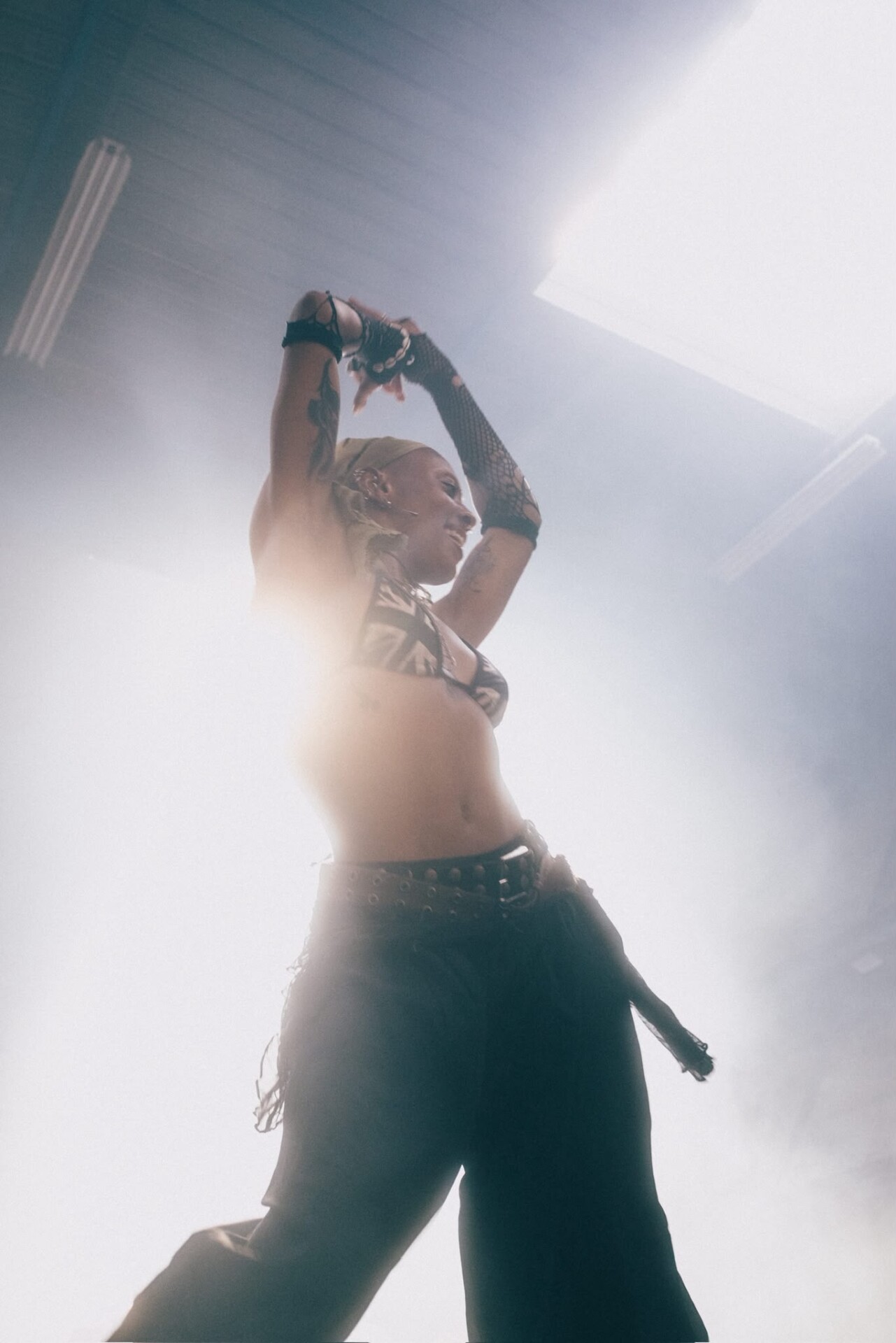
Beyond trends and the movements we imitate, social media and, more broadly, our relationship with audiovisual culture have introduced another dimension to the way we experience nightlife. The dancefloor has also become an image: something we capture, share, and consume. At Clubbing TV, we can hardly condemn this consumption (for obvious reasons). It’s what keeps our channel running and fuels our media platform. But that doesn’t prevent us from questioning the consequences images can have on reality.
Do we dance the same way when we know we’re being filmed?
The presence of a camera potentially introduces a new gaze: that of an audience that isn’t physically there, an audience that might discover these images the following day or several months later. For dancers, this becomes another audience to interact with. And through the power of algorithms, that same audience can help people discover a party, a collective, and ultimately contribute to the life of the scene itself.
We can see this with collectives such as Reverse Unit, whom we’ve chosen to welcome as part of a residency. Preserving a moment is also part of the ongoing evolution of our scene. It’s certainly at odds with Berlin’s almost sacred “no photos, no videos” policy. But on the other hand, protecting a culture doesn’t always mean keeping it hidden. Some places deserve to remain secret. Others host nights we want to remember, moments we want to share and present as pieces of living art.
And especially at a time when our cultural spaces are facing increasing difficulties, creating these representations matters.
In its own way, O2ZONE also embodies the richness and diversity of our scene and culture. Through the values the collective stands for, as well as the plurality of identities, backgrounds, and genders within it, O2ZONE reflects a desire to make the dancefloor a space for expression and connection.
When the collective filmed its first Zone, the concept took off. Why? Because the community recognized itself in what it saw.
“(…) And then footage from the party hit social media, and suddenly it blew up: 20K, thousands of views. Us? We were seriously shocked. And I think we inspired the whole ‘stream’ concept that followed. ❤️ I’m incredibly proud of that.”
But that would be forgetting that images can also be a powerful means of transmission. Social media allows artists, dancers, and collectives to make their work visible beyond the walls of a club. A filmed performance can inspire someone to discover a scene, explore dance, or simply dare to give it a try. Of course, this sometimes comes at a cost. We know that bringing larger audiences into the scene hasn’t always had positive consequences. But by putting forward the right representations, we can hope to attract people who genuinely connect with its values. Somewhere along the way, by merely pretending to be underground and subversive, we’ve lost something.
Authenticity is rooted in sincerity. It might sound like a cliché, but despite how obvious it seems, a project driven by genuine passion is one that resonates with people who share that same passion. As Tecna explains:
“(…) Every time we’ve performed, people have given us feedback beyond anything we could have imagined. Things like ‘That was historic!’, people thanking us, and it really touches us and makes us want to keep going. On top of that, we’re being invited by artists we genuinely respect, so I think that comes through in our presence. I mean, we love doing this because people love it. Otherwise, what’s the point? ❤️
Art should serve a purpose, and dance especially, because it’s genuinely good for the body. Take it from a professional dancer.”
It would therefore be somewhat absurd to condemn cameras altogether, just as it would be to reject phone use entirely. The real question is: “What are we using them for?” What’s the intention? What message are we trying to communicate? For O2ZONE, performance and cameras aren’t about seeking validation:
“Of course, it can be perceived as something flashy or attention-seeking, but when you look closely, we’re not chasing validation.
Our performances are designed and created with dancers who believe in sharing and who interact directly with the audience, the DJ, and the people watching us. The goal is to make YOU feel comfortable and included in the party.”
And Tomorrow, Where Will We Dance?
O2ZONE doesn’t claim to resolve all the contradictions and changes within a scene that, in any case, is far from finished evolving. But perhaps the collective can help guide these transformations through the message it carries.
In its own way, O2ZONE navigates these tensions by bringing together artistic ambition and individual freedom. And this approach clearly isn’t destined to remain confined to Parisian dancefloors. When asked where they imagine O2ZONE in five years, Tecna has big ambitions:
“The best stages and parties in the world. Whether niche or international. The absolute cream of the crop when it comes to DJs, because there are plenty of good DJs, plenty of very good DJs, but some manage to bring EVERYONE together. That would definitely be a goal.
And us, still smiling, and hopefully with an original team that has grown but stayed close.”
So, dancing for yourself or dancing for others? The two aren’t mutually exclusive. Neither are technique and spontaneity, individuality and community, or performance and freedom. Let’s all be a little more complex, a little more curious, and a little less black-and-white in our thinking.
Credits :
Perf Tecna : edouard.nguyen
Cover : pp_prod