

No products in the cart.
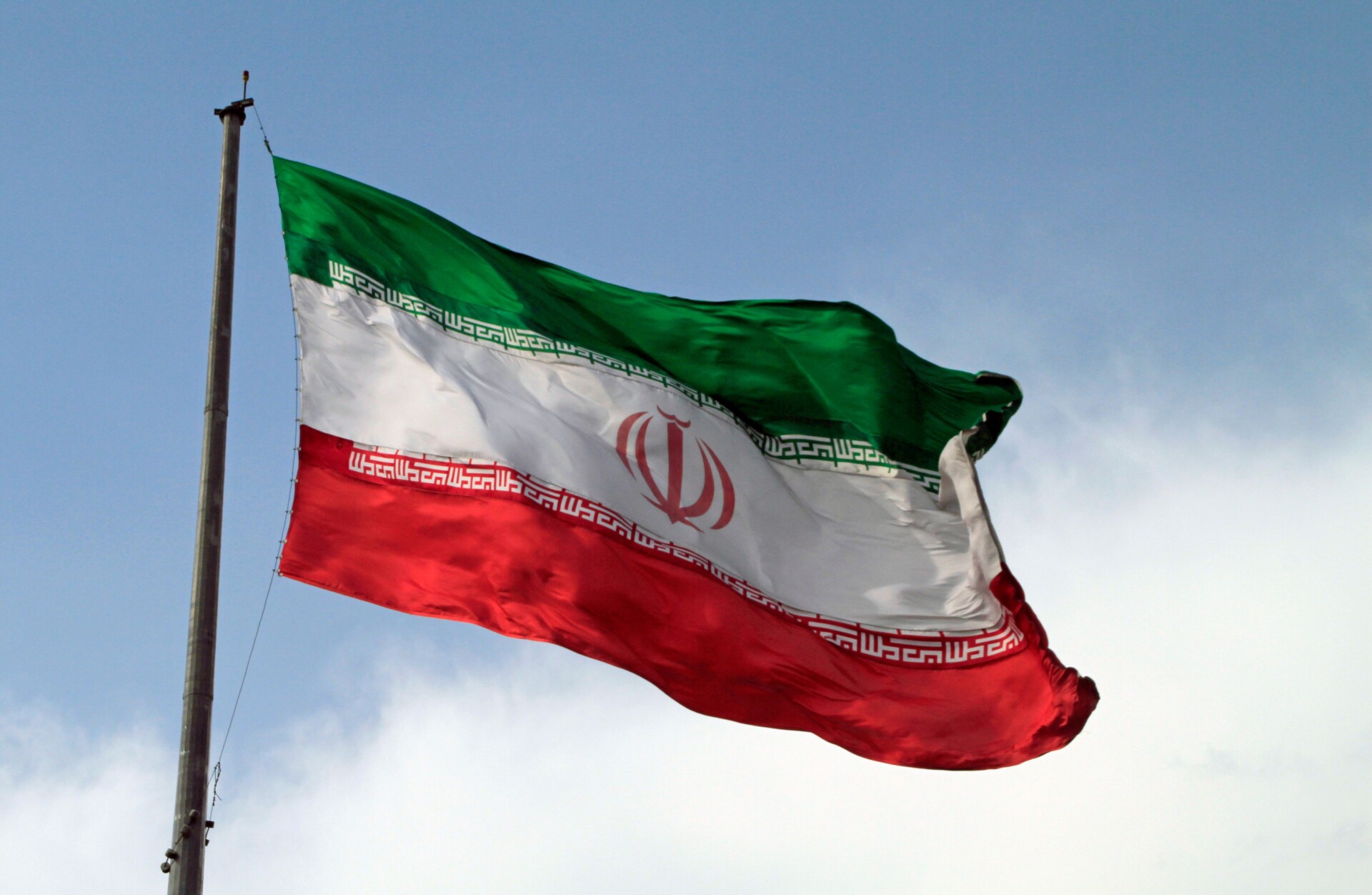
In Iran, organising a party, playing music, dancing or simply dressing the way you want in the street can expose you to arrest, fines and different forms of violence. Despite surveillance, war and an increasingly difficult economic situation, an electronic music scene continues to exist. It is carried by passionate Iranians who refuse to let their culture disappear. A party then becomes much more than a moment of escape. It represents one of the last spaces where a generation can still dream, feel free and sometimes mourn a wounded homeland.
I was able to speak with a young Iranian woman. This article is first and foremost her story, but it is also the story of part of Iran’s younger generation. At her request, neither a name nor a pseudonym will be used. Certain details that could make it possible to identify her have also been deliberately left out.
Music Is Part of Iran
She was born in southwestern Iran, into a family where music was always present. As in many other families, it is part of their traditions:
“ I grew up in a family where music and dance were never something to be hidden or ashamed of. They were always part of our lives. Even at funerals, we say goodbye to the people we’ve lost through music and dance, believing that we are helping their souls leave this world in peace. That’s the culture I was raised in, and it’s something I’m very proud of.”
She thus recalls a history and a culture that have, to some extent, been erased. Music actually occupied a very important place in Iranian society. Pop, rock, musical cinema and modern orchestras gave rise to artists such as Googoosh, Dariush, Hayedeh, Mahasti and Kourosh Yaghmaei. Women sang on the radio, appeared on television and performed on stage, even though their place was still affected by moral judgement and inequality. In Tehran, the cafés, cinemas and cabarets of Lalehzar contributed to the city’s nightlife.
The revolution and the establishment of the Islamic Republic on April 1, 1979, transformed the place of music in Iranian society. The new authorities saw part of the cultural production from the Shah’s era as a symbol of Westernisation and moral corruption that they wanted to eliminate.
An entire civilisation was buried. Cabarets closed, concerts were suspended or strictly controlled and Iranian pop disappeared from official media. Many artists left the country, while others were forced into silence. Women could no longer sing freely. Music did not disappear, but only traditional music remained, along with revolutionary songs.
A Scene That Is Difficult to Observe
I have wanted to write this article for several months. I was looking for people who would agree to speak to me directly from Iran, often without success. Some were afraid, and rightly so. Others were mourning their dead and could no longer find the strength to dance.
I deeply thank our interviewee for her courage, because the conversation we had obviously represents a risk for her. I am writing this article to talk about Iranians. To remember. To avoid forgetting those who continue to live, create and dance despite everything, as well as those who can no longer do so. Them, but also all the populations currently living in the middle of a conflict.
“Honestly, I can confidently say that personal freedom has almost no real meaning here. Almost everything we do comes with fear, stress, and anxiety. We constantly have to think about the consequences of simply enjoying something as normal as music. But despite all of that, we never stop trying to live.”
Under these conditions, discretion is not the underground aesthetic we know in Europe. It is a protective measure.
Dancing Is Resistance
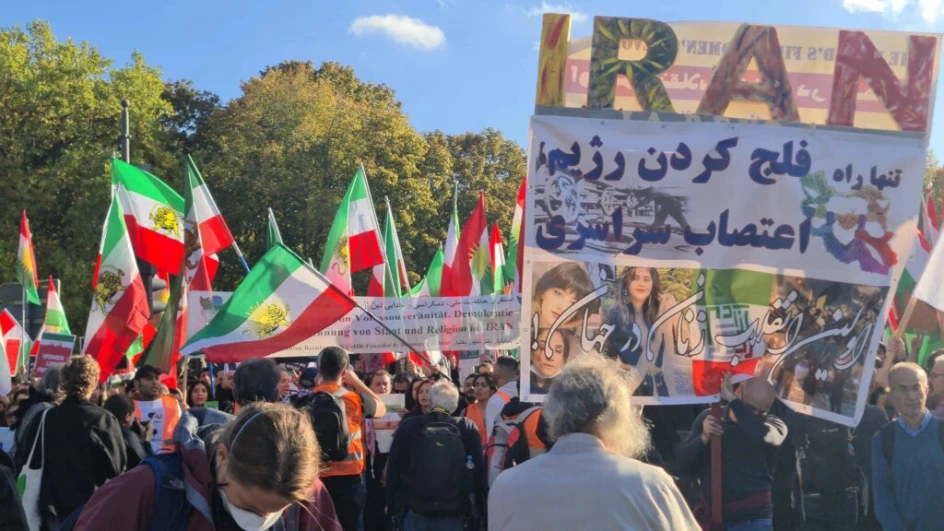
It is within this context that countercultures are fighting for their existence. In Iran, every party is a rave, since it is illegal and secret. The underground scene is not limited to electronic music, but part of the younger generation, including our interviewee, finds an escape within it. She is a DJ herself. For her, sound is the only way to express her feelings:
“We don’t really have the right to protest here. Even when we want to express ourselves, we often have to do it quietly, only for ourselves. Many times I’ve found myself standing in the middle of a dance floor, surrounded by music and people, suddenly crying because of everything we’ve lost, everything we’ve been denied, and all the dreams we’ve had to put aside. Sometimes music becomes the only place where those emotions can exist.”
However, she reminds us of the risks involved in organising or simply attending underground parties:
“The risks are very real: arrest, imprisonment, heavy fines, and physical punishment.Music is the one thing that has always saved me. Because of that, I believe it’s worth the risk. But that doesn’t mean it isn’t terrifying.”
According to her, the people who take part in or organise anything from the smallest apartment party to larger raves have understood the importance of what they are doing. Dancing is not only a way to forget. Dancing is resistance.
“Definitely. People are much more aware now. They’re more informed, more connected, and they understand much better why these spaces matter.”
When I ask her whether she knows of parties that turned into nightmares after being discovered, she describes a chilling reality:
“Yes. Unfortunately, I’ve heard about several. Many of my friends were present at some of those parties, and they were treated terribly. There was psychological abuse, physical violence, and it didn’t matter whether they were women or men.”
An Even More Uncertain Climate
Recent conflicts have intensified the climate of anxiety experienced by the Iranian people. Our interviewee does not provide a precise chronology here, but she describes a clear change in the atmosphere.
“Very much. We were already living under countless restrictions, and the recent conflicts have only made life even more difficult. Everything feels more uncertain now.”
The twelve-day armed conflict between Iran and Israel caused civilian casualties and was accompanied by a new wave of internal repression. Amnesty International reports that the Iranian authorities used the context to increase arbitrary arrests and interrogations.
In the additional information she wanted to share, our interviewee returns to the sense of abandonment she experienced during the attacks:
“I just want to ask people from every country and every background to be the voice of the Iranian people.
During the recent war, there were moments when we didn’t even have air raid sirens to warn us that missiles were coming. We were left completely unprotected.”
A Generation Far Removed From the Image of a Country Frozen in Time
Iran is now buried under the weight of dictatorship and an image that has remained frozen in time for several decades. For many people outside the country, Iran is mainly seen through its government, its conflicts and its nuclear programme. The country’s cultural life remains far less visible.
Our interviewee insists on the gap between this representation and the young people she knows, as well as the everyday lives of Iranians:
“I think many people have a completely different image of us. Some assume we’re culturally the same as Arab countries, but Iran has its own unique culture and identity. Young Iranians are incredibly modern. They’re constantly learning, adapting, and trying to build a future for themselves, even though so much of that future has been taken away from them. Sometimes I feel people imagine Iran as a place frozen in time. But honestly, if you came to one of our parties, you might forget you were in Iran. The creativity, the fashion, the music, the energy, you wouldn’t expect it.”
“We’re Still Here”
At the end of the interview, I ask her what message she would like to share with you:
“Please be the voice of Iran. We’re exhausted. We don’t want anything extraordinary, we simply want the chance to live normal lives, like everyone else.Despite everything, we’re still here. We still create art. We still dance. We still make music. Not because life is easy, but because it’s one of the few ways we can remind ourselves that we’re still alive.”
The Iranian electronic scene exists. Iranian youth exists.
It cannot be described only as a festive scene, that is certain. For Iranians and for countries experiencing conflict, partying is a much more complex issue. It is not a leisure activity. It is the only way to escape.
Nor can it be reduced to an organised political movement. It is a cultural space of its own, a place where people can live differently. Music asserts freedom. Music means telling the story of a generation that does not want to be defined only by war or by the power that governs it.
A generation that continues to dance while knowing that the music could stop at any moment.
Additional sources
“Gender and Singing in Pahlavi Soundscape: Modern Feminine Culture and Masculine Politics in the Age of Popular Culture,” Iranian Studies, Cambridge University Press.
credits : Wikimedia Commons, Envato Elements