

No products in the cart.
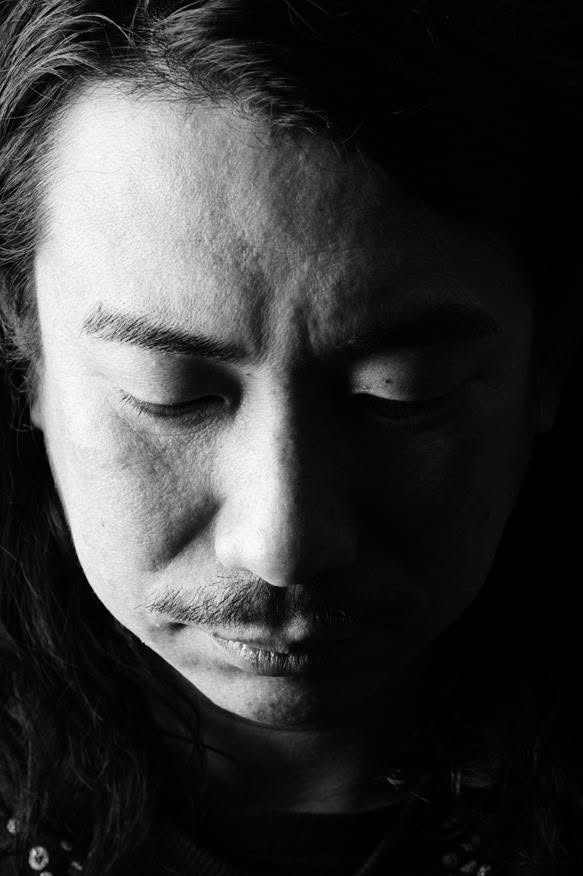
The DJ stopped his set in Geneva after repeated intrusions and inappropriate behaviour around the booth. His reaction is completely understandable. It also highlights how forcefully the electronic music scene can defend certain boundaries — while being far less consistent when it comes to others.
Article en français.
On Saturday, September 5, during his set at Motel Campo in Geneva, DJ Nobu did something he says he had never done before: he stopped the music himself.
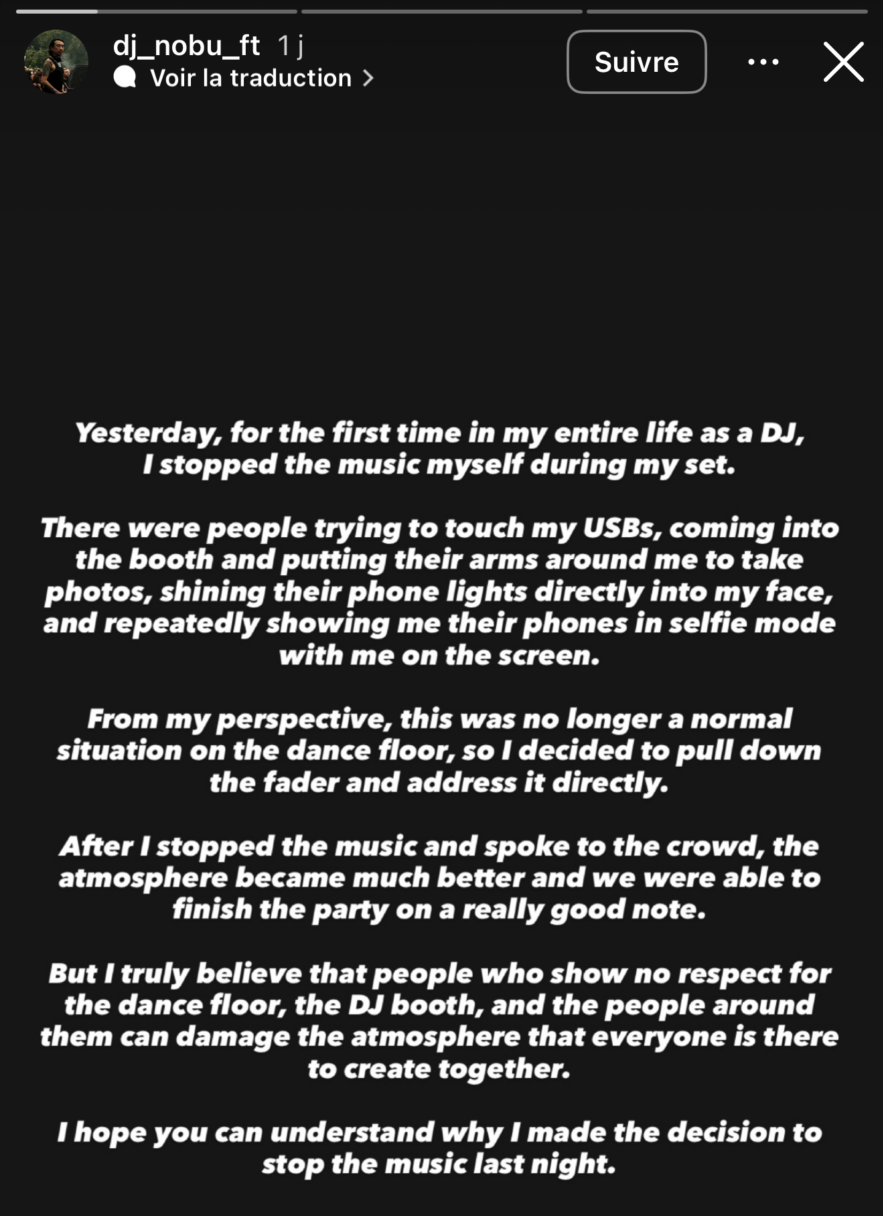
People were trying to touch his USB sticks, entering the booth, putting their arms around him for photos, shining their phone lights directly into his face and repeatedly holding up their phones in selfie mode. In a statement later posted on Instagram and reported by Resident Advisor, the Japanese DJ said he felt the situation was “no longer normal” and decided to pull down the fader and address the crowd directly. After he spoke, he said, the atmosphere improved significantly and the party was able to continue.
He was right to set a boundary. A DJ booth is not a photo booth, and buying a ticket does not give anyone access to a DJ’s body, equipment or workspace. But this story also raises another question for us.
So we do know how to get collectively outraged
It usually takes only a few hours for disrespectful behaviour towards a DJ to be commented on, shared and condemned. When an artist says a line has been crossed, people listen. We immediately remind everyone that artists, their space, their concentration and their working conditions deserve respect.
And conversely, when a DJ crosses a line themselves — when it comes to safety or their behaviour towards the crowd, for example — the internet is usually more than happy to launch a fairly aggressive callout. Especially when the DJ happens to be a woman.
We would like to see that same determination when the people speaking about being assaulted or harassed within this industry are women.
And this is not only about what happens to members of the public on the dancefloor. It is also about the women who work in this scene — all the professionals who have to navigate working alongside perpetrators every day.
The UK Musicians’ Census found that 33% of women surveyed had experienced sexual harassment while working as musicians. A European study into sexualised violence in nightlife environments also found that 46.4% of women surveyed said they “always” or “very often” experienced certain normalised forms of sexual violence when going out at night.
Yet when a sexual violence case emerges within the music industry, solidarity often becomes far more complicated. Public statements become scarce. Some people say they do not know what to say. Others would rather not “take sides.” Line-ups still get shared, bookings are still accepted, and people sometimes behave as though the issue only concerns those directly involved.
Of course, respecting the presumption of innocence and distinguishing between an allegation and a criminal conviction remains essential. None of that prevents anyone from supporting victims, demanding that reports are taken seriously, calling for proper safeguarding procedures or refusing to normalise dangerous behaviour.
Respect cannot stop at the booth door
DJ Nobu wrote that people who show no respect for the dancefloor, the DJ booth or those around them can damage the atmosphere everyone is there to create together. That is perhaps the most interesting part of his statement, because the same collective responsibility exists when women say they no longer feel safe in the very same clubs, festivals, backstage areas and professional networks where we are supposedly building this culture together.
Seeing artists publicly defend the rules and boundaries of the dancefloor is a good thing. Seeing more DJs use that same visibility when it comes to sexual violence would probably make this scene considerably safer for the women who work in it.
If someone touching a USB stick can be enough to stop the music, accounts of sexual violence should at the very least be enough to stop the instinct to look the other way.
And we are not talking about posting one Reel and never mentioning the issue again.