

No products in the cart.
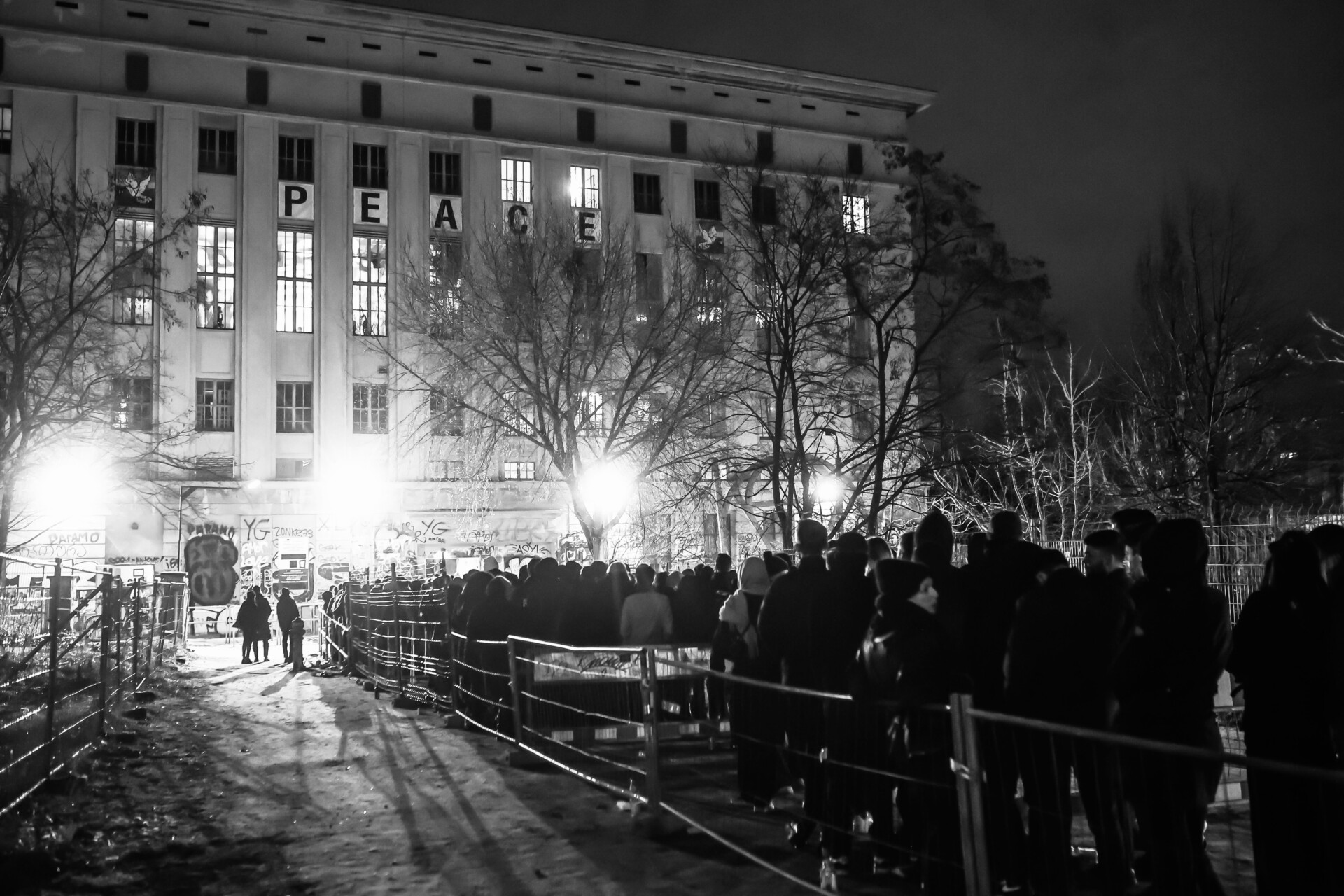
Whether you are a techno fan or not, we have all heard of Berghain, that inaccessible place where nobody really knows how to get in, yet absolutely everyone wants to try. A source of endless curiosity, the club has been the subject of countless investigations, articles and YouTube videos attempting to uncover the thousand and one contradictory tips for finally reaching the Holy Grail: the door. Perhaps unintentionally, in its attempt to create a space dedicated to pure hedonism, Berghain has created an entire industry of fantasy that has massively influenced European club culture. Human nature is such that we desire what is rare and inaccessible. Somewhere between the desire to experience something unique and an insatiable curiosity, Berghain never seems to stop fascinating us. So how did secrecy and inaccessibility turn the club into a myth, eventually creating an entire industry of desire around it, where rarity is measured not by price, but by how difficult it is to get in?
Find the Perfect Moment
If Berghain has become such an object of fascination, it is also because it probably could not have been born anywhere other than Berlin. When the Wall fell in November 1989, the city reunited and suddenly found itself filled with vacant spaces, factories, basements, buildings and wastelands that nobody quite knew what to do with. For decades, Berlin’s division had slowed the reconstruction of certain neighbourhoods. After the fall of the Wall, these empty spaces became vast experimental playgrounds for a generation searching for something different. It marked the beginning of a music made for the misunderstood.
A study commissioned by the Berlin Senate described the capital at the time as an “unfinished city”, offering an almost limitless playground for creative practices to a divided population that had been waiting for the collapse of the Wall to rebuild everything. But once the Wall came down, there was also an aesthetic reality to deal with: everything was raw, concrete and cold. In short, this was still a post war landscape.
In the East, abandoned buildings were transformed into clubs and gathering spaces, often illegally. After four decades of separation, techno also accompanied the strange euphoria of a city suddenly rediscovering territories that had long been inaccessible. The music itself was not born in Berlin. Its roots notably lie with the African American pioneers of Detroit. But in the early 1990s, Berlin welcomed it with open arms. The club became a sanctuary for newly reclaimed pleasures, and the city became the birthplace of a new way of living and an aesthetic unlike anywhere else.
It was from this heritage that Berghain would eventually emerge, but also from an undeniable ambition to build the perfect club. Located inside a former East German power station and designed around monumental architecture and an uncompromising philosophy of sound, all these elements turned the club into something resembling a manifesto of contemporary art, simply waiting for its audience.
Build the Perfect Club
To create this fantasy, the conditions for the ideal club first had to be created. A space where the experience could take precedence over almost everything else, without allowing everyone inside. The definition sounds subjective because it is. The Club Culture Berlin report reminds us that a club is never defined solely by its musical programming. Architecture, decoration, scenography, lighting, performance, dramaturgy and even dress codes are all part of the party, which itself becomes a form of performance.
The former power station was not chosen to erase its industrial past. Quite the opposite. Its monumentality had to be exploited. Concrete, overwhelming volumes, darkness, staircases, vast open spaces suddenly giving way to more intimate areas: the building almost seems as though it was made for techno, as if the music itself had chosen it. The report describes abandoned industrial halls as spaces particularly suited to the “visions and fantasies” of the pioneers of club culture, and identifies Berghain’s industrial aesthetic and “morbid charm” as fundamental elements of its identity.
This “concrete utopia”, created through architecture and design, sometimes goes even further. Panorama Bar is filled with carefully designed elements, including soft materials intended to prevent injuries, mirrors and swings. It is a clubber’s paradise.
The scenography has even led people to describe the space as a “cathedral”. We are talking about something sacred. Berghain has been canonised: it is the temple of techno. Berlin, with all its complexity and history, was the perfect place to create this paradise, but also this great mystery. Is it really like people say it is? And was the difficulty of getting into the club deliberately created? The answer is that originally, nothing explicitly suggests that it was. More importantly, there was another reason behind the selective door policy.
Before this mythical temple, there was Ostgut, open from 1998 to 2003 and itself rooted in Berlin’s gay and fetish scenes, particularly through the Snax parties. The prestige and rarity now associated with Berghain originally emerged from something much more practical: a measure of safety.
“I have a responsibility to make Berghain a safe place for people who come purely to enjoy the music and celebrate.”
Sven Marquardt
When it opened, the club therefore inherited the communities of Berlin’s queer and fetish scenes, where controlling access helped protect both the community and the freedoms exercised inside. Selection later became a tool of curation, determining not only how many people could enter, but also what kinds of personalities would make up the crowd.
Build the Secret
But for a myth to work, being difficult to access is not enough. Above all, nobody should know exactly why. Today, Berghain’s secrecy is carefully articulated. Even if it still serves to protect its communities, it has also undeniably become a marketing asset for the club. Berghain itself is not hidden. Its address is known, its line ups are public and its reputation is global. What remains secret are the rules determining who will actually be allowed to experience it.
Symbolically, the door is much more than an entrance. It decides who will remain in the outside world and who will be allowed to leave it behind for several hours. The Club Culture Berlin report describes the door precisely as a “membrane” and points out that admission policies can remain implicit, defined by the decisions of those selecting the audience rather than by written rules.
The role of the bouncer, and even the character they embody, is entirely part of the experience. Now famous worldwide, Sven Marquardt himself contributes to the myth. He literally helps compose the crowd. Marquardt speaks of searching for diversity, personalities and “friction”. Yet no official recipe has ever been given, so people have tried everything, sometimes to an almost comical extent.
Dress in black? Speak German? Say nothing at all? Come alone? Know the line up? Pretend you do not care about getting in? Wear leather? Dress normally? Make sure you do not look too happy if they say yes?
As Berghain became a global destination, this form of protective curation produced an unexpected side effect. Exclusion became rarity, and rarity became prestige.
From Underground to Destination
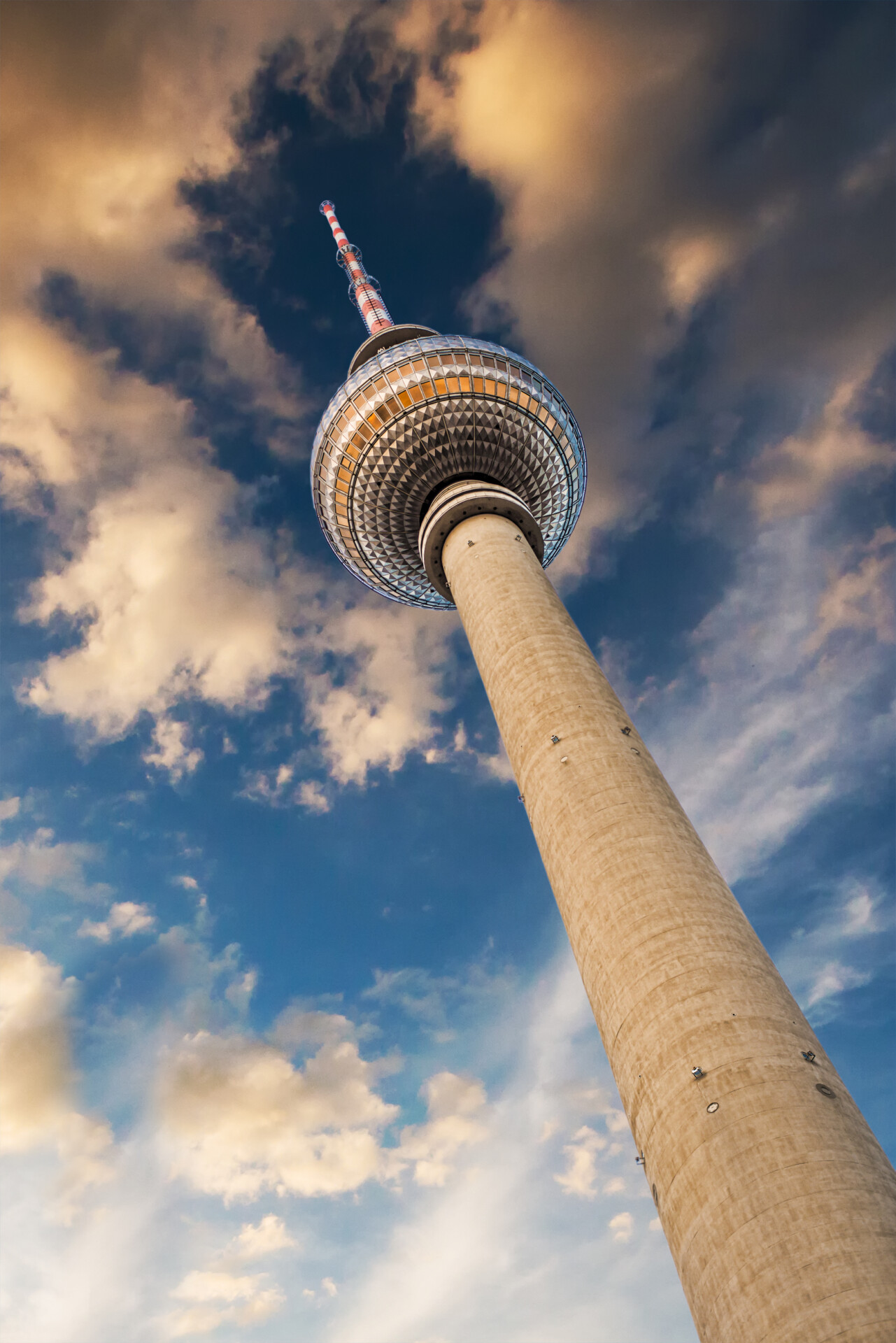
When techno exploded after Covid, this myth, once mostly reserved for passionate fans making a kind of pilgrimage to Berlin, spread far beyond that original audience. Berghain, alongside many other underground clubs, helped Berlin establish itself as a major cultural destination across Europe. The city is now visited not only for its history, but very much for its nightlife as well.
Researcher Luis Manuel Garcia uses the term “techno tourism” to describe travellers who repeatedly return to Berlin specifically to participate in its electronic music scenes and, among other things, try their luck at Berghain. An entire tourist economy has therefore developed around this fantasy.
The phenomenon has grown far beyond the small economy of a subculture. The Club Culture Berlin report estimated that tourism related to Berlin’s club culture generated €1.48 billion in tourist spending in 2017, compared with €168 million in revenue generated directly by clubs and events themselves. The imaginary surrounding Berlin nightlife generates money far beyond its dancefloors.
Berghain now has to protect its identity from the mass tourism that it has, at least indirectly, helped attract. The club therefore finds itself trapped in a deeply cyclical mechanism: the more famous it becomes, the more people it attracts. The more people it attracts, the more selective it has to become. The more selective it becomes, the stronger its reputation for inaccessibility grows. And the stronger that reputation becomes, the more people want to try their luck.
Rejection does not destroy desire. It feeds it.
Berghain Everywhere?
More importantly, by becoming a global reference point, Berghain has helped export this desire. An entire Berlin imaginary has begun spreading across Europe’s major cities, where the so called “techno spirit” has become increasingly fashionable.
The Club Culture Berlin report confirms that certain scenes contribute to this subcultural mythology even though they have long since entered mainstream culture. Berghain is directly cited among the Berlin clubs that have influenced not only music, but also club architecture, fashion and lifestyle. This does not mean that the music played inside the club is mainstream. It simply means that if everyone wants to be underground, and if a culture influences society far beyond the field from which it originally emerged, then regardless of its marginal roots, it has become mainstream. And that is okay.
If this conclusion applies to Berlin, it may not apply in exactly the same way to every major European city. But Berghain’s influence remains undeniable. If Berghain influences Berlin, Berlin influences Europe when it comes to techno.
The same report discusses the idea of “subcultural capital”, referring to the knowledge of codes required to pass through certain doors, and argues that exclusivity reinforces the “seductive power” of a scene. There is always this tension between the irresistible desire to be chosen and the desire to join a selective group made up of other chosen people. In a way, does that not end up making the place almost elitist?
These codes were not invented by Berghain. Secret raves, warehouses, queer clubs and selective door policies all existed before it. But the international influence of the club and of Berlin helped crystallise these codes into a universal representation of what underground techno is supposed to look like. In other words, Berghain has become a vehicle for stereotypes, perhaps without even intending to, simply by becoming the primary reference for Berlin clubs in the collective imagination.
Today, this influence can even be openly acknowledged. In Paris, Le Monde described Mia Mao in 2025 as a 3,000 square metre space of raw concrete with a “no photo, no video” policy. Sounds vaguely familiar, doesn’t it?
A crowd dressed in black, inside a venue whose connection to Berghain was openly acknowledged when it first emerged. We remember the hype: it was the new underground club not to be missed, with a huge industrial space and the promise of returning to the roots of club culture. Does Mia Mao have the same reputation as Berghain today? No, not yet. But the ambition to reproduce a similar aesthetic is clearly there. Even if Mia Mao had wanted to create a second Berghain, however, it could never truly succeed, because Berghain is above all the result of a unique combination of historical, geopolitical, social and geographical circumstances that are unlikely to ever occur again.
Also in Paris, the RORSHAR collective moved in a similar direction. Although its events did not take place in clubs, the collective occupied spaces characterised by a raw aesthetic. “No list, no camera, no line up, backroom”, selection at the door and even advance tickets that did not guarantee entry. There is certainly a desire for curation and selectivity here, but has this not ultimately resulted in reproducing the same codes of the mainstream, simply by shifting the criteria?
The subject of backrooms is also a fundamental part of Berlin’s aesthetic. In 2022, urban geographer Johan Andersson wrote an academic essay entirely dedicated to Berghain. He analyses the club as a relational space where architecture, sound, drugs, bodies and sexuality interact to produce a highly sought after experience of subversion. Andersson even describes the weekend queue as a human extension of Berghain’s concrete architecture.
As mentioned earlier, this myth is created by the whole package. It is the space, the people, the hedonism and the secrecy. Sexual freedom is also part of it, symbolising a form of prohibition that becomes permitted only within the space of the club. We desire what we are forbidden to see or practise in public space.
So What Exactly Is the Berghain Effect?
The club invented neither secret raves, warehouses, backrooms nor selective door policies. What it did achieve, through its international influence, was the mass diffusion of the codes of subversion, prohibition and secrecy. This helped construct both its own mythology and that of Berlin techno more broadly. What is being sold is the possibility, for a few hours, of feeling like one of those who are allowed to transgress. And the more exclusive that experience appears, the more desirable it becomes, especially now that techno itself is fashionable.
Berghain may now function, perhaps without intending to, almost like a luxury object, leaving behind it a whole wave of clubs and experiences that sometimes end up as little more than white label versions of the original. They move from cliché to cliché, accumulating codes that are misunderstood or poorly used, all to earn the right to sell an experience of subversion that has itself become a standard, and sometimes a slightly ridiculous one.
Sources / Further Reading
Clubcommission Berlin / Berlin Senate — Club Culture Berlin (2019).
Read the Club Culture Berlin studyBurt Helm — “How the Bouncer of Berghain Chooses Who Gets Into the Most Depraved Party on the Planet”, GQ, July 25, 2015. Interview with Sven Marquardt.
Read the GQ interviewLuis-Manuel Garcia — “Techno-tourism and post-industrial neo-romanticism in Berlin’s electronic dance music scenes”, Tourist Studies, 2016, 16(3), 276–295.
Read the academic articleJohan Andersson — “Berghain: Space, affect, and sexual disorientation”, Environment and Planning D: Society and Space, 2022.
Read the academic articleStudio Karhard — Berghain architectural project.
Explore the Berghain projectAdditional video source — YouTube.
Watch the videoAdditional video source — YouTube.
Watch the video