

No products in the cart.
You can fill a club without bringing it back to life
Big parties sell out, and yet, once you’re inside, you sometimes feel that the thing that made you want to go in the first place is not quite there anymore.
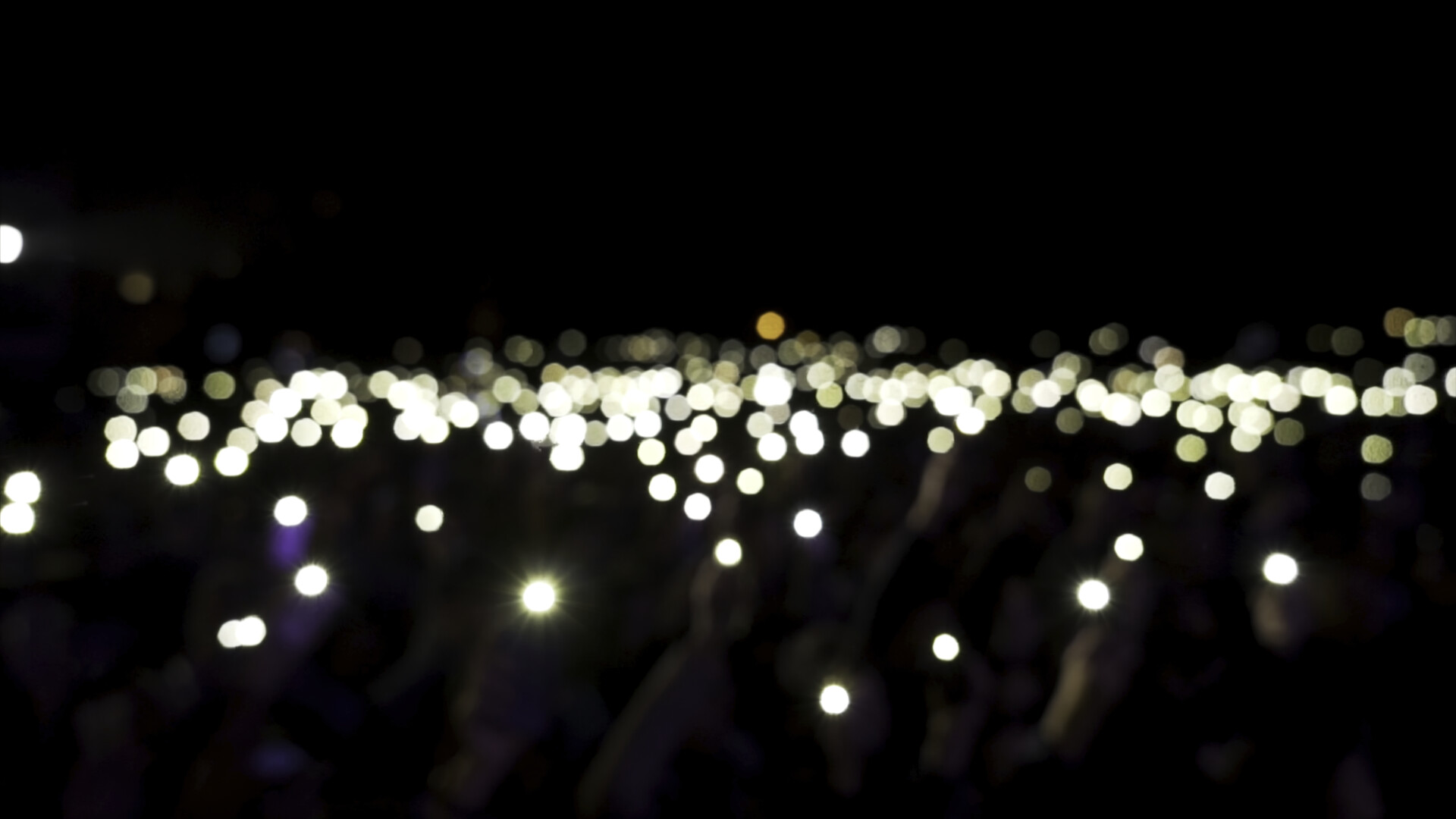
We all know the scene. A sea of phones in the air. Bodies barely moving. Faces turned towards the DJ more than towards their friends. People filming their own presence before they even allow themselves to experience the night. They need to show they were there. They paid a lot, they are in the right place, and somehow they have to prove it. In the end, the dancefloor starts to feel more like a showroom than a living, breathing crowd.
Parties have never been more visible. And yet, some of their most commercial forms have rarely felt so empty.
Cultures born on the margins often follow this path. They first appear where people need to invent their own spaces, their own codes, their own ways of being together. House, techno, raves, queer scenes, free parties were never just nighttime entertainment. They were refuges. People came to dance, of course, but also to breathe differently.
Then these spaces become desirable. Their stories start to seduce people. What was once marginal becomes trendy, and above all, bankable. Brands arrive. Investors buy in. Prices rise. Lineups start to look the same. The crowd changes. And with that, the way people behave changes too. People dance less and watch more. They participate less in creating the atmosphere than in consuming it.
The gentrification of nightlife is not just about ticket prices going up. It gradually changes the relationship to the space, to the sound, to others, and to oneself.
When underground becomes an aesthetic
Gentrified nightlife often sells a clean, reassuring, Instagram-friendly version of the underground. It keeps the external signs: black clothes, smoke, strobes, references to rave culture, words like “community”, “safe space”, “warehouse”, “raw”, “underground”. But part of what gave these scenes their power disappears along the way: social mixing, creative discomfort, the unexpected, closeness, surrender, artistic risk.
A party that has been too well marketed can end up looking like its own promo video before it has even started. Everything is already designed in advance to be filmed. The experience has to match the promise. The more expensive the ticket, the more the crowd expects some kind of guarantee. The track has to work fast, and the emotional and financial investment has to feel worth it.
That is where the party loses part of its trouble, its blur. What attracts so many people to nightlife, deep down, is the idea that something unexpected might happen. A meeting, a moment of release, a set that takes a strange turn, a crowd tipping over together, a feeling you cannot really explain the next day.
But today, the club is no longer always a space you move through. It becomes boring, like almost everything touched by gentrification.
Rich people do not make places cooler, they make them more profitable
The problem is not that wealthy people go clubbing. Nightlife should not hand out certificates of social purity at the door. The real problem begins when the expectations of the most solvent audiences become the norm around which everything is reorganised.
Their spending power deeply changes the economy of a venue. It makes it possible to sell tables, raise prices, justify certain fees, attract brands, and turn a party into a VIP++ product. For clubs, promoters, agencies and tourist destinations, this clientele is an obvious opportunity.
But solvency does not necessarily make a scene more interesting. In fact, it often does the opposite, by removing disorder, mixing, and moments of experimentation. Raised VIP areas say a lot too. They are a way of being inside the party without ever really merging with it.
By constantly trying to reassure those who arrive with the most money, some venues end up smoothing out the very practices that once made them alive. The dancefloor becomes too clean, too organised, too hierarchical. People enter with their class reflexes, and the venue adapts to them instead of resisting them.
At its best, a club should do the opposite. It should blur positions, reduce distances, impose other codes, and remind everyone that nobody should structure the whole room simply because they paid more.
A crowd that watches changes the crowd that dances
The massive presence of phones is not only a question of image or privacy. It physically changes the energy of a dancefloor.
A crowd that knows it is being filmed does not move in the same way as a crowd that feels free to disappear a little. Even those who are not filming end up adjusting to other people’s cameras. You become afraid of ending up in the story of some wannabe influencer who came to build a following on the backs of people who actually need to let go.
Partying has always involved some degree of performance. Looks, attitudes, codes, and ways of occupying space are part of club culture. This is also why certain alternative, queer, community-based or separatist parties can have such a particular intensity. Not because their crowds are naturally more authentic, but because the conditions for surrender are sometimes better protected. People dance with less fear of being turned into content.
The music starts to tighten too
The gentrification of a scene does not only transform prices or audiences. It also acts on the music.
In very expensive spaces, the pressure for immediate return becomes huge. The set has to work quickly. The crowd has to recognise something it already knows. The drop has to arrive, fast. Collective patience shrinks. Long builds, tension, and risk-taking become harder to defend.
The DJ is not always building over time anymore. They are securing a crowd that did not necessarily come to be surprised.
The recent history of EDM has already shown this. As the genre became massive, it also locked itself into certain formulas: the same builds, the same drops, the same pre-chewed emotions, the same feeling of watching endless variations of a profitable recipe. Part of commercial hard techno is now facing a similar risk. At some festivals, it is not rare to hear the same tracks several times in one day, carried by the same logic of immediate impact.
This does not mean an entire genre should be dismissed. Artists are still bringing real vision to it. But the environment often pushes repetition, because repetition works fast. It reassures the crowd, makes content easier, and speeds up the reaction. In the short term, it is effective. In the long term, it exhausts a scene.
A living club culture needs moments that do not work immediately. It needs artists who take their time, crowds capable of listening, and dancefloors willing to feel lost for a few minutes.
Comfort can become a form of impoverishment
Talking about gentrification in nightlife does not mean romanticising precarity. Clubs have to pay their teams, artists have to make a living, venues have to be safe, and organisers have to survive economically. Nobody should confuse authenticity with struggle.
But we need to be able to look at the cultural effects produced by certain economic models. When a scene is mainly built around the most profitable audiences, it often ends up weakening what once made it rich. You can still enter the venue. And yet, something no longer speaks to you in the same way. The feeling of belonging dissolves. The party continues, but it no longer really includes you in its promise.
This is one of the hardest forms to challenge, because it does not always look like exclusion. It looks like an upgrade, professionalisation, success. The venue is cleaner, more famous, more profitable. But very often, it also becomes less free.
Distant struggles are easier to love than local ones
Club culture loves to tell its political mythologies. It gladly celebrates clubs resisting elsewhere, scenes becoming symbols, dancefloors facing power. Bassiani in Georgia, for example, has been admired all over the world as a space of resistance against repression and reactionary forces. That admiration was legitimate. The story said something powerful about what a club can represent politically.
But this fascination sometimes contrasts with the weakness of local mobilisation. In France, there is absolutely no shortage of issues: the repression of free parties, sexual and gender-based violence in nightlife, transphobia, the precarity of nightlife workers, the commercial appropriation of minority cultures, and the rise of the far right.
It is often easier to love resistance when it happens far away. From a distance, it becomes a strong image, almost romantic. Locally, it forces people to take a position within their own network, to risk collaborations, to lose comfort, to disturb partners, friends, institutions or audiences. It costs more.
And yet no scene is out of danger. Believing that political or social backsliding only concerns others is one of the surest ways to let it progress.
Transmission matters more than simply opening the doors
Criticising gentrification can quickly fall into gatekeeping. The “real” ones versus the “fake” ones. Those who understand versus those who do not. The old crowd against the new. That logic is sterile, because scenes have to be able to welcome new audiences, evolve, circulate and transform.
But opening the doors is not enough. Something also has to be passed on.
Club culture is built on practices. For example: not filming people without consent, respecting the dancefloor, understanding the role of a warm-up, accepting that you are not the centre of the room, leaving space for others, supporting local scenes, and knowing at least a little of the history behind the places and sounds you consume.
Without transmission, new audiences enter, but dominant codes come in with them. The party gradually adapts to the most visible, most solvent, or loudest behaviours. The result is not a more open scene, but a scene reconfigured for those who already had the most space elsewhere.
Protecting the party as a living space
Defending a living club culture means looking at very concrete issues: ticket prices, access to water, the place given to local artists, real diversity in programming, safety, the fight against violence, the welcome given to minority audiences, accessibility, photo and video policies, working conditions, set times, fees, and the relationship to the local territory.
These questions are sometimes treated as secondary, almost administrative. Yet they determine the kind of party a venue makes possible. A 15-euro night does not produce the same crowd as a 90-euro night. A club that truly bans videos does not create the same kind of release as a dancefloor turned into a permanent film set. A programme that takes risks does not say the same thing as a lineup built only around artists doing 30-minute B2Bs who gained 400,000 followers in a month.
There are still collectives, clubs and festivals that keep prices accessible despite inflation. There are still crowds who accept not filming everything, not owning everything, not converting everything into content.
None of this is simple. It costs money, time, energy, and sometimes opportunities. But a living scene has never been only a market. It also depends on choices, limits, and organisational courage.
Can a party still transform those who enter it?
Saying no to gentrification does not mean saying no to wealthy audiences. It means refusing to let their expectations automatically become the norm.
If these audiences come into spaces born from alternative cultures, it means they are looking for something there. Intensity, freedom, an image, a feeling of displacement. Fine. But why should those spaces be constantly reorganised to reassure them? Why not preserve the codes that existed before they arrived, and let those audiences be changed a little by the dancefloor instead?
Nightlife can still have that power. It can make social distances fall, even temporarily. It can force bodies to share a common space. It can remind people that they are not always the centre of the room. It can make them accept other ways of dancing, being, desiring, disappearing into a crowd. It can produce a little less fear of others, and a little more humanity.
But for that to happen, partying has to remain something other than a premium experience. It has to keep a share of trouble, anonymity, unpredictability, friction and freedom. It has to accept that it will not please everyone. It sometimes has to frustrate the expectations of the most comfortable audiences in order to protect what makes it necessary for others.
Maybe that is what makes so many gentrified parties feel so deeply boring. They have kept the external signs of nightlife, but lost part of its urgency. They promise intensity while organising the very conditions that prevent it from appearing.