

No products in the cart.

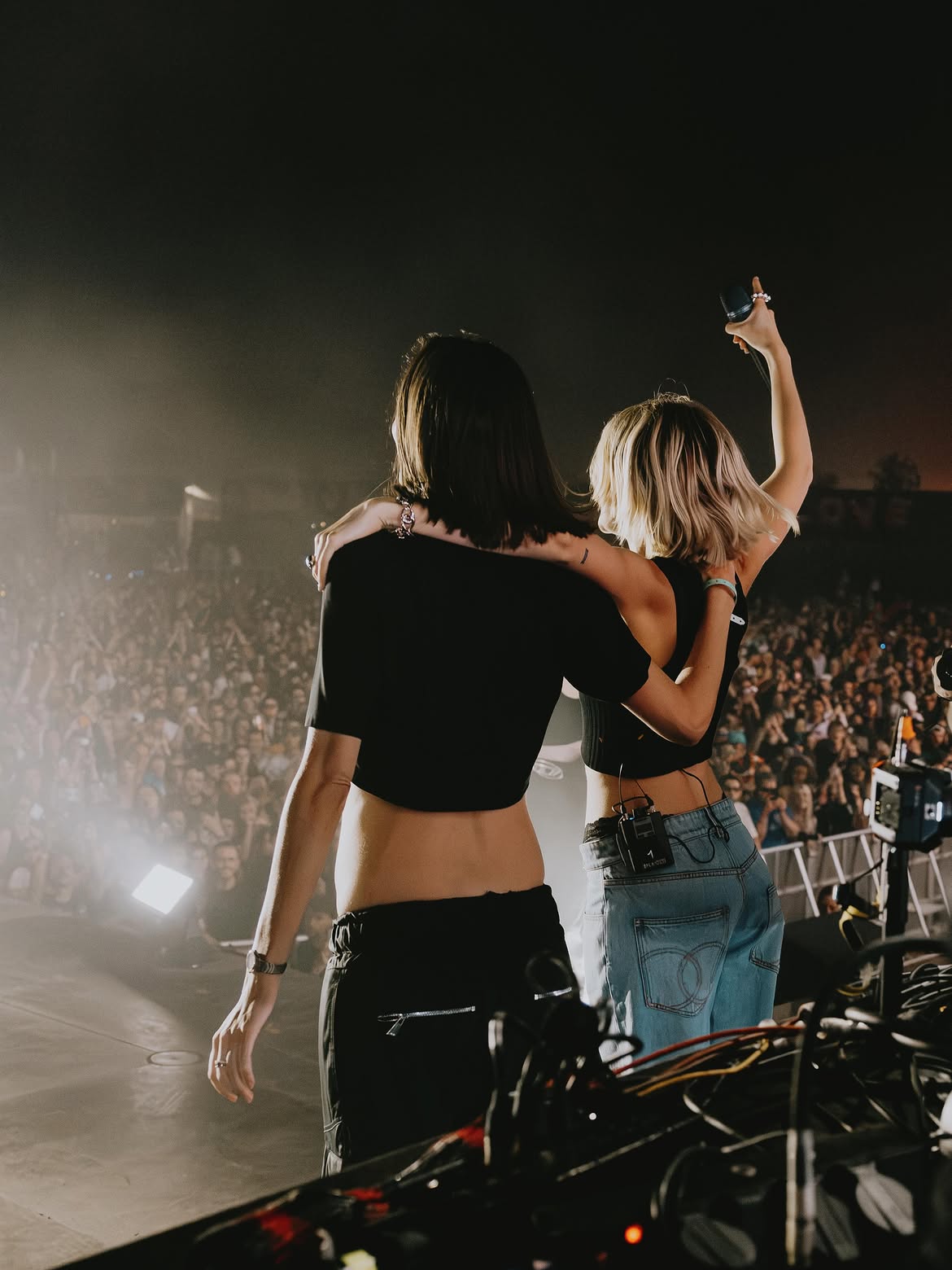
The moment was as unexpected as it was symbolic. During her set at Dour Festival, Amelie Lens invited Angèle on stage to perform Run, an unreleased track set to appear on Aura, the Belgian DJ and producer’s debut album. The surprise appearance immediately got people talking, bringing together two of Belgium’s most influential artists of their generation.
This collaboration tells several stories at once. First, it reflects a form of sisterhood between two women who each dominate their own musical universe. It also highlights the increasingly blurred boundaries between pop and electronic music in its more radical forms. Over the past few years, those lines have continued to fade. Charli XCX, FKA twigs, Rosalía and even Beyoncé have all incorporated rave or techno aesthetics into their artistic worlds. Angèle herself had already moved closer to electronic music through her collaboration with Justice. More recently, Dis-le sparked debate, with accusations of cultural appropriation and criticism over a music video considered too heavily inspired by existing visual references. With Amelie Lens, she takes another step forward, placing her artistic evolution even more firmly within the electronic landscape alongside one of contemporary techno’s defining figures. In short, she makes a statement.
But this evolution also raises a question we’ve explored before. Has rave become nothing more than a fashionable aesthetic, or are we witnessing a genuine artistic evolution?
Because it is entirely possible to appreciate a work of art while maintaining a critical perspective. It would be naïve to ignore the effects of the popification of club culture. When an aesthetic born in marginal spaces becomes a widely consumed product, it inevitably risks becoming disconnected from its history. Democratization brings new audiences, but it can also transform places that were once conceived as safe havens for minorities into spaces where those very communities no longer feel as welcome.
The philosopher Walter Benjamin argued that when a work of art, or even a culture, becomes endlessly reproducible, it loses part of its “aura”, the uniqueness that comes from a particular context, place and history. Techno is no exception. As it becomes a mainstream aesthetic, it gains visibility, but it also risks losing some of the singularity that once made it so distinctive.
Music is movement
Yet reducing this evolution to nothing more than commercial appropriation would be just as simplistic. Cultures have never been static. They exist precisely because they circulate, blend and evolve, constantly influencing one another. This openness allows the scene to grow, enriches it with new influences and gives a wider audience access to a world they might never have discovered otherwise.
That is why reducing this collaboration, or Angèle’s recent artistic choices, to a simple publicity move would probably miss the point.
Amelie Lens has never softened her artistic identity in order to appeal to the mainstream. Her career was built in clubs long before she reached international festival stages. Angèle, meanwhile, has always shown a musical curiosity that extends far beyond French pop. She has also repeatedly spoken out in support of minority communities, causes that resonate deeply with the history of electronic culture. Their artistic encounter feels rooted in genuine mutual admiration as much as in a sincere desire to create together. At Dour, they also embody a reunited Belgian scene capable of bringing together worlds that are too often seen as incompatible.
There is another dimension worth highlighting: sharing. In two industries where women remain underrepresented in the most visible positions, seeing two Belgian artists who have become leading figures in their respective fields come together on a shared project carries real symbolic weight.
Electronic music still suffers from a lack of female representation behind the decks and in music production. Pop, despite its many female stars, continues to impose different expectations depending on gender. This collaboration shows that it is possible to build bridges without either artist giving up her identity.
If Run succeeds in bringing together Amelie Lens’ hypnotic intensity and Angèle’s melodic sensitivity, it could become much more than a headline-making collaboration. It could illustrate an evolution of popular music towards a richer and more fertile space for artistic expression.
And perhaps we should not be afraid to enjoy music simply because it becomes popular. Behind the word mainstreamoften lies a value judgement. What is considered too commercial today may well become tomorrow’s nostalgic reference, or even a cultural heritage defended with passionate purism. Labels change much faster than the works themselves.
While we wait for Run to be released, this collaboration once again opens the debate around the democratization of club culture. An openness that can enrich the electronic scene by attracting new audiences, while also reminding us to remain vigilant so that its history, its codes and the communities that shaped it are never pushed into the background.
photos credits : Angèle’s Instagram