

No products in the cart.
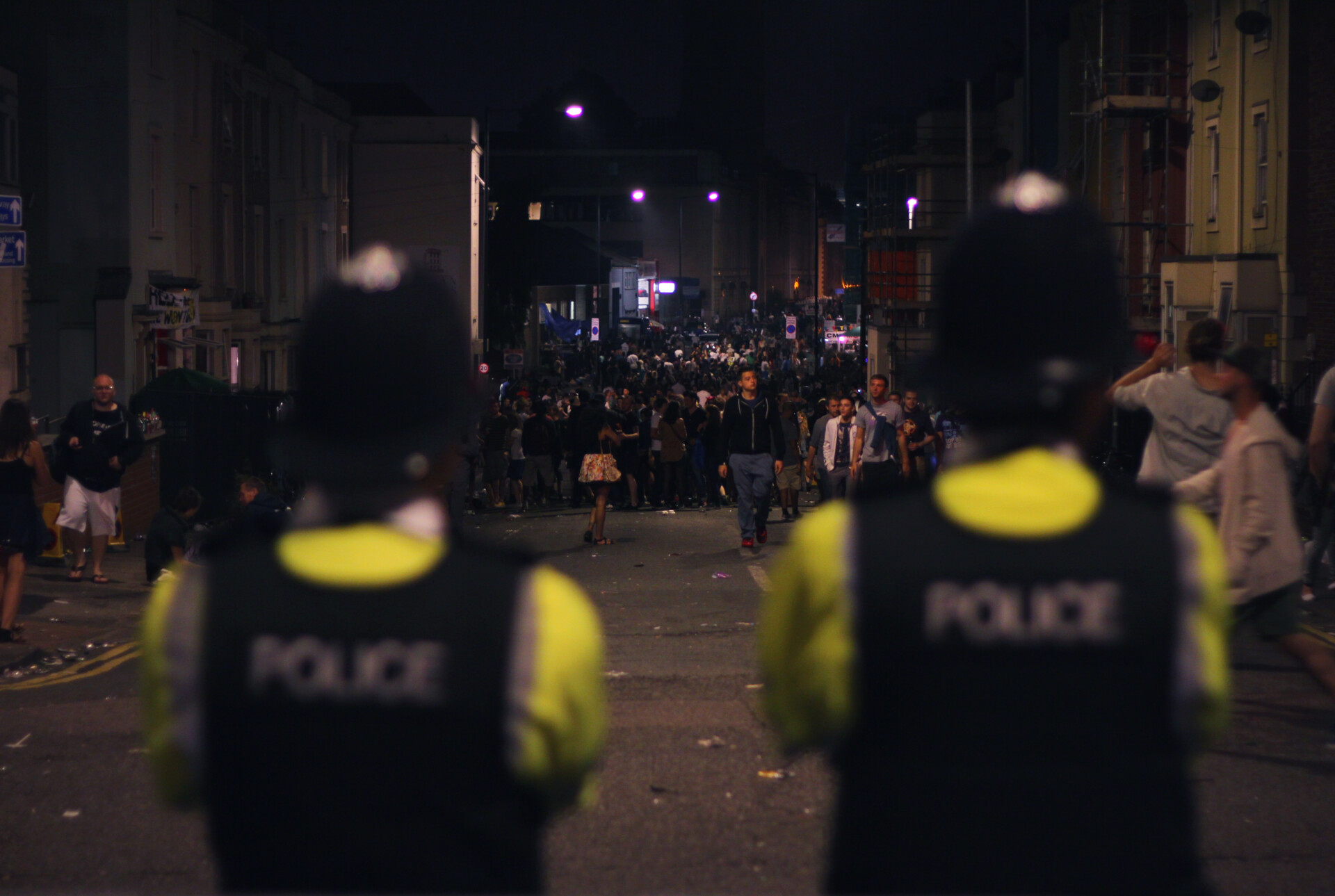
In recent days, free parties have been at the center of public debate. Law 1133 was approved this Thursday at the National Assembly. The problem isn’t techno, they say — the problem is what they call free parties (to quote Mr. Chirac). And yes, after all this time, NOTHING has changed. How can we celebrate electronic music by inscribing it as intangible cultural heritage, while suffocating the very spaces where it was born and allowed to flourish? What hypocrisy. What disgrace. (To quote Mr. Sarkozy…).
You can ban parties, seize equipment, criminalize gatherings, and smear a culture in the media — you won’t stop the desire for free celebration, for collective resourcefulness, for thinking, for music as a political space. If it’s no longer here, it will be elsewhere. If it’s no longer under this name, it will be under another. Let’s take a step back and look at the political debate around free parties.
Everything is already said in this sentence, spoken in the Assembly by Sandrine Rousseau:
“Yes, youth can be subversive — and that’s a good thing. Let them dance, let them sing, let them be happy… because in the world you are preparing for us, there isn’t much space for that.”
What people really struggle with is that some spaces still escape control — spaces where young people don’t just consume, but create, overflow, organize, and sometimes disturb.
The party as a public problem
If free parties have been frowned upon for decades, it’s not only because of what they are — it’s also because of how they’ve been framed. Mainstream media has largely contributed to what we call a moral panic, for very specific purposes. Creating a public problem, planting seeds of fear in the minds of those unfamiliar with it, pointing fingers at it as a major issue — all to divert public debate from real societal concerns. War, inflation, social injustice, sexism, political corruption, the depoliticization of a disillusioned youth in this country. A non-exhaustive list, of course. Why panic over these issues when you can designate the ultimate culprit for the downfall and delinquency of an entire generation: partying in fields?
As a reminder, moral panic is a concept coined in 1972 by sociologist Stanley Cohen. It describes a disproportionate collective reaction to cultural or personal practices — often minority ones — perceived as “deviant” or harmful to society.
Music that establishes itself as counterculture has always been a way to step outside the norm, to exist on the margins. Free parties are not just rituals for dancing — they also exist to think differently.
And that’s what bothers people. It’s also a goldmine for misleading media framing: “Noise”, “drugs”, “drifting”, “uncontrollable youth”. Every word carefully chosen to build a dangerous imaginary around free parties. So much so that decades later, they are still stigmatized exactly as they were 40 years ago. If you feel like you’ve already read this article, it’s because this isn’t the first — and because these spaces have been fighting for years just to survive, and to be UNDERSTOOD.
Reduced to its excesses, the free party becomes a label — and that’s why today, bureaucrats in suits who have never set foot in these spaces (and never will) penalize them. But this isn’t new — it’s part of a broader historical process in the hierarchy of cultures.
Remember the emergence of rock, electric guitars, the punk movement. Remember jazz. Remember prose poetry, then the novel, which democratized reading and thinking. Every medium that gives people a voice is first banned, then legitimized. Does the free party really seek legitimacy? I don’t know. I think it just wants to exist.
A question of safety?
Let’s be perfectly honest: yes, there are drugs at free parties. Yes, sometimes there are tragedies. But no more than anywhere else. People take drugs everywhere — in commercial clubs, raves, bars, workplaces. There is a real issue of substance use — we can’t look away. Especially not from what happens in our own institutions, right?
The drug issue is not a “free party problem.” It’s a social, political, national issue. In France, according to the OFDT, 21 million people have experimented with cannabis, 5 million used it in the past year, including 900,000 daily users. Cocaine now concerns 1.1 million people annually, and ecstasy/MDMA 750,000. So no, we cannot seriously pretend that everything begins at the entrance of a field behind a wall of sound. These practices are widespread, embedded, far beyond the spaces we conveniently choose to stigmatize.
This also applies to rural areas. Again, we’re told a somewhat folkloric story: young people bringing delinquency into peaceful countryside settings. But reality is broader — and less comfortable. Substance use exists far beyond free parties, far beyond clubs, far beyond city centers. It crosses territories — including rural areas, small towns, outskirts. Recent OFDT publications describe this expansion clearly: usage and markets are spreading, no longer limited to major urban centers. Drugs are a broader, deeper, more ordinary issue than the sensationalist narrative we’ve been fed about free parties for decades.
The issue of gender-based and sexual violence — and safety more broadly — has also been raised. And yes, there is a real problem of GBV in our parties, in free parties, in clubs, in bars, at work — and in our institutions too, right?
As I once read in a very famous book: before pointing out the speck in your neighbor’s eye, look at the beam in your own. (The Bible.)
This is where repression seems like the worst possible response. Instead of thinking about organization, harm reduction, mediation with territories and landowners, respect for spaces, access to emergency services — we choose repression. It solves nothing. It displaces. It buries. It makes things more clandestine. More dangerous. It distances associations. It distances emergency services. It distances the possibility of collective responsibility.
“Yes, but if something happens, no one can intervene.”
Then stop criminalizing free parties. Allow participants not to fear calling the police when needed. Allow harm reduction organizations to operate beyond emergency situations. Allow territories to imagine responses other than purely repressive ones.
But go ahead — ban free parties. We’ll find something else.
And worst case, we’ll just organize smaller gatherings of 249 people.